

Imagine walking into a vibrant tech hub in Lagos, Nairobi, or Accra. At the core of the bustling workspace, a group of African women debate, build, and innovate—crafting artificial intelligence solutions that aren’t just changing industries, but the very narrative of who gets to shape Africa’s digital future. This isn’t a scene from tomorrow—it’s unfolding today, shining a spotlight on why supporting women in AI is a strategic issue, not a side conversation, especially for Africa’s unique context.
A Transformative Moment: Why Supporting Women in AI Is Under the Spotlight
Across Africa, artificial intelligence is reaching its own tipping point. From streamlining health diagnostics in rural clinics to accelerating fintech across local economies, generative AI and other AI tools are reshaping the continent’s potential. Yet, as industries race ahead, a critical truth has emerged: the full promise of AI will go unrealized unless African women and girls are central—not marginal—to this transformation. The question isn’t whether to involve women, but how quickly we can break through the persistent gender gap that still shadows science, technology, engineering and mathematics across Africa.
The gender gaps seen in AI adoption, participation, and leadership are not just unfair—they threaten the effectiveness and direction of technology itself. When only a fraction of voices are heard, the resulting AI systems, tools, and language models risk mirroring biases, ignoring vital social realities, and missing out on innovation “from the ground up. ” This new wave of African women in AI is moving the conversation from the margins to the centre, redefining what meaningful, relevant innovation looks like.

Observational Entry Point: The New Wave of African Women in Artificial Intelligence
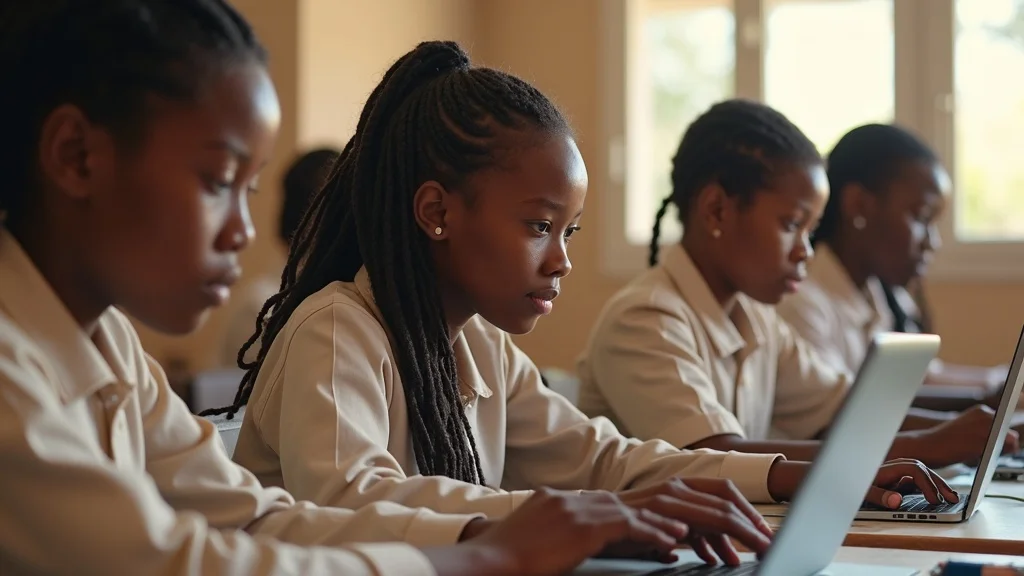
Today, more African women than ever are stepping into the AI arena—not as users, but creators, researchers, and visionaries. From Kampala to Cape Town, young minds spearhead hackathons, develop language models tailored to regional dialects, and design AI tools that tackle uniquely African challenges. Their presence is not just symbolic but is driving a shift in how AI systems are conceived and used—by ensuring that technology is designed for all, not just a select few.
Despite this progress, these trailblazers often confront obstacles their male counterparts rarely face: from family expectations to a lack of safe spaces, limited funding opportunities, and cultural stereotypes about “women’s work. ” Yet, these barriers haven’t stopped them; instead, they fuel an unrelenting push for transformation. Women such as Dr. N. Akintoye, a prominent AI researcher, show that African leadership in AI isn’t a western import, but a home-grown movement with global implications.
As African women continue to break new ground in AI, their stories and achievements are increasingly being recognised across the continent. For those interested in the evolving landscape of women's empowerment and digital innovation, She Evolves Africa offers further perspectives on how women are shaping Africa’s future through technology and leadership.
Breaking the Silence: From Margins to the Centre of Artificial Intelligence
For far too long, conversations about women and girls in African AI were relegated as afterthoughts or “nice-to-haves. ” Today, we stand at a pivotal moment. As partner representatives and news outlets highlight, the centre stage now belongs to those investing, mentoring, and building in Africa’s digital space. It is not just about closing gender gaps—it’s about ensuring the survival and prosperity of ongoing AI-driven industries, from agriculture to law firm automation.
When African women use AI tools and lead AI projects, they redefine what is possible for entire societies. The move from margin to centre isn’t just about statistics or per cent changes; it’s a cultural and economic imperative. The narrative has shifted: supporting African women in AI is about strategic innovation that serves all Africans.
What You’ll Learn From This Article on Why Supporting Women in AI Is a Strategic Issue, Not a Side Conversation
- Understand how generative AI is reshaping African industries and the role of women.
- Explore the existing gender gap and gender gaps in the adoption and impact of ai tools.
- Learn why the participation of women and girls is foundational, not supplementary, for shaping artificial intelligence.
- Hear African voices and perspectives often missing from global AI discussions.
Historical Context: African Women and Girls at the Intersection of Artificial Intelligence
Tracing the Footsteps: Gender Gaps in Technology Across Africa
The journey of African women in technology has always been one fraught with barriers but rich in resilience. For decades, low participation rates and restricted access to educational channels kept women and girls out of engineering and mathematics paths. Even as AI tools appeared across sectors, a persistent gender gap has kept women underrepresented in high-impact roles. Historical patterns in African education—from primary school through to university—have shaped perceptions about who “should” use and build new technologies.
Yet, there are bright spots. Partner representatives, law firm stakeholders, and grassroots leaders are increasingly championing interventions: coding bootcamps for girls, mentorships, and targeted scholarships. Today, as AI rapidly evolves, the question is whether we will let old patterns prevail or forge new ones marked by gender equality and opportunity. The choice to address these gender gaps is also a choice about the future of African innovation.

Around the World Versus African Realities: Unique Challenges and Opportunities in AI
While gender gaps in AI are a global problem, African realities add extra layers of complexity. Around the world, efforts are often backed by large, well-funded institutions. In Africa, community-driven, women-led projects propel change, built not with abundance, but with creativity and determination.
Unlike the global stage—where “women in tech” often centers western experiences—Africa's challenges include limited broadband, language barriers for large language models, and deeply rooted gender stereotypes. But these same realities seed unique advantages: African women’s lived experiences generate locally relevant AI solutions, from digital health platforms for maternal care to real-time market data for small traders. Despite fewer per cent of women and girls in STEM, their influence is disproportionate, proving that inclusion yields outsized positive effects across sectors.
Addressing the Gender Gap: Why Supporting Women in AI Is a Strategic Issue, Not a Side Conversation
The Case for Inclusion: How Gender Gaps Undermine AI Tool Efficacy in Africa
Leaving women out of AI development is not just unjust; it’s unstrategic. The gender gap in African AI means that the needs, languages, and lived experiences of a massive part of the population are absent from AI systems, making these tools often less effective or even irrelevant. For instance, if women and girls are not involved in building health diagnostic models or education platforms, critical nuances—like maternal health or linguistic variation—are overlooked.
When partners, policy-makers, and tech innovators realize that bridging gender gaps is fundamental, not peripheral, Africa’s AI revolution will accelerate. As Neves McClain and Greg Lambert suggest, the future belongs to ecosystems where women use AI tools as confidently and capably as their male colleagues—driving better outcomes for everyone, not just a select few. In summary, the gender gap is not only a social issue but a clear barrier to impactful innovation.

Generative AI and its Potential for Empowering Women and Girls
The arrival of generative AI offers a turning point. Unlike legacy technologies, today’s AI tools can learn, adapt, and localize to African needs—from automating community banking to supporting mental health projects. When women lead, design, and use the tools that power generative AI, they bring a sense of responsibility, ethics, and empathy that is often missing from one-size-fits-all frameworks.
Generative AI is not just about huge, global solutions—it’s about practical tools that improve daily life for African women and girls. Case studies show that women and men working together on generative AI projects lead to more inclusive results, greater uptake among communities, and sustainable growth. This is why supporting women and girls to use AI tools and engage with generative technologies is “mission-critical” for everyone in the sector.
Lists of Barriers and Enablers: Gender Gap Realities in African Artificial Intelligence Sectors
- Barriers: Limited access to education and ai tools, cultural stereotypes, funding gaps.
- Enablers: Women-led ai tools projects, community support, policy interventions tailored to African contexts.
Quotes from African Women Shaping Artificial Intelligence
“African women are not just technology users—we are increasingly its creators and stewards.” — Dr. N. Akintoye, AI researcher, Nigeria

AI Tools, Generative AI, and the Critical Mass: Why Representation Matters
Using AI Responsibly: Experiences from Women and Girls in the Field
No story about African AI is complete without the voices of those using AI every day. Women and girls in diverse sectors—from agriculture to law firms—report that when they use AI tools designed with them in mind, the value is transformative. Safe spaces for collaborative learning, mentorship channels, and access to generative AI platforms are proving crucial.
Marlene Gebauer, a tech partner representative, notes that “women use AI not only to solve their own problems but to uplift entire communities. ” Their real-world experiences reveal that responsible design is a core issue: AI tools that reflect women’s input avoid the bias and blind spots that have plagued so many legacy systems globally.
Generative AI as a Game Changer: Case Studies from Across Africa
Across Africa, generative AI is not a buzzword but a game changer. Projects led by women—like natural language models for indigenous languages or mobile health diagnostics—have brought AI out of elite circles and into everyday life. In fact, as Neves McClain and Greg Lambert have shown, when policy interventions support women to use generative AI, entire sectors shift.
There are marked differences when comparing projects where men use ai tools in isolation versus teams inclusive of women and girls—the latter boast higher adoption rates, greater community trust, and more relevant solutions to Africa’s pressing challenges. Around the world, these African-led innovations are drawing attention for their impact, relevance, and inclusive design.
Tables Comparing Gender Gaps: Africa vs. The Global Stage
| Key Gender Gap Metrics in AI Sectors (Africa / Global) | Participation Rates | Leadership Roles | Access to AI Education |
|---|---|---|---|
| Africa | Lower overall, growing among youth | Significantly fewer women, but strong emergent leaders | Patchy, but improving via targeted programs |
| Global | Still below parity but higher than Africa | Few women leaders, with slow progress in tech firms | More access, but gender gap persists in elite institutions |
People Also Ask: What is the 30% rule in AI?
The 30% Rule Explained and its Impact on Why Supporting Women in AI Is a Strategic Issue
The “30% rule” refers to the idea that when at least thirty per cent of decision-makers in a system—like a board or policy setting—are women, meaningful change not only becomes possible, but accelerates. In African AI contexts, striving for this critical mass in both participation and leadership unlocks better tools, more effective AI systems, and a reduction in gender bias.
As women and girls reach this threshold, the conversation shifts from “add women” to “equal partners”, turning what was once a side conversation into a central strategy for artificial intelligence development across sectors.
People Also Ask: Why is AI a feminist issue?
Why Supporting Women in AI Is a Strategic Issue From a Feminist Perspective
AI is a feminist issue because technology reflects the values—and sometimes the biases—of its creators. Around the world and especially in African contexts, a feminist approach insists on equity, justice, and access for all. When women and girls have a seat at the table, they challenge gender stereotypes and ensure AI tools serve the needs of entire societies, not just a privileged few.
Fostering equality in AI system design isn’t a trend; it’s a necessity for fairness and effective progress. By closing gender gaps in the sector, we achieve stronger, safer, and more useful innovations for Africa and beyond.
People Also Ask: What is the most controversial aspect of AI?
Exploring Controversies in Artificial Intelligence: The Gender Gap Dimension
One of the most controversial aspects of artificial intelligence is its tendency to amplify existing gender gaps and biases, especially when women and girls are absent from design and deployment processes. For example, news outlets have reported how AI systems may deliver answers or recommendations that reinforce harmful stereotypes rather than challenge them.
The controversy is not simply technological—it’s deeply social. Without deliberate, inclusive intervention, generative AI could widen the gender gap, making existing inequalities harder to bridge. This is why supporting African women in AI is a strategic issue: it addresses not just technical accuracy, but the broader ethical and societal impacts of technology.
People Also Ask: What does AI think about women?
Decoding AI’s Biases: What Generative AI Says About Women and Girls
While AI by itself does not “think,” large language models and recommendation systems can reveal and reflect back the biases entrenched in the data they are trained on. If that data—and the teams designing AI tools—don’t include women and girls or their experiences, then the outcomes range from subtly biased to overtly discriminatory.
Studies by partner representatives such as Marlene Gebauer and Greg Lambert document these limitations: how AI tools are more effective and less likely to propagate stereotypes if women use the tool, help craft its responses, and audit outputs regularly. This reinforces the call for ongoing scrutiny, transparency, and bold support for women in every facet of African AI.
Lists: Action Steps for Supporting Women in Artificial Intelligence Throughout Africa
- Fostering inclusive educational access
- Funding African women-led generative ai initiatives
- Building mentorship networks
- Promoting the responsible design and usage of ai tools
FAQs on Why Supporting Women in AI Is a Strategic Issue, Not a Side Conversation
What unique challenges do African women face in artificial intelligence fields?
African women face obstacles such as limited access to technical education, inadequate internet infrastructure, and strong cultural stereotypes. These challenges can limit participation and advancement. Nevertheless, African women have shown remarkable innovation by forming supportive networks, initiating women-led community projects, and advocating for local policy changes that make AI careers more accessible.
How can AI tools help bridge gender gaps around the world and in Africa?
AI tools, when inclusively designed, can democratize access to education, healthcare, and financial resources for women and girls. They automate tasks, break down linguistic barriers, and offer tailored programs. In Africa, AI systems have the added advantage of addressing local needs like maternal health, market pricing, and rural learning—even in under-resourced communities.
Which sectors in Africa are most impacted by the absence or inclusion of women in generative ai?
Key sectors include healthcare, agriculture, law firms, education, and fintech. When women are excluded, AI solutions often miss practical insights, fail to address real-day challenges, or reinforce exclusion. Where women are present and active, AI-driven projects see higher adoption rates, improved outcomes, and more relevant connections to Africa’s diverse realities.

Key Takeaways: Reinforcing Why Supporting Women in AI Is a Strategic Imperative
Supporting African women in AI is more than social justice; it’s the foundation for impactful, innovative, and equitable advances in artificial intelligence across the continent. The future of AI belongs to everyone—provided the conversation is broad, inclusive, and led by those who’ve historically been left out.
Inspiring Change: From Side Conversation to Central Strategy in African Artificial Intelligence
Take Your Place In The Anthology https://themeridian.africa/pioneer-voices
The journey to a more inclusive AI ecosystem in Africa is just beginning, and every voice matters in shaping its direction. If you’re inspired to learn more about the broader movement of women’s empowerment, digital transformation, and leadership across the continent, exploring platforms like She Evolves Africa can offer valuable stories and resources. By connecting with these wider conversations, you’ll discover how strategic support for women in AI is part of a much larger tapestry of progress—one that champions innovation, resilience, and collective growth for Africa’s future. Take the next step and see how you can be part of this transformative narrative.





Write A Comment