

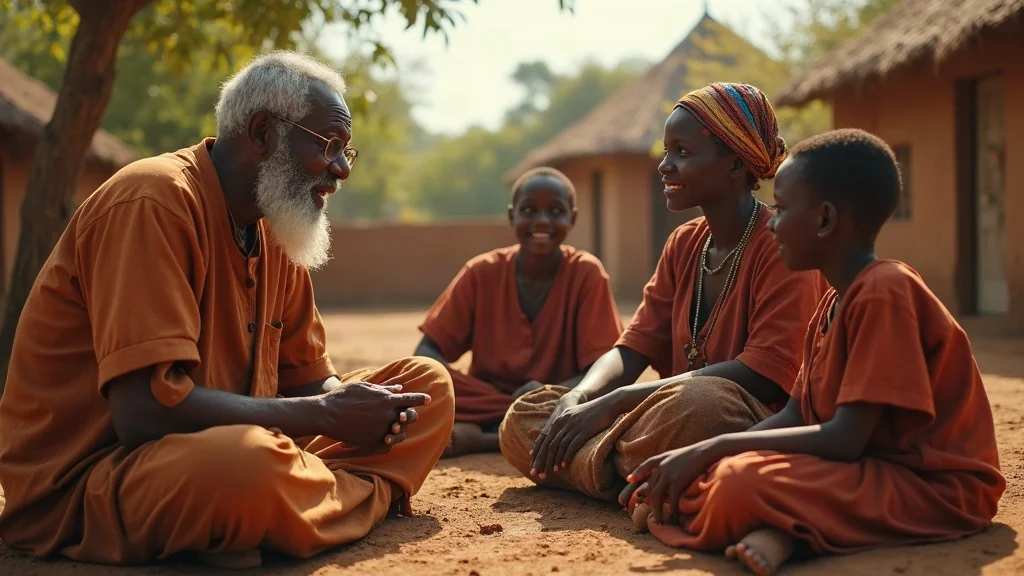
Imagine a twilight village gathering: elders in a ring, vividly narrating the journeys of ancestors, their words igniting curiosity in children. Yet, across Africa, such scenes are growing rare. With each elder lost, unique oral tales fade—risks that technology may be able to counter. Today, ai preserving african history stands at the crossroads of tradition and innovation, raising the question: Can artificial intelligence truly rescue Africa’s vanishing oral heritage, giving these living libraries a new lease on life?
An Urgent Call: Observing Africa's Disappearing Oral History
Across the continent, oral history is the living heartbeat of Black heritage, shared generation to generation through spoken word, song, and performance. However, modern pressures—urbanisation, migration, globalisation—put immense strain on these traditions. The unique knowledge held by griot and grits, Africa’s storied keepers of historical document and memory, now faces unprecedented threats. As elders pass on, and with them irreplaceable archives of local knowledge, identity, and resilience, a race against time unfolds.
The march of digital progress, ironically, has widened the gap between past and present. Here, the intersection of heritage preservation and technology becomes vital. This article is prompted by a sense of urgency: unless innovative solutions like artificial intelligence and hybrid cloud are mobilised as tools to explore and secure these voices, countless oral histories could vanish, inaccessible to a global audience now hungry for authentic Black history and cultural heritage. With the stakes so high, we must ask how responsible technological archiving can balance power, authenticity, and community stewardship in this delicate work.
Personal Reflection on the Value of African Oral Stories
As a child, I sat at my grandmother’s knee, entranced by tales of trickster animals and heroic ancestors. Each story was not simply entertainment—it was a lesson, a map of values, a living tie to my roots. These moments of oral storytelling shaped my understanding of identity. Today, witnessing the encroaching silence as older generations disperse or pass, I am struck by a deep sense of loss. The songs and proverbs that animated my youth risk becoming echoes. Realising that ai preserving african history might offer a bridge between worlds fills me with both hope and caution. We must ensure these efforts amplify community voices, not replace them, so that the wisdom of our elders remains vivid for future generations.
What You'll Learn
- The significance of ai preserving african history in today’s digital age
- How artificial intelligence can serve as Africa’s modern griot and grits
- The intersection of hybrid cloud technology and heritage preservation
- Potential challenges and ethical dilemmas with ai preserving african history
- Practical examples and recommendations for the future of Black history archiving
As we consider the evolving landscape of digital archiving, it's important to recognise that the journey to preserve African oral traditions is ongoing and multifaceted. For those interested in how these efforts are developing and the broader context of digital heritage work, you can find additional perspectives and updates on initiatives in progress at She Evolves Africa, which highlights community-driven approaches and the challenges faced along the way.
Understanding Oral Heritage: Why ai Preserving African History Matters
Africa’s oral traditions are more than lore—they are the beating heart of cultural heritage. From the epic poetry of the Mandé griots of West Africa to the folk tales recited by Xhosa elders, these stories pass down wisdom, history, social codes, and the lived experiences of communities. Unlike written historical records that may be stored in hidden archives, oral histories are interactive, participatory, and constantly evolving, embodying communal memory.
However, oral traditions face peril in an era valuing written and digital documentation. The loss of a single storyteller—an irreplaceable griot or grit—can mean the extinction of centuries-old knowledge. The relentless march toward modernity increases pressure to pivot towards new, digital methods of heritage preservation. But this evolution brings risks: if the transition is rushed or mishandled, language nuances, unique dialects, and cultural context could be lost in translation. Therefore, today’s challenge is twofold—leveraging the power of AI and digital archiving while safeguarding authenticity and safeguarding the integral role of local custodians.
Role of Griot and Grits in Black History
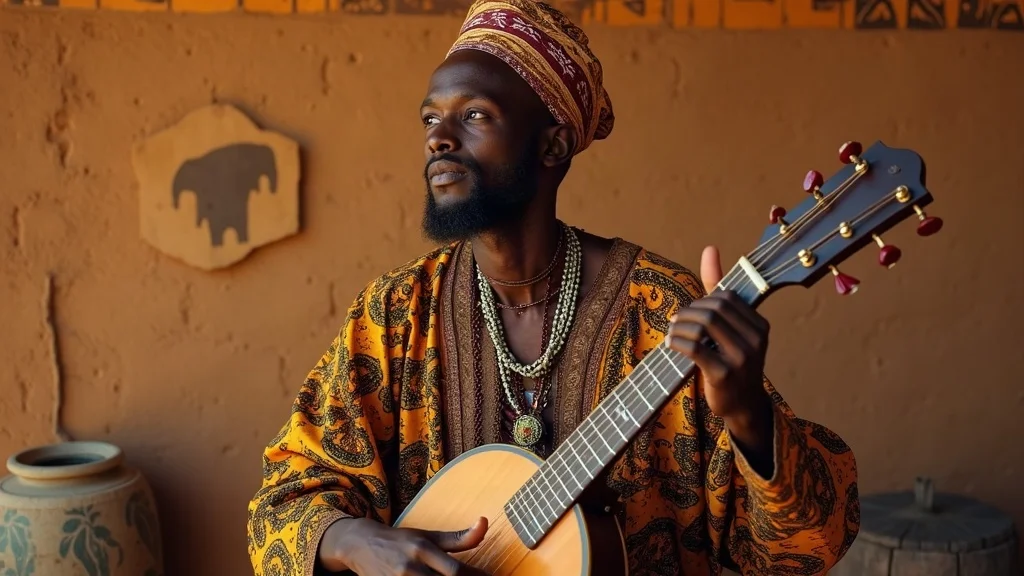
For centuries, griot and grits have been the living libraries of black history—musicians, poets, genealogists, and storytellers who commit entire historical events and cultural values to memory. In many African societies, a griot holds a pivotal role as a cultural archive themselves, shaping collective identity and serving as living, breathing links between ancestors and new generations. Their poetry, songs, and spoken word retell not just personal anecdotes, but historical documents—wars, ancestral lineages, moral parables, and lessons of resilience.
These storytellers do more than entertain; they foster unity and identity formation, anchoring younger listeners in a deep, shared past. The challenge, however, is that when not recorded, these stories are as fragile as memory itself. The rise of artificial intelligence offers a radical transformation—providing new ways for griots and grits to digitise their gifts, secure their marks on history, and share their wisdom with a global audience long after voices fade.
Threats Facing Heritage Preservation in Africa
Unfortunately, the cultural preservation of oral traditions in Africa is under siege. Urban migration draws young people from rural communities, causing traditional storytelling gatherings to dwindle. Political instability, economic hardship, and conflict further erode opportunities for heritage preservation. Moreover, climate change and natural disasters can scatter communities, literally and figuratively washing away memories, artifacts, and archives.
There is also the encroachment of outside narratives—documentaries, textbooks, and digital projects produced without local context, risking a filtered or inaccurate retelling of Black history. The absence of proper tools to explore and digitise oral assets means stories become trapped in the memories of individuals rather than preserved in history archives accessible to a global audience. Here, the thoughtful use of ai technology could shift the equilibrium towards inclusive, enduring preservation, but only if action is taken rapidly and responsibly.
AI Preserving African History: Promise or Peril?
The intersection of ai preserving african history and heritage preservation is both exciting and fraught. AI promises to listen, transcribe, translate, and even reconstruct language, accent, and performance nuances previously unrecordable. Hybrid cloud solutions allow these large-scale archives to be stored securely and made accessible to a global audience, while machine learning sorts, identifies, and reconstructs fading dialects. Yet, it is not without peril—these technological advances risk standardising or misrepresenting nuanced oral histories and, if misused, may amplify external or commercial narratives at the expense of community voices.
Essentially, AI functions as a modern griot: it can remember, retrieve, and even simulate the breaths and inflections of lost storytellers. But there are critical boundaries—AI cannot replicate the soul of lived experience or improvise with the same meaning a human might. The challenge is to wield these technologies as sensitive tools to safeguard cultural heritage and ensure the power of archived oral histories is not diluted.
How Artificial Intelligence Intersects with Heritage Preservation
AI technologies such as natural language processing (NLP) and speech recognition enable the transcription and translation of oral stories, capturing intonations, slang, and dialects. For instance, audio recordings of rituals and praise songs can be processed and indexed for future generations. AI and virtual reality platforms transform static records, making the past immersive—breathing life into dusty archives and making them accessible to a global audience.
Generative AI can even help reconstruct lost tales by identifying linguistic patterns and collaboratively generating story variations. Critically, advanced ai models must be open source and culturally attuned to avoid erasure or distortion, ensuring the integrity of black history. In responsible hands, the use of AI provides unprecedented opportunities to collaborate with living griots, enabling community-driven history archives to flourish.
The Potential of Hybrid Cloud in Digital Archiving
Hybrid cloud technology occupies a central role in ai preserving african history. The massive datasets created by oral recordings and interactive digital archives require scalable, secure storage. Hybrid cloud platforms combine the resilience of local servers with the accessibility of global cloud resources, keeping sensitive cultural digital storytelling records under the control of their originating communities while also making them accessible to academic, diaspora, and future generations.
In practice, this means that a historical event or interview preserved by a local historian can be uploaded, indexed by AI for quick retrieval, and stored with replicas in multiple locations to prevent loss. With proper consent, these archives can be opened to educational institutions, researchers, or shared during cultural festivals online. Hybrid cloud, then, acts as a seamless bridge—empowering griot and grits to reach new audiences without ceding ownership of their own history.

Stories Reimagined: Bridging Past and Present with AI
With AI and virtual reality, there is a new opportunity to reimagine the experience of African storytelling. Imagine putting on a headset and witnessing the lively dances and tales as if seated by the original fire pit, or exploring audio archives with interactive digital overlays, hearing the ancient words in their mother tongue. Generative AI tools can translate local proverbs or recreate lost narratives with community input, making them not just preserved but also living, evolving, and engaging.
This approach does not mean the replacement of traditional griot and grits. Instead, it intends to support their vital role, making sure their performances reach a global audience and inspire those disconnected from their roots. When balanced with ethical oversight, digital griots and hybrid cloud-based storytelling offer real hope for the sustainability of Black history.
Lists: Key Technologies Empowering AI Preserving African History
- Natural Language Processing (NLP)
- Speech Recognition and Reconstruction
- Hybrid Cloud Platforms for Scalable Storage
- Data Annotation Tools for Oral Traditions
- Machine Learning for Story Categorization

Quotes: Thought Leaders on AI and Heritage Preservation
"AI gives us the tools to encode, cherish, and restore the voices we cannot afford to lose." – Contemporary historian
"Digital griots can bridge lost generations, giving our past a future." – African storyteller
Success Stories: Early Initiatives Using AI to Preserve Black History
Across Africa, early adopters are already demonstrating the potential of ai preserving african history. Initiatives work with communities to record folk songs and oral biographies in local dialects, passing the material through AI for transcription and digital archiving. These projects highlight how AI models foster collaborative storytelling, turning what was once an ephemeral event into a preserved, searchable, accessible digital asset.
Crucially, success stories show that the best results come from projects where local griot and grits are collaborators, not just sources. With flexible, open-source platforms and hybrid cloud storage, these archives grow over time, enabling constant community review and input, which ensures that heritage preservation remains authentically African.
Case: Collaborative Storytelling with Griot and Grits
One standout case involves a university project in Ghana where elders worked side by side with technologists, recording thousands of tales. With the power of AI, stories are not only transcribed but also translated and indexed by region, language, and theme—creating a living map of cultural knowledge. This collaboration between human wisdom and digital innovation preserves the contextual and emotional range that makes Black history so vibrant.
Such projects empower communities, giving them tools to explore their own archives and pass them seamlessly to the next generation. By ensuring community control over digital assets, these digital griots foster new connections across physical distance and generational divides.
Hybrid Cloud Solutions in Real-time Heritage Preservation
Hybrid cloud technology is central to preserving oral traditions in real-time. During a recent community archiving event in Nigeria, participants recorded elders’ voices onto mobile devices, uploaded files to the cloud, and reviewed transcripts for accuracy before publication. This flow—from field recording to secure hybrid archiving—means materials remain accessible, editable, and locally owned, mitigating risks of data loss or misappropriation.
Such initiatives underscore the importance of combining local knowledge with advanced technological infrastructure. AI-powered search tools allow community members to find their own stories quickly, share them globally, and influence future generations. In this way, hybrid cloud doesn’t just store history—it actively shapes the ongoing narrative of Black identity and collective memory.
Tables: Comparing Traditional and AI-Driven Heritage Preservation
| Method | Traditional Archiving | AI-Driven Digital Archiving |
|---|---|---|
| Storage | Physical tapes, transcribed scripts | Hybrid cloud, searchable digital repositories |
| Access | Localised, sometimes restricted | Accessible to a global audience online |
| Preservation Risks | Loss, decay, fire, migration | Multiple backups, redundancy, disaster recovery |
| Community Involvement | Occasional, in-person only | Active participation, collaboration, virtual review |
| Representation | Dependent on archivist’s perspective | AI-assisted, with input from many voices |
AI Preserving African History vs Traditional Archiving Methods
Traditional archiving often relies on physical tapes, hand-written transcriptions, or local museum collections—resources vulnerable to time, climate, and unrest. While these methods offer tangible connection, their reach is limited and the risk of complete loss is high. In contrast, ai preserving african history leverages hybrid cloud for instant duplication, community oversight, and resilience against disaster. AI-driven solutions democratise access, making Black cultural heritage not only resilient, but visible and actionable for new generations.
This shift enables authentic voices to define their own history archives, not simply be interpreted by outside scholars. It bridges rural and urban divides, preserves dialectical nuance, and makes collective memory vibrant, interactive, and globally accessible—breathing life into the archive itself.
Ethical Reflections: Ownership and Representation in AI Preserving African History
With power comes responsibility. While ai preserving african history offers incredible potential, ethical questions persist. Who owns the digital versions of these stories? Can AI, built on globally-trained models, reliably interpret the subtlety and intent of oral histories? Most importantly, how can communities retain agency over their own narratives in a digital age dominated by commercial interests and external actors?
These are not academic worries—they shape the very future of Black history and cultural preservation. The successful future of history archives in Africa will depend on community-led design, ethical use of open-source ai models, and robust safeguards against misappropriation or distortion.
Community Consent and Control
Community consent is the ethical cornerstone of AI-driven heritage preservation. Before recording, uploading, or analysing a story, clear guidelines must be set by and for the community. Only with full understanding and approval can digital projects avoid exploitation and foster trust. Equally, communities must maintain access—owning their digital storytelling tools, editing rights, and the ability to remove or update content over time.
In practice, this means regular review panels, transparency about where and how oral histories are shared, and a commitment to passing digital stewardship between generations. This collaborative model, grounded in local values, ensures that the legacy of griot and grits is not only preserved but keeps evolving with active community voice.
Risks of External Narratives in Black History
One pressing risk of digitising African history with external help is narrative distortion: outside interests may unintentionally prioritise stories that suit global audiences or commercial platforms, rather than representing the true diversity of local voices. The use of AI must be continually reviewed for bias, both in data collection and machine learning interpretation, to uphold the authenticity and dignity of Black history.
Balancing global accessibility with local context is essential. Hybrid cloud and open-source models empower local participation, but oversight, participatory governance, and education on AI technologies help communities hold control in the face of outside influence. Only then can AI become a genuine ally in telling Africa’s story as it deserves to be told.
People Also Ask
How can AI help preserve African oral traditions?
AI can record, transcribe, and categorise oral stories in multiple dialects, storing them in digital archives that are accessible to future generations. By using AI models to translate and reconstruct the nuances of storytelling, unique voices and expressions are preserved rather than lost to time. Importantly, combining AI with community guidance ensures that these oral histories keep their cultural authenticity while becoming accessible to a global audience.
What challenges do AI and hybrid cloud technologies face in heritage preservation?
Technical and ethical challenges abound in the digital preservation of African oral history. AI and hybrid cloud platforms must deal with language diversity, data privacy, internet access, and community consent. Additionally, there is the ongoing risk of losing authenticity if stories are detached from their cultural roots, or if projects prioritise commercial over cultural value. Only by prioritising local ownership and ethical stewardship can these hurdles be overcome on the path to sustainable heritage preservation.

Can digital griots replace traditional storytellers in black history?
While digital griots powered by AI can archive, share, and amplify oral stories for a global audience, they cannot fully replace the lived connection and nuanced improvisation of traditional storytellers. These technologies work best as supportive tools, preserving elders’ voices and extending their reach, but must always respect the irreplaceable role griot and grits play in cultural continuity and community identity.
Are there successful examples of AI preserving African history today?
Yes, there are several emerging projects where AI and hybrid cloud technologies have been used to document and digitise African folklore, oral biographies, and performance traditions. These initiatives often involve collaborations with local griots and the broader community, ensuring authentic representation and stewardship. As these projects scale, they provide hopeful roadmaps for further history archives—accessible, secure, and community-centred.
Short documentary video showcasing active AI-driven oral history projects in Africa, featuring interviews with local historians, storytellers, and technologists, scenes of cloud-based archiving, and vibrant community engagement.
Lists: Practical Steps for Communities Engaging in AI Preserving African History
- Engage storytellers and local historians for authentic narrative input
- Partner with AI technologists for customised solutions
- Utilise hybrid cloud for accessible, scalable, and secure storage
- Prioritise community consent in digital archiving projects
- Regularly review and update archives for accuracy and inclusivity
FAQs
Is AI reliable for capturing all dialects and languages in African history?
AI is becoming increasingly reliable for recording and understanding African dialects and languages, especially with open-source AI tools and community involvement. However, limitations remain, especially with under-documented or endangered tongues. Collaborative development, ongoing annotation, and active local participation are essential for ensuring accuracy and cultural sensitivity in AI-driven projects.
What role does hybrid cloud technology play in preserving oral records?
Hybrid cloud technology empowers communities to store and safeguard oral histories on a global scale while retaining local control and security. This approach ensures archives are both resilient to data loss and easily accessible, bridging digital divides and supporting inclusive history preservation that local storytellers can revisit and contribute to at any time.
Key Takeaways
- ai preserving african history can bridge generational gaps in knowledge
- Hybrid cloud empowers secure, scalable preservation of oral traditions
- The voices of griot and grits are vital to ensuring authenticity in black history
- Community involvement and ethical oversight are essential foundations
A Future Chronicle: How Will Africa’s Stories Endure?
The world is watching as Africa weaves old and new, investing in ai preserving african history to ensure its chronicles survive and flourish. With hybrid cloud, open-source AI, and ethical collaboration, Africa’s oral legacies can live on—not as relics, but as vibrant resources for the future.
If this exploration of AI’s role in safeguarding Africa’s oral traditions has sparked your curiosity, there’s a broader conversation unfolding about the future of digital heritage and community empowerment. As more projects emerge and technology evolves, staying informed about ongoing developments is key to understanding how these innovations shape cultural identity. For a deeper dive into the evolving landscape of African digital storytelling and to see how communities are actively shaping their own narratives, visit She Evolves Africa. Discover how you can be part of the movement to ensure Africa’s stories are not only preserved, but continue to inspire generations to come.
Take Your Place In The Anthology https://themeridian.africa/pioneer-voices
Sources:
- The Meridian - Pioneer Voices
- UNESCO - Oral Heritage
- Microsoft News - AI Preserves Africa’s Storytelling Traditions
- IBM Case Studies: Heritage AI Projects
In the quest to preserve Africa’s rich oral traditions through artificial intelligence, several pioneering initiatives have emerged. The AfriX project is developing a blockchain-backed legacy infrastructure aimed at safeguarding identity, family lineage, and oral history across the continent. This platform seeks to ensure that cultural narratives are preserved and accessible for future generations. (lightcode.org)
Similarly, the African AI Heritage Labs, a flagship program of the AI for Cultural Heritage Institute, focuses on the ethical preservation of cultural heritage through community-sensitive AI technologies. This initiative emphasizes direct community involvement to ensure that technological solutions are both effective and respectful of cultural contexts. (aiforculturalheritage.org)
For those interested in the intersection of AI and cultural preservation, these resources offer valuable insights into how technology can be harnessed to protect and celebrate Africa’s oral histories.





Write A Comment