
Futuristic 3D logo with glowing light bulb, 'AI AFRICA' text, and chrome accents.
AI AFRICA DIGITAL PATHFINDERS
MAJESTIC MEDIA  APPLICATIONS
  • Home
    • #Business & Event Spotlights
    • #AI TODAY & TOMORROW
    • #AI Africa Ethics
    • # AI CREATIVES AFRICA
    • #AI ECOSPHERE
    • AI Frontiers
    • AI Spotlights
    • AI History
  • Featured
    • AI Visionaries
    • AI Horizon
    • AI Success
  • AI Pioneers
    • AI Accelerators
    • AI Trailblazers
    • AI Policy
  • AI Africa now
  • AI Africa Kids
  • AI Hub
    • AI Ignitors
    • AI Educators
    • #AI KIDS AFRICA
  • #AI IN BUSINESS
  • #AI INSIDER
  • #AI SOVEREIGNTY AFRICA
  • AI Healthcare
July 30.2026
1 Minute Read

How Women-Led Businesses Can Use AI Without Losing Their Brand Voice

Picture this: a spirited group of African women entrepreneurs huddled around a laptop, ideas bouncing between them like rays of early sunlight—each woman bringing her own energy, culture, and vision. As artificial intelligence weaves its way into their businesses, the question arises: how can they use AI without losing their brand voice? With every new tool, the heart of your business—the stories, the language, the spirit of community—risks being lost in a sea of generic content. But what if you could have powerful AI by your side and still sound, feel, and grow as only you can? This article guides African women business owners on how to embrace AI and innovation while remaining unmistakably authentic.

How Women-Led Businesses Can Use AI Without Losing Their Brand Voice: Setting the Scene for African Women Entrepreneurs

For many women entrepreneurs across Africa, keeping the essence of their business alive is at the core of every strategy. As artificial intelligence becomes prevalent in marketing, communication, and operations, the drive to work smarter by leveraging smart tools often meets a fundamental challenge: AI-generated content and automation can make brands sound the same, erasing the beautiful diversity that African women bring into the business landscape. The question at the heart of today’s rapidly changing world is whether you can use AI to advance productivity, build customer relationships, and boost revenue growth—all while holding onto your unique presence.

The good news is yes; it is possible. African women business owners have a tremendous opportunity to let AI handle repetitive tasks, enhance their marketing strategy, and support data-driven decision-making—with intention and care. Through adopting AI responsibly and curating the way these tools integrate into your day-to-day, you not only streamline operations but also open doors to fresh, creative storytelling reflective of your background, your language, and your vision. Here, we explore how women-led businesses can use AI without losing their brand voice, ensuring your company’s identity shines through in every AI-powered touchpoint.

Confident African women entrepreneurs using AI tools together in a vibrant coworking space - how women-led businesses can use AI without losing their brand voice

Maintaining Authenticity: Why Brand Voice Matters for Women Business Owners

Your brand voice is more than just the words you use; it captures your purpose, your community, and your vision. For African women entrepreneurs, the importance of maintaining an authentic voice cannot be overstated. In markets where consumer trust often hinges on local dealings, personal reputation, and cultural familiarity, your unique perspective and style form the foundation for lasting business relationships. As you explore how AI tools integrate with your operation, prioritising authenticity will help your brand stand out amid competition—even if machines help with the talking.

When women business owners allow AI’s convenience to fully overtake their natural voice, the messaging can become generic or lose touch with community values and local nuances. Smart business leaders understand that whether you’re crafting a social media campaign, creating automated email responses, or writing new marketing material, the cues, tone, and references embedded in your content must remain true to your roots. Preserving this voice is not just about marketing but also about inspiring other African women to join, collaborate, and amplify the visibility of owned businesses across the continent.

What You'll Learn From This Deep Dive Into How Women-Led Businesses Can Use AI Without Losing Their Brand Voice

  • Understand why preserving your unique brand voice is essential for women entrepreneurs using AI tools
  • Identify practical strategies African women business owners can use to maintain their authentic voice while using AI
  • See real-life examples and insights from African women-owned businesses successfully harnessing artificial intelligence

Women Entrepreneurs and the Dual Edge of AI: Opportunities and Pitfalls

AI is a powerful tool that can help African women business owners achieve more with less effort. From automating customer service responses to creating content tailored for diverse social media platforms, AI continues to help businesses of all sizes grow their reach and connect with customers in new ways. However, the duality lies in the risk of losing your business’s soul in translation. Tools like automated writers or chatbots can sometimes misunderstand African humour, dialect, or values, turning vibrant, relatable messaging into lifeless corporate speak.

As more women entrepreneurs across Africa explore how AI can streamline operations, it’s crucial to avoid relying solely on out-of-the-box solutions that don’t factor in local realities. Instead, success comes when business owners guide the AI—training it with stories, references, and user data that reflect the company’s community or region. AI should enhance the African narrative, not dilute it. Thoughtful integration, testing, and local storytelling customisation must be central to every business leader’s plan when adopting AI in marketing, sales, or customer service.

As you consider the balance between automation and authenticity, it's worth noting that many African women entrepreneurs are actively shaping the future of business by embracing technology while staying true to their roots. For a glimpse into how these pioneers are navigating digital transformation, you can explore the evolving landscape at She Evolves Africa, where stories of innovation and resilience are continually unfolding.

Balancing Innovation and Identity: Case Studies of African Women Business Owners Using AI

Consider the journey of Nia, a Ghanaian entrepreneur whose eco-friendly home goods company uses AI chatbots to answer customer questions overnight. Rather than leaving everything to automation, Nia worked with her team to train their AI using local greetings, proverbs, and context-specific scenarios. The result? Their chatbot now speaks in Pidgin English and references market days and festival schedules, keeping the tone warm and community-driven. Nia’s approach shows that, when business owners remain involved, AI can enhance—not erase—brand voice.

In Kenya, a women-led startup marketplace uses AI for social media scheduling and trend analysis, but each automated post is reviewed and sprinkled with Swahili phrases and regional examples before publishing. These women entrepreneurs ensure that even when using the latest technology, their customers feel a genuine, homegrown touch. The lesson is clear: women business owners must demand flexibility and customisation from technology, using AI as a marketing service that fits their brand, not the other way around.

Determined African businesswoman reviewing AI-powered analytics dashboard - using ai to balance brand voice and innovation

Common Missteps to Avoid When Women Entrepreneurs Use AI Tools

Some of the most frequent setbacks faced by women-led businesses undertaking AI adoption stem from using imported tools without localising content—resulting in robotic messaging or insensitive, culturally-blind automation. Another common misstep involves neglecting staff training: when team members aren’t empowered to guide or correct the AI, its outputs can stray from the business’s ethos. Finally, entrepreneurs often trust AI to generate messaging on topics it doesn’t fully understand, causing inconsistencies in mood or context that customers notice.

It’s critical to select AI platforms that allow editing, language model training, and feedback loops. Think of your AI as a new staff member—one that must be onboarded into your brand’s story, traditions, and tone. To work together toward building a resilient brand, routine audits, regular feedback from your community, and collaborative supervision should all be part of your AI tool use. As a reminder: your brand’s distinctive voice is your company’s superpower; treat technology as an amplifier, not a replacement.

“The most powerful brands are those that sound and feel like their founders – even when machines do the talking.”

Curating Your Unique Brand Voice While Using AI Tools

Preserving the essence of an authentic African brand means making deliberate choices about the digital tools that enter your business ecosystem. When selecting AI tools, prioritise those that offer customisation options, support indigenous languages, and enable feedback-driven improvements. Elect AI partners that invite your input, letting you upload reference material, record audio samples, or define essential words and greetings that form your signature style.

For women entrepreneurs, this is about more than features—it’s about partnership. AI systems must respect, not override, the cultural individuality embedded in your business. Seek tools designed to celebrate your identity, not mask it. Building AI relationships that value creative storytelling and local authenticity increases not just audience connection, but also trust, loyalty, and long-term revenue growth.

Selecting AI Tools That Amplify, Not Erase, Your Brand Voice

When assessing potential AI platforms, begin by reviewing their language capabilities, region-specific settings, and capacity for brand voice adaptation. Do they understand or support Yoruba, Xhosa, or Swahili colloquialisms? Is there space to add your own proverbs, greetings, or story formats? AI tools should be evaluated by how well they fit your existing brand guidelines, not by their trendiness or international profile. Many women-led businesses have found success by insisting that any tool they adopt keeps their founders’ spirit alive in every customer interaction.

Think through the way an AI handles scheduled posts, newsletter generation, or insights from customer data analysis. If a tool gives you editorial control, supports local imagery and stories, or lets you tweak tone and mood for differing audiences, it is primed to help your brand thrive. Remember: a powerful tool is only as strong as the intention and training of the business leader behind it. The best AI partners amplify your existing voice instead of making all African brands sound the same.

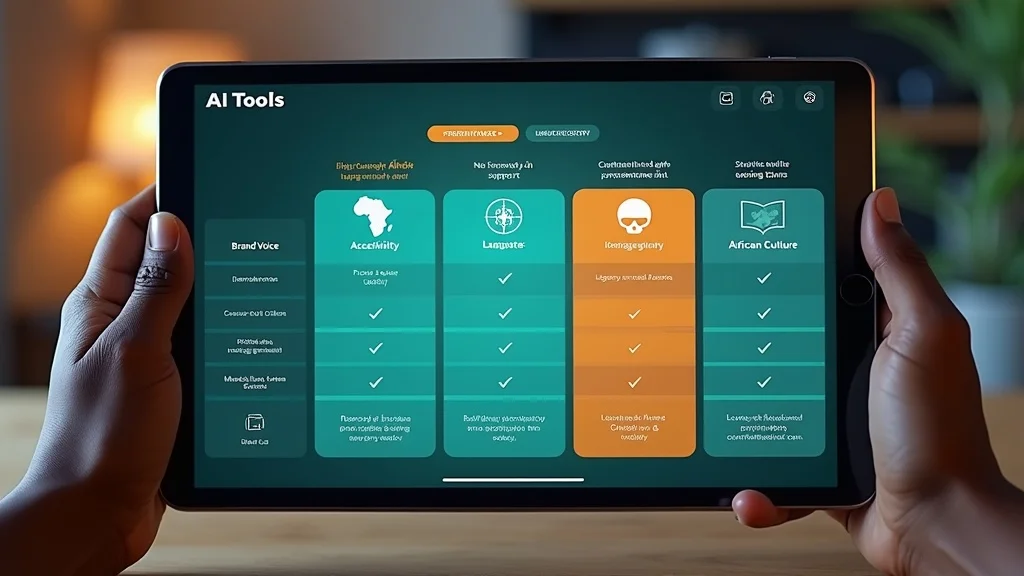
Thoughtful African woman entrepreneur selecting AI tools to support brand voice and local culture

Practical Steps for Women-Led Businesses to Use AI in Social Media and Marketing Strategy

Social media channels offer an incredible opportunity for women-owned businesses to reach larger audiences, but it’s easy for authenticity to slip when AI-generated content isn’t monitored. Start by using AI to suggest post ideas, track when your followers are active, or analyse which hashtags connect best in specific regions. But before sharing, always review and adapt the content—add local greetings, refer to events or phrases only your community would recognise, and ensure graphics and images reflect your identity.

Extend this intentionality to email marketing, website landing pages, and customer support. Use AI to save time—drafting first versions or summarising data—then add your own touch by double-checking tone and phrasing. As AI evolves, keep your team invested in continuous learning, new tool trials, and routine brand voice checks. When your technology and culture move hand in hand, your marketing strategy will always feel distinctly yours, no matter how much you work smarter with automation.

    Checklist: How Women Entrepreneurs Can Use AI Without Losing Their Brand Voice
  • Define your brand’s voice clearly before using any AI tool
  • Select AI tools that support local languages and custom responses
  • Invest in staff training on how to review and guide AI outputs
  • Customise all automated content with relevant African idioms, proverbs, and references
  • Collect feedback from your audience to ensure messages resonate authentically
  • Regularly audit your marketing channels for consistency in voice and tone
  • Document and update your guidelines as AI tools change and evolve

Creative African women marketers collaborating on social media strategy using ai tools and sticky notes

People Also Ask

How can women entrepreneurs use AI without losing their brand identity?

Women entrepreneurs can begin by setting clear guidelines for brand tone, values, and preferred language. As they integrate AI tools, they should customise templates, add local colloquialisms, and regularly audit automated content for authenticity. Keeping the business founder’s perspective at the heart of every AI-driven touchpoint ensures the brand remains unique and relatable, rather than generic or out of touch with its audience.

What are some AI tools suited for women-owned African businesses?

There are AI solutions tailored for African settings, such as messaging bots with support for regional languages, AI-driven social media schedulers that allow for cultural content customisation, and platforms offering analytics in relatable, locally-relevant dashboards. Tools that prioritise language diversity, story-based content creation, and personalised automation tend to serve women-led African businesses best, as they support genuine engagement and unique storytelling.

How can artificial intelligence enhance the marketing strategy of women-led businesses in Africa?

Artificial intelligence helps women business owners streamline repetitive marketing tasks, analyse social media trends unique to their region, and deliver more personalised content to local customers. By freeing up time for strategy and creativity, AI can increase impact—so long as business owners remain active in curating content, ensuring every message and interaction encapsulates their core values and African identity.

Tables: Comparing AI Tool Features for Women Business Owners

Feature comparison: AI tools tailored for women entrepreneurs (Accessibility, Language Support, Customisation for African nuances, Brand Voice Support)

AI Tool Accessibility Language Support Customisation for African Nuances Brand Voice Support
Tool A Mobile, desktop, cloud Yoruba, Swahili, English Regional idioms, local references Edit tone, upload brand guidelines
Tool B Mobile & web French, Hausa, Setswana Story templates for African SMEs Founder audio samples, phrase bank
Tool C Web-based dashboard Zulu, English, Arabic Festival calendars, proverbs Localised style editor

AI tools feature comparison for women business owners: accessibility, language support, cultural customisation, brand voice adaptation

FAQs: How Women-Led Businesses Can Use AI Without Losing Their Brand Voice

What’s the first step for a women business owner to start using AI responsibly?

The first step is to outline your brand’s values, communication style, and audience preferences. Once defined, seek AI tools that allow for customisation, language options, and regular manual review. This foundation ensures that even as you begin to automate, you stay in control of your narrative.

Can AI tools understand African cultural nuances and brand voices?

The best AI tools are designed for adaptability and learning. While they might not grasp cultural nuances instantly, when trained with local stories, language samples, and regular feedback from business owners, these tools can mirror and amplify authentic African brand voices over time.

Is there a risk of women-led businesses becoming indistinguishable when using AI?

Yes—if AI tools are used without input or oversight, businesses can begin to sound generic. To avoid this, women-led businesses should select tools built with flexibility, continuously inject their personality into content, and regularly update AI guidelines. This way, authenticity isn’t just preserved but strengthened.

Key Takeaways from How Women-Led Businesses Can Use AI Without Losing Their Brand Voice

  • AI is a powerful marketing strategy enabler for women business owners but must be approached intentionally
  • Preserving Africanness and founder identity is central to brand authenticity in AI-driven communication
  • Select AI tools with features that support local languages, storytelling, and customisation to protect your brand voice

Modern, professional documentary-style footage featuring African women business leaders discussing AI in their companies, lively offices and vibrant workplace energy.

Your Invitation: Celebrate Your Authentic Voice as an African Woman Business Leader

Take Your Place In The Anthology https://themeridian.africa/pioneer-voices

Conclusion: African women business owners can harness the power of AI and grow their businesses, but only by centering their own stories, languages, and values at every step. With the right tools and intentional strategies, AI will amplify—not erase—your voice.

As you continue your journey to blend technology with authenticity, remember that the landscape for African women entrepreneurs is constantly evolving. Staying informed and inspired by the broader community can help you anticipate new trends and opportunities. For ongoing updates, resources, and stories that celebrate the growth and resilience of women-led businesses across Africa, keep an eye on She Evolves Africa. By connecting with platforms dedicated to your advancement, you’ll be better equipped to lead with both innovation and heart—ensuring your brand voice remains as vibrant as your vision.

Sources:
The Meridian: Pioneer Voices
Business Insider Africa: Women Entrepreneurs Using AI
TechPoint Africa: Analytics & AI for African SMEs


AI Horizon

0 Views

0 Comments

Write A Comment

*
*
Please complete the captcha to submit your comment.
Related Posts All Posts

Why the Future of African AI Must Include More Women Builders

Imagine a future where artificial intelligence solutions across Africa are designed not just to solve problems, but to reflect the real, lived experiences of everyone on the continent. In this vibrant vision, African women take center stage as architects of digital transformation—embedding their creativity, culture, and community wisdom deep into the DNA of inclusive AI. Why is this the moment for African women to claim their space as builders in our AI future? This article offers a uniquely African perspective on why the future of African AI must include more women builders—and what is at stake if we do not act now. Setting the Stage: why the future of african ai must include more women builders To truly understand why the future of African AI must include more women builders, we first need to examine the evolving scene of AI innovation on the continent. African artificial intelligence is rapidly advancing, with new tech hubs springing up from Lagos to Nairobi, and voices in local AI research becoming louder and more influential. However, while this growth is impressive, it is not yet as inclusive as it could—and should—be. In many cases, African women remain sidelined due to historical barriers, societal expectations, and a lack of access to critical digital skills. If the AI future in Africa is to thrive, we must address these imbalances head-on, ensuring African women’s perspectives are deeply woven into AI systems, from data collection to language models and the policies that govern them. Inclusivity in AI is not just a matter of gender—it is about genuinely reflecting Africa’s linguistic, cultural, and socioeconomic diversity in the next generation of digital technologies. This is especially urgent as AI shapes education, health, finance, and governance across the continent. By enabling African women to become co-creators and leaders in AI ecosystem building, we guarantee that artificial intelligence solutions honour our unique realities rather than perpetuate external biases. The time is now for more African women to become recognized—and resourced—as AI builders, guiding a future where tech works for every African country and community. A snapshot of today’s African artificial intelligence landscape Across the continent, the AI ecosystem is engaging a new wave of entrepreneurs, researchers, and problem-solvers—from North Africa to sub-Saharan Africa. Pan-African initiatives focus on AI innovation tailored for local contexts, such as language models designed for African languages, and data collection systems that capture the lived experience of African communities. Yet, the representation within these ecosystems is uneven. While South Africa and Nigeria are home to flagship AI research labs and vibrant tech communities, many African women still lack access to digital tools and training opportunities. As the African AI landscape grows, it risks amplifying existing exclusion gaps without intentional interventions to support women at every level, from early education to leadership in AI policy and development. Inclusive AI in Africa is not an abstract goal—it's a practical necessity. When diverse voices, especially those of African women, participate in designing AI technologies, the resulting systems address the realities of agriculture, education, and healthcare, reflecting cultural nuances and linguistic diversity. Without this, AI systems risk "importing" solutions that don’t resonate with African lived experiences. This is why pan-African collaboration and local investment in women’s digital skills will define the next evolution of African artificial intelligence. As we consider the current landscape and the need for more inclusive participation, it's worth noting that platforms dedicated to empowering African women in technology are emerging across the continent. For example, initiatives highlighted by She Evolves Africa are actively supporting women’s journeys in tech and AI, offering resources and community for those seeking to become builders and leaders in this space. African women’s presence and potential in ai innovation Despite the challenges, African women are steadily stepping into the AI innovation space—as programmers, data scientists, social entrepreneurs, and grassroots activists. Their participation is especially dynamic in sectors such as health tech, fintech, natural language processing for African language models, and community education initiatives. Many women-led startups in Nigeria, Kenya, and Ghana are not only building advanced AI technologies but also focusing on how these tools can uplift underserved communities. The potential is immense: when these innovators are given adequate resources, their digital tools can transform sectors by addressing issues like maternal health, child education, agricultural resilience, and economic inclusion. Nonetheless, the number of African women leading large-scale AI projects or receiving funding remains disproportionately small. This often traces back to cultural and societal patterns that place technology outside the reach of young girls and women, perpetuating myths about who can be a “tech leader”. Unlocking the potential of African women in the AI future requires intentional strategies to break these cycles—and to celebrate those already blazing trails as examples for the generation of African women ready to shape the continent’s digital direction. What You'll Gain from This Insight Understand the significance of why the future of african ai must include more women builders Explore the interplay between inclusive ai, ai innovation, and African women Recognise the unique challenges and strengths African women bring to ai future Discover actionable steps to support women builders in African artificial intelligence Why the Future of African AI Must Include More Women Builders: The Foundation of Inclusive AI Bridging the gender and cultural gaps in African artificial intelligence The journey towards inclusive AI in Africa demands far more than simply adding women into existing structures. We need to reimagine what truly inclusive systems look like, breaking down not only gender but also cultural gaps that have shaped African artificial intelligence to date. Bridging these divides means designing AI research agendas that recognize African traditions, support local languages, and champion indigenous knowledge—areas where African women, especially those embedded in communities, bring unique insight. This fresh approach is about more than ticking boxes: it’s about rewriting what AI can do and whom it serves, ensuring that the AI future is not shaped by global AI narratives but by lived experiences and realities from across Africa. Culturally responsive AI systems have the potential to catalyse better outcomes for health, finance, rural livelihoods, and governance in African countries. Yet, African women often confront systemic barriers to entry—fewer role models, limited tech education, and societal messages that say innovation is for men. As more women become data scientists, product designers, and AI policy shapers, the doors open for solutions that are simultaneously innovative, authentic, and impactful for African communities. The future of African AI must champion these perspectives if it wishes to escape imported biases and genuinely serve its people. Inclusive ai: more than gender parity—why culture matters Focusing on inclusive AI is not about numbers alone. True inclusion means acknowledging the multiplicity of Africa’s cultures and histories—something that only happens when those with firsthand knowledge are builders, not just users, of AI systems. African women, grounded in their specific contexts, have the sensitivity to design AI technologies that resonate with local ethics, beliefs, and communication styles. This is especially critical for language models, which must capture nuances in African languages to avoid perpetuating harmful stereotypes or missing key information. By centering culture alongside gender in AI innovation, we ensure that Africa’s digital transformation reflects its richness and diversity. This approach is also powerful globally. When African women build AI, their lived experience shapes how technology interacts with users—spanning urban professionals, rural farmers, and everyone in between. Their visibility in the AI ecosystem counters narratives that cast Africa only as a consumer of new tech, repositioning the continent as an originator of globally relevant, culturally rooted AI solutions. This lays the groundwork for an AI future responsive to every African’s voice and story. Lessons from African women in technology leadership Throughout Africa, pioneering women are already demonstrating what inclusive AI innovation looks like. Their journeys—often marked by resilience, collaboration, and creative thinking—offer a blueprint for the future generation of African innovators. These women are not just coding algorithms but also rewriting narratives, advocating for community-led AI research, and teaching young people the power of digital skills. Their stories show how African AI can evolve beyond imported standards to address the layered realities of African societies. By drawing on their lived experiences, African women in leadership embody the principle that meaningful technology must emerge from, and be accountable to, the communities it serves. They show us that the future is possible—a future where every African country’s voice shapes the AI systems we rely on. As one leader puts it: “When African women build AI, they embed our histories, languages, and lived realities into the future.” The Crucial Role of African Women in AI Innovation African women as problem solvers rooted in community African women bring a distinctly community-oriented approach to AI innovation. Frequently called upon as caretakers, organisers, and grassroots problem solvers, they are acutely aware of the day-to-day challenges facing their families and neighbours. This makes them especially effective at defining local problems—and envisioning relevant AI-driven solutions. Whether it’s recognising gaps in maternal health access or developing AI systems for local language translation, these women see opportunities for digital technologies to uplift entire communities. Such community-driven perspectives are invaluable, particularly for south africa and other nations with high linguistic and cultural diversity. Their insights help AI systems account for real-world complexity, ensuring digital tools are adaptable, scalable, and sustainable within Africa’s multifaceted landscape. This not only benefits African women, young people, and rural innovators, but also amplifies Africa’s leadership role in shaping global AI policy and practice. How diversity drives authentic artificial intelligence solutions for Africa Diversity within AI innovation teams leads to more robust, context-aware solutions. African women contribute perspectives that challenge imported problem framings and bring relevance to local data governance, language models, and usage priorities. Inclusive teams—blending gender, age, and cultural backgrounds—are proven to catch biases early, advocate for better disaggregated data, and ask the critical questions that make AI trustworthy and effective for Africans. In the AI future, authentic solutions are those designed by and for local communities. African women, drawing from generations of lived experience, are best placed to anticipate pitfalls and ensure that new tech does not replicate old inequalities. Their leadership in inclusive AI is not just token representation—it is the engine that drives sustainable, people-centered innovation across Africa. Inclusive ai: debunking Western narratives about women in tech Western narratives about women in technology—often focused on individual achievement or narrow “empowerment” tropes—can feel disconnected from African realities. Here, African women’s collective efforts in problem-solving and their roots in familial, communal, and indigenous knowledge traditions create AI innovation with depth. These wider, more interconnected approaches lead to technologies that are truly inclusive and relevant for communities across the continent. By challenging externally imposed measures of success, African women redefine what it means to lead in AI systems. Their stories, achievements, and advocacy broaden the global understanding of technology—demonstrating that effective AI must reflect the full tapestry of lived experiences, values, and languages found across Africa. From Exclusion to Inclusion: Why the Future of African AI Must Include More Women Builders Historical barriers faced by African women with ai innovation African women’s journey in AI has often been hampered by intersecting historical barriers—limited infrastructure, costly digital tools, inadequate schooling in STEM, and underrepresentation in decision-making. Many across Africa still lack access to reliable internet, affordable hardware, or mentorship networks. Societal messages, sometimes unwittingly reinforced in education and media, suggest tech is not a “female” field. These obstacles are part of a much larger picture that has traditionally gatekept AI innovation from reflecting true African diversity. Yet, time and again, African women have persisted. From teaching themselves to code in rural hubs to leading community data collection for language models, their determination is driving incremental yet powerful changes in the AI ecosystem. Overcoming these barriers is essential not just for gender equity, but for bringing the full spectrum of African humanity into artificial intelligence. Navigating economic, societal, and cultural gatekeeping The economic hurdles for African women in tech can be steep—insufficient funding, limited access to venture capital for women founders, and less representation in formal AI education tracks. Societal expectations add yet more layers; many women juggle professional aspirations with family and community responsibilities. Culturally, there is often a scarcity of visible role models, making it harder for aspiring young people to picture themselves as AI leaders. However, a growing number of initiatives—such as mentorship programs, women’s tech collectives, and targeted scholarships—are starting to shift the landscape. These support structures not only build digital skills but also create pathways for women to move from “users” to “builders” of digital technologies. Such movements are vital to ensuring the ai future in Africa includes all voices. The transformation when African women have access to build AI When African women overcome these barriers and participate fully as AI creators, the changes are profound. They introduce new priorities in data governance, language inclusion, and local relevance; they lead projects that deeply impact health, education, climate resilience, and economic alternatives. Technologies built by African women are more likely to factor in ethical considerations and long-term community needs. The ripple effect is seen as more girls pursue STEM, entire communities adopt trusted digital solutions, and Africa’s AI ecosystem becomes both more innovative and more just. The AI future that emerges is one where every African has the chance to shape the technologies that will define tomorrow. Tables: Gender Participation in African Artificial Intelligence Sectors Sector Male Participation (%) Female Participation (%) Mixed Teams (%) Notes Health Tech AI 62 32 6 Rapid growth in women-led maternal health projects. AI Research Labs 71 22 7 Female participation increasing via mentorship initiatives. EdTech & Language Models 60 30 10 Women lead community-driven African language projects. Financial Tech AI 64 28 8 Recruitment bias remains a challenge for women. Voices From the Field: Stories from African Women Building AI “As an African woman, when I create AI tools, I challenge the assumptions written into global technology.” Rural innovators bringing maternal health solutions Women founders translating local languages with artificial intelligence Mothers designing edtech AI for African classrooms The Impact of Inclusive AI on Africa's Future Socioeconomic outcomes for communities when African women lead AI projects When African women lead in AI, outcomes ripple across entire communities. AI solutions become more attuned to real challenges: access to clean water, affordable healthcare, relevant education, and financial inclusion. Inclusive AI, shaped by women’s lived experiences, increases trust in digital systems and expands participation in the digital economy. This creates jobs for young people, bridges urban-rural divides, and empowers communities that previously lacked access to digital technologies. As African women advance as role models, they inspire new generations—demonstrating that technology can honor cultural legacies while driving visible, local change. Their impact is multiplied in communities across Africa, paving the way for a more resilient and prosperous AI future. ai future: building technologies that honour African diversity Inclusive AI supports the development of technologies that celebrate, rather than obscure, Africa’s diversity—whether that means supporting African language learning apps, rural healthcare bots, or systems adapted to local customs. This approach sows the seeds for sustainable development by emphasizing what is unique across the continent, rather than fitting communities into imported molds. The lasting legacy of this movement will be an AI future in which every African, regardless of gender or geography, can benefit from and trust in technology. By centering African voices, particularly those of women, Africa moves from being a passive receiver of global AI to a creative, self-determined innovator. Examples of inclusive ai catalysing positive change Concrete examples of inclusive AI in Africa abound. Women entrepreneurs in Ghana are building AI-powered maternal health apps tailored to rural realities. In Kenya, teachers-turned-developers are designing education bots that help children learn in multiple African languages. In Nigeria, local-led fintech AI helps women gain secure financial independence. These projects did not emerge from Western blueprints; they grew from the dreams and resilience of African women leaders. Such success stories demonstrate that prioritizing African women in AI innovation is not charity; it is the path to technologically just, community-rooted solutions that work for African countries—and, by extension, the globe. Watch: A short documentary segment highlighting African women AI pioneers sharing stories, collaborating, and demonstrating impactful AI projects in real-world community settings. Overcoming Challenges: Supporting the Next Generation of African Women Builders Bridging the digital divide with mentorship and access One of the greatest levers for change is direct mentorship and resource-sharing. Experienced African women in tech are increasingly mentoring the next generation, equipping girls with digital skills, and providing emotional and professional support. These mentorship networks break cycles of exclusion and help bridge the digital divide, especially for those in rural or underserved areas. Ensuring accessible training, scholarships, and role models is crucial to expanding the pipeline of women AI builders. By centering African women’s lived experiences in curriculum and leadership, we build an ecosystem where every girl can see a future for herself in AI innovation and development. The importance of community-led initiatives for inclusive ai While individual mentorship is critical, community-led initiatives scale impact and promote inclusive AI at a regional and national level. These programs—ranging from coding clubs in rural Kenya to innovation labs in South Africa—offer safe, supportive spaces for skill-building, idea-sharing, and team formation. They not only teach technical skills but also boost confidence and leadership capacity. Long-term, such grassroots initiatives drive equity by ensuring that the AI future is shaped by Africa’s multitude of cultures and languages. They enable women to lead the narrative on what digital transformation should look like in their contexts, rather than waiting for solutions to be imported or imposed. Lists: How to Empower African Women in AI Innovation Invest in local training and scholarships for African women Establish mentorship programmes linking current builders with aspiring girls Support community-driven artificial intelligence projects Create networks to share knowledge, lessons, and opportunities Work to eliminate biases in funding and hiring in the ai future People Also Ask: Why do we need more women in AI? Why do we need more women in AI? Answer: More women in AI ensures broader perspective, more equitable technologies, and authentic representation of African realities in artificial intelligence solutions. This shifts the ai future towards inclusive ai outcomes that benefit all communities. People Also Ask: What 3 jobs will not be replaced by AI? What 3 jobs will not be replaced by AI? Answer: While AI continues advancing, empathetic caregiving, cultural heritage work, and high-touch innovation roles—often led by African women—remain resilient and crucial. Their value in the ai future speaks to the need for inclusive ai and careful integration of artificial intelligence. People Also Ask: What is the future of AI in Africa? What is the future of AI in Africa? Answer: The future of African artificial intelligence lies in embracing local context, having African women builders take leadership roles, and centering inclusive ai to ensure sustainable, relevant technology for all. People Also Ask: Why are women over 50 the future of AI? Why are women over 50 the future of AI? Answer: Women over 50 bring lived experience, wisdom, and cultural grounding. In Africa, their leadership in inclusive ai builds bridges between generations and grounds ai future solutions in real needs. FAQs: why the future of african ai must include more women builders How can inclusive AI address challenges unique to African contexts? By including African women as builders, inclusive AI is designed around local challenges, spoken languages, and societal priorities—making digital solutions relevant and effective. Why should African women be encouraged to take up AI innovation? Their lived experiences and community insights result in technology that reflects true African realities, catalysing change where it matters most. What are the real benefits of diverse teams in the AI future? Diverse teams—gender, cultural, generational—reduce bias, increase creativity, and lead to AI systems that serve all Africans. Which sectors most need women's insights in artificial intelligence? Sectors like health tech, EdTech, financial inclusion, and language modelling benefit enormously from women’s leadership and vision. How does gender balance impact the future of African AI? A balanced AI ecosystem paves the way for authentic, trustworthy, and inclusive AI, unlocking potential across Africa. Key Takeaways from Why the Future of African AI Must Include More Women Builders African women are pivotal to building authentic, inclusive ai. ai innovation is stronger with diverse voices at the table. Supporting women builders will shape the ai future for generations. The journey toward inclusive ai must be led within African nuances, not imported narratives. Looking Ahead: why the future of african ai must include more women builders How readers can support African women in AI and become part of the transformative ai future The road ahead for African AI is at a crossroads—either driven by imported solutions or rooted in genuine local leadership, with women at the core. You can be part of this positive transformation: invest in mentorship, support African women’s digital journeys, amplify their stories, and advocate for inclusive ai policy that ensures no voice is left out. Every action counts toward a technologically just, truly African AI future. Take Your Place In The Anthology https://themeridian.africa/pioneer-voices If you’re inspired by the movement to empower African women in AI, there’s a broader conversation unfolding about the future of women’s leadership and innovation across the continent. Exploring platforms like She Evolves Africa can offer deeper insight into how women are shaping not only technology, but also culture, entrepreneurship, and social change. By engaging with these wider narratives, you’ll discover new ways to support, collaborate, and learn from the trailblazers redefining Africa’s digital destiny. The journey toward a more inclusive AI future is just one chapter in the evolving story of African women’s impact—your next step could help shape the next breakthrough. Conclusion: The future of African AI depends on the inclusion of more women builders. Let’s empower, invest, and amplify their voices so Africa’s digital future belongs to everyone. Sources Against All Odds: Increasing African Women's Influence on ...How Will AI Affect the Construction Industry for Women ...Building an Inclusive AI Future: Four Priorities for Africa's YouthThe future of AI in Africa, built by Africans, that benefits ...African women driving innovation: From barriers to ...AI and Gender in Africa

The Real AI Opportunity for Women in Tech and STEM Across Africa

Imagine a bustling tech hub in Lagos, Nairobi, or Accra: diverse teams collaborate, digital screens radiate code, and young women lead spirited discussions about AI-driven solutions for community challenges. This isn’t just a vision of the future—it’s unfolding right now. Across Africa, the real AI opportunity for women in tech and STEM is breaking traditional barriers and transforming what leadership, creativity, and innovation look like. As new voices rise and cultural strengths shine, Africa’s AI revolution is distinctly local, changing not only the face of technology but also reshaping societies and entire economies. A New Era: Setting the Scene for The Real AI Opportunity for Women in Tech and STEM Across Africa “African women have always been innovators—now AI offers a new frontier for their creativity and leadership.” The landscape for women in tech across Africa is changing fast. Today, African women are finding more meaningful and authentic ways to participate in the digital economy—ways rooted in culture, local problem-solving, and community values rather than simply following Western paths. Despite obstacles, these transformations offer new hope for young women and girls who dream of building careers at the cutting edge of artificial intelligence and STEM fields. As communities and governments invest in infrastructure and education, a new era emerges where African women are not just consumers but also creators and leaders in the tech industry. For many, this is more than economic growth—it’s a movement for gender equality and digital empowerment. What does this mean for you as a young woman, policy maker, educator, or tech business owner in Africa? The real AI opportunity for women in tech and STEM across Africa is about ownership, visibility, and impact. African women can now drive innovation, build local solutions with global potential, and act as role models for the next generation in ways unique to the continent’s context. This article will uncover those nuances, spotlighting bold changemakers and providing practical ideas for stepping into this exciting frontier. What You'll Learn About The Real AI Opportunity for Women in Tech and STEM Across Africa The unique landscape of AI for African women in tech Barriers, breakthroughs, and role models shaping the future How young women in Africa can shape the AI revolution Culturally attuned strategies and stories from African women in technology Understanding the Landscape: Women in Tech and AI in Africa The Growth of Women in Tech Across Africa Over the last decade, the number of african women entering the tech industry has steadily grown. More young women are enrolling in STEM fields, thanks to targeted training programs, scholarships, and community-driven educational initiatives. In countries like South Africa, Nigeria, and Kenya, coding bootcamps and innovation hubs led by African women are helping to close the gender gap. While systemic barriers remain, a fresh crop of women in technology is rising—driven by a passion for software development, data science, and artificial intelligence. The adoption of digital tools and higher education in STEM empowers women with the technical skills crucial for today's competitive workforce, and inspires others to dream beyond traditional expectations. This growth is not only about numbers but visibility. As more african women in tech stand out, they inspire their peers, catalyze cultural shifts, and challenge the stereotype that tech is a space primarily for men. The next generation will find inspiration close to home, seeing women who look like them leading projects, launching startups, and speaking at global AI events. Progress is incremental but real, supported by mentors, networks, and a renewed sense of possibility for African women in technology. African Women in Technology: Historical and Cultural Context African societies have a long tradition of women as knowledge bearers and problem solvers, even though such contributions haven’t always been visible in formal STEM spaces. While the colonial legacy and Eurocentric curricula have historically minimized women’s roles in science and technology, local communities still relied on women’s insights in fields as diverse as medicine, agriculture, and commerce. Today, as AI and technology become central to African economies, there is a movement to honour this cultural inheritance—and deliberately position African women as leaders and architects of the continent’s digital future. African women in technology leverage both ancestral wisdom and cutting-edge technical skill, blending tradition with innovation to offer fresh perspectives unseen elsewhere. By understanding and embracing this unique historical context, the real AI opportunity for women in tech and STEM across Africa can drive solutions that are rooted in communal values, indigenous knowledge, and local realities. Technology adoption in Africa often takes forms that reflect these traditions, remaking global innovations to suit African lives. This locally driven evolution opens new careers, leadership roles, and chances for economic growth for African women and their communities. Young Women: Emerging Voices Shaping STEM A new generation of young women is entering STEM fields across Africa, passionate about leveraging technology for social good. Their voices are reshaping the industry—bringing issues like inclusive design, ethical AI, and rural connectivity to the forefront. Often, these young innovators grew up in communities affected by limited opportunities or systemic barriers, and their first encounters with digital tools came through NGO-led coding camps or mobile-based training. Yet what sets them apart is their ability to use technology not just for personal advancement but for the collective good. These emerging leaders act as catalysts, encouraging others to break from traditional gender expectations and envision new possibilities in AI, robotics, and engineering. Through mentorship, community collaborations, and visible successes, these african women are writing a new narrative for women in technology across Africa, one grounded in resilience, resourcefulness, and the power to drive innovation from the ground up. As the movement for women in tech gains momentum, it's important to recognize that progress is often incremental and shaped by ongoing efforts to bridge the digital divide. For those interested in the evolving landscape and the broader context of women's empowerment in Africa, exploring platforms dedicated to African women's growth and leadership can provide valuable perspectives and resources. Breaking Barriers: Challenges African Women in Tech and STEM Face Today Structural and Societal Barriers for African Women in Technology Despite progress, african women in technology continue to face deeply rooted structural and societal challenges. Many women remain less likely to access quality education and training in tech due to the combined effects of poverty, inadequate infrastructure, and traditional gender roles. Systemic barriers persist—not only in the availability of resources and opportunities but also in how communities perceive women's capabilities. For some, the expectation to prioritise family or household duties is held above pursuing a passion for AI or software development. Additionally, the digital divide isn't confined to devices—it extends to internet connectivity, technical mentorship, and networks essential for career growth. The tech industry can feel isolating for African women, with fewer visible role models and a lack of representation in leadership roles. As a result, young women may view STEM fields as inaccessible or not “meant for them. ” Changing this narrative requires a proactive approach—amplifying success stories, supporting girls through school and university STEM programmes, and ensuring industry doors are truly open to all. Access to Education, Infrastructure, and Networks “The digital divide for African women isn’t just about devices—it’s about deeply rooted systemic access issues.” Quality education and training remain elusive for many african women. Persistent issues include under-resourced schools, inconsistent electricity, high data costs, and few female-focused educational programmes in STEM. Girls are often times less likely to attend higher education or technology workshops compared to their male peers, especially in rural or marginalized communities. Even when educational opportunities exist, supportive networks for women in tech are less developed, hampering ongoing mentorship and skills development. Infrastructural gaps also block access for aspiring women in tech. Without affordable, high-speed Internet or public-access computers, it becomes harder for women to learn coding, join online networks, or participate in remote training. Overcoming these barriers demands cross-sector cooperation—engaging government, local and international NGOs, and the private sector—to create scalable solutions tailored to the unique African context. Navigating Cultural Expectations and Stereotypes Stereotypes and social expectations still discourage many African women from entering or staying in STEM fields. Sometimes, pursuing a career in AI or software development is seen as “unfeminine” or distracting from family responsibilities. These biases can start early—with families nudging girls away from technical interests or schools failing to encourage female STEM achievement. In the workplace, cultural norms may discourage women from taking up leadership roles or from speaking out about their achievements. Addressing these cultural challenges requires more than policy changes—it involves role models, community outreach, and storytelling that celebrates women's successes in technology. When local women see their peers and neighbours succeeding in the tech industry, pursuing higher education, and working at the forefront of artificial intelligence, new possibilities emerge for everyone. Why the Real AI Opportunity for Women in Tech and STEM Across Africa Is Different Comparing the Real AI Opportunity for Women in Tech and STEM: Africa vs. Western Regions Criteria Africa Western Regions Access Emerging, often rural/urban divides; rapid mobile growth Broad, established digital infrastructure Support Systems Community networks, peer mentoring, local NGOs Formal educational and industry mentorship Cultural Context Collectivism, intergenerational learning, tradition/innovation blend Individualism, professional identity focus Available Funding Growing but competitive; emphasis on local impact Established venture capital, corporate grants Representation Increasing, but from a lower baseline Higher, but still underrepresented Cultural Strengths as a Springboard The real AI opportunity for women in tech and STEM across Africa is shaped by distinct cultural strengths. African communities value collective achievement, resilience, and community-driven solutions—factors that give local women a natural advantage in problem-solving and technology adaption. Unlike Western narratives centred on individual achievement, African ecosystems flourish on shared success. Initiatives such as women-led hackathons, group mentorship, and localised training programmes enable young women to thrive through peer-to-peer support, knowledge sharing, and collective empowerment. This mindset doesn’t just empower women individually—it drives broader economic growth by bringing diverse perspectives and locally relevant innovations into the AI space. Culturally attuned strategies, grounded in African realities, can support women as both learners and leaders, transforming challenges into opportunities for themselves, their families, and their wider communities. Innovative Applications of AI Led by African Women African women are already at the forefront of AI-driven change, particularly in agriculture, fintech, and healthcare. From designing smart irrigation systems that optimize water use for rural farmers, to building AI-powered mobile health centers diagnosing diseases in remote villages, these innovators blend technical expertise with deep understanding of local needs. Several have founded startups that provide financial access for the unbanked, while others have created inclusive educational apps in local languages. Their locally inspired innovations underscore why the real AI opportunity for women in tech and STEM across Africa is so powerful. Instead of copying Western models, African women are creating AI applications designed for the continent's unique circumstances, harnessing data, mobile technology, and indigenous knowledge to make a real impact in their communities. Spotlight: African Women in Tech Breaking New Ground Across the continent, African women in tech are leaving their mark—from rising stars in software development to AI researchers tackling critical health data gaps. Their achievements are recognized at international summits, and they serve as consultants for major technology companies. Notable figures include programmers overcoming limited infrastructure to launch award-winning apps and engineers leading pan-African collaborations on responsible AI. These pioneers demonstrate what is possible when African women get the resources, support, and recognition they deserve. By sharing their journeys, they become essential role models, showing the next generation that “AI for Africa” must include the voices of African women in technology. Embracing Local Nuance: African Realities Shaping the Real AI Opportunity African Women Solving Africa-Specific Challenges with AI What truly sets the real AI opportunity for women in tech and STEM across Africa apart is how women use AI to solve African problems. For example, AI-powered translation tools break language barriers in education, while health bots designed by local teams deliver information on maternal care in rural dialects. In urban areas, women-led startups use AI to analyse transport patterns and improve public safety. These examples show how african women leverage local insight to drive innovation tailored to local realities. Importantly, these solutions are not simply technological copycats—they’re built on the deep cultural understanding and resourcefulness that African women bring to every project. Their work ensures AI becomes more inclusive, practical, and transformative for communities across the continent. Case Study: South Africa’s Leading Women in Technology In South Africa, several women in tech have risen to national and international acclaim, becoming champions for girls' education and equity in STEM. From coding educators who run grassroots bootcamps in townships, to AI scientists advocating for responsible data use, their work breaks stereotypes about who belongs in the tech industry. Their successes—and the communities they build—spark similar movements in neighbouring countries, showing how local leadership can inspire massive change. As more South African women publish influential research, mentor the next generation, and consult for multinationals, they embody what’s possible when women in technology are empowered and included at every level. How African Societal Structures Enable Collective AI Success Unique to Africa’s context is the role of collective, intergenerational social structures. Extended families, kinship groups, and faith communities often rally behind women pursuing STEM, making inclusion not just a personal goal but a community investment. Men typically reinvest in their own learning, while women’s advancements in tech have wide-reaching effects—lifting entire families and villages. This communal support makes women in tech more resilient and collaborative, reinforcing the continent’s collective approach to progress and gender equality. When women succeed in STEM, their achievements are celebrated by whole communities, spurring others to enter tech fields, break digital divides, and drive economic growth. This collective mindset is one of Africa’s greatest assets in nurturing future female AI leaders. Mentors, Role Models, and Communities: Women in Tech Networks Across Africa Women in Tech Mentorship Initiatives for Young Women Mentorship is a powerful driver for women in tech across Africa. Initiatives like “She Codes Africa,” “Women in Machine Learning and Data Science (WiMLDS),” and university-led programmes offer young women access to experienced professionals, guidance, and networking opportunities. These mentorships dispel myths about the inaccessibility of STEM and give students the encouragement and technical skill they need to thrive. Through these programmes, mentors help young women frame setbacks as learning opportunities, refine technical skills, and build confidence in their unique contributions to the AI sector. Not only do they provide one-on-one support, but they also help mentees navigate cultural stereotypes and advocate for themselves in male-dominated environments. Building Communities: Collaborative Spaces for African Women in Technology Tech hubs led by African women Support groups for young women entering STEM Notable African women in technology to follow Community is another cornerstone of the real AI opportunity for women in tech and STEM across Africa. Across major cities and even rural regions, African women have organized coding clubs, online forums, and peer support groups where they can share knowledge, resources, and career opportunities. Tech hubs and innovation labs, many led by African women, provide critical access to digital tools and expertise, inspiring the next generation and driving innovation forward. These collaborative networks foster an environment where challenges are met with creativity and solidarity—ensuring that African solutions are designed by those who best understand Africa's needs. By following prominent African women in technology on social media and participating in local groups, aspiring technologists can quickly connect to valuable mentorship, funding opportunities, and peer-driven support. The Path Forward: Empowering the Next Generation Cultivating Digital Skills and Confidence in Young Women To fully realise the real AI opportunity for women in tech and STEM across Africa, dedicated efforts to cultivate digital skills and confidence among young women are crucial. Transformative educational programmes, hands-on workshops, and tech competitions must be scaled to reach girls in both urban and rural communities. Early exposure to coding, robotics, and problem-based AI projects demystifies technology, making it accessible and exciting. Equipping girls with technical and leadership skills, and normalising their presence in STEM, shapes new generations who see themselves as innovators and solution-drivers. Confidence built through small wins—such as building an app or joining an online forum—creates lifelong digital agency. Policy and Advocacy for Greater Inclusion in Women in Tech “Investing in girls’ education and tech exposure is investing in Africa’s collective future.” For sustainable progress, policy and advocacy are paramount. Governments, international donors, and businesses must partner to strengthen education infrastructure, fund targeted scholarships, and remove systemic barriers for African women in technology. Policies that mandate gender parity in educational admissions and professional hiring, protect women from discrimination in the workplace, and support STEM outreach at all levels are important drivers of change. Additionally, ongoing advocacy—by local leaders and grassroots movements alike—ensures that real change occurs, with women at every table where decisions about Africa’s digital future are made. People Also Ask: The Real AI Opportunity for Women in Tech and STEM Across Africa How are African women leading the AI revolution in technology? African women are spearheading the AI revolution by founding startups that address local challenges, building inclusive educational projects, and leading research in critical sectors like healthcare and agriculture. Their leadership is visible in the creation of AI-powered mobile health apps, translation tools for indigenous languages, and digital financial platforms tailored for African contexts. By blending cultural insight with technical ability, these women ensure that AI in Africa serves communities holistically and sustainably. What are some challenges faced by African women in STEM? Key challenges include limited access to quality education, deeply rooted cultural stereotypes, and underrepresentation in leadership roles and decision making. Systemic issues such as inadequate infrastructure, high costs of digital tools, and bias in schools or workplaces make it harder for African women to pursue and progress in STEM careers. Yet, with growing networks, mentorship, and advocacy, many women are overcoming these obstacles to thrive in technology. How can young women in Africa get involved with AI and technology? Young African women can get involved by participating in coding bootcamps, joining local or online tech communities, seeking mentorship from established professionals, and taking part in competitions focused on problem-solving with AI. Leveraging free or subsidised educational resources, enrolling in university STEM programmes, and following African women role models on social media can open up pathways into technology and AI fields. What is the impact of women in tech on Africa’s economy? When more African women participate and lead in tech, the entire economy benefits. Increased female participation boosts diversity in problem-solving, stimulates new industries, and leads to more inclusive, scalable solutions. Closing the gender gap in STEM and AI opens opportunities for job creation, improved healthcare, and community development—driving economic growth across Africa. FAQs on The Real AI Opportunity for Women in Tech and STEM Across Africa How can women in Africa start a career in AI? Starting a career in AI involves gaining foundational knowledge through online courses, attending local workshops, and joining supportive communities. Many NGOs, universities, and tech hubs across Africa offer resources designed specifically for women. What organisations support African women in technology? Organisations like She Codes Africa, AkiraChix, Women in Tech Africa, and more provide mentorship, training, and networking to support African women at every stage of their tech journey. Is there funding for African women in tech and STEM? Yes, multiple local and international initiatives offer scholarships, grants, and seed funding for African women-led tech projects and STEM education—often focusing on impact-driven enterprises and grassroots initiatives. Key Takeaways from The Real AI Opportunity for Women in Tech and STEM Across Africa The real AI opportunity for women in tech and STEM across Africa is locally nuanced Mentorship and role models are critical AI adoption can bridge gender and digital divides Your Next Step on the Journey Take Your Place In The Anthology https://themeridian.africa/pioneer-voices The journey for women in tech and STEM across Africa is just beginning, and the landscape is rich with opportunity for those ready to shape the future. If you’re inspired to deepen your understanding of women’s empowerment, leadership, and the evolving digital space, consider visiting She Evolves Africa for broader insights and stories. Exploring these resources can help you connect with a wider network, discover new role models, and find inspiration to take your next step—whether that’s launching a project, joining a community, or advocating for change in your own sphere. Sources: She Codes Africa Women in Machine Learning & Data Science AkiraChix Women in Tech Africa

How AI Can Expand Visibility for African Women Building Online

Have you considered how artificial intelligence could redefine the narrative for African women in business, offering visibility and opportunities previously out of reach? The surge of digital transformation across Africa has empowered many, but rarely have women in business—particularly those from underrepresented backgrounds—been spotlighted as key beneficiaries. In this article, we take a closer look at how AI can expand visibility for African women building online, understanding the very real impact of technology, and why it matters right now. Can Artificial Intelligence Truly Level the Playing Field for African Women in Business? At the heart of Africa’s digital revolution lies a pressing question: Can artificial intelligence truly create equitable opportunities for women in business? Historically, African women entrepreneurs have experienced unique barriers, often shaped by societal expectations, limited access to digital infrastructure, and a visibility gap in global markets. As AI begins to shape the digital economy, we see new possibilities emerge, from AI-powered content creation to smarter networking solutions. However, it's not just about having access to AI tools or cloud infrastructure. It’s about ensuring these systems are inclusive, culturally tuned, and able to amplify authentic African narratives rather than override them. When we examine how AI can expand visibility for African women building online, it becomes clear: there is no one-size-fits-all solution. The stories of women across the continent show a gradual shift from being mere users of technology to becoming digital innovators who influence the AI ecosystem itself. The journey is complex, but every step taken is an act of redefining power, position within digital systems, and self-determination. Examining Historical Visibility Challenges for African Women For decades, African women in business have faced an uphill battle for recognition. Their position within the digital economy was shaped by colonial legacies, informal work patterns, and a digital divide that entrenched existing inequalities. Access to reliable internet, digital infrastructure, and business resources has too often been out of reach, particularly for those in rural regions. These structural constraints meant that even as Africa’s digital development accelerated, women were at risk of being left behind. The lack of targeted AI strategies and relevant public services, perpetuated by gaps in data governance and inclusive cloud infrastructure, deepened this divide. Moreover, societal biases and underrepresentation in digital storytelling meant the stories of African women often went unheard, uncelebrated, or were seen through a Western lens. Understanding the gravity of these often overlooked challenges is crucial to appreciating why AI-powered transformation must—by design—centre African women’s lived experiences. As African women continue to navigate these challenges, it's important to recognize that the digital landscape is still evolving. For those interested in the ongoing development of platforms and resources dedicated to empowering women online, exploring initiatives like She Evolves Africa can provide further insight into community-driven support and digital empowerment. Breaking the Cycle: How AI Is Creating New Pathways Enter artificial intelligence: a set of tools, platforms, and digital systems that are not bound by geography or tradition. AI has the potential to automate business workflows, personalise outreach, and even challenge bias in hiring through objective AI algorithms. For entrepreneurial African women, these breakthroughs are not just technological—they are deeply personal. They represent a chance to break cycles of exclusion and reframe digital sovereignty on their own terms. Empowered by AI-generated insights and smart digital service delivery, more women are able to build their brands, connect with local and global markets, and share their stories—sometimes for the first time. The process, however, requires conscious effort against the risk that AI systems, poorly designed or governed, may perpetuate historical biases unless African women’s voices are indispensable in the design and governance of these systems. What You'll Learn About How AI Can Expand Visibility for African Women Building Online Unique African women’s perspectives on technology and entrepreneurship How the AI ecosystem is transforming women in business Strategies to overcome barriers often overlooked in African contexts The role of community-driven artificial intelligence Actionable steps for leveraging AI-powered platforms The AI Ecosystem and African Women: A Matter of Context Understanding the AI Ecosystem in Africa The AI ecosystem in Africa is as diverse as the continent itself, shaped by local innovation, regulatory priorities, and unique social dynamics. From grassroots technology incubators in Lagos to government-sponsored digital development hubs in South Africa, there’s a vibrant cross-section of actors. African governments are making strategic moves, investing in digital infrastructure while tackling digital sovereignty, ensuring services across regions reflect the aspirations and needs of their citizens. Yet, despite these advances, digital access and digital systems remain uneven—often overlooked in discussions dominated by narratives from the United States or Europe. For African women, especially those leading in the digital space, understanding these layers is essential to effectively harness AI-powered opportunities. It’s about finding the right fit between global AI tools and local realities and recognizing the subtle nuances in how technology is adopted and adapted in African countries. How AI Can Expand Visibility for African Women Building Online in Local Markets Across the continent, AI is revolutionizing how women in business engage with their communities and markets. By automating repetitive tasks, offering personalised recommendations, and opening up new communication channels, AI-powered platforms support entrepreneurs as they build their brands both locally and beyond. In local markets, these advancements mean African women can position their businesses competitively without relocating or compromising their cultural identities. More importantly, AI enables entrepreneurs to tailor their marketing messages for diverse audiences, adapt quickly to changing market trends, and access real-time data for agile decision-making. For many, this has translated into increased brand visibility, better resource management, and an amplified voice in sectors previously inaccessible. It is a journey from digital obscurity to recognition—and the rise of women entrepreneurs signals the broader transformation of the African AI economy. Women in Business: Overcoming Barriers and Bias with Artificial Intelligence Often Overlooked: The Nuances in African Women’s Online Stories What is often overlooked is the sheer diversity of experiences among African women online. These women navigate not only gender biases but structural constraints unique to their countries and communities. Informal work arrangements, limited public services, and social expectations can turn simple digital engagement into a complex journey. The challenge is not just introducing women to digital tools, but recognizing and amplifying their authentic voices within the fast-moving AI ecosystem. With the increasing reliance on AI systems, issues like data governance and inclusive AI design have come to the fore. If digital infrastructure is not mindful of the specific needs—and stories—of African women, the result risks perpetuating stereotypes rather than dismantling them. By collectively reimagining the role of women in business as creators, storytellers, and innovators, the next phase of Africa’s digital economy will be far richer and more representative. "African women are redefining digital entrepreneurship, using AI to bridge not just a digital divide, but a visibility divide." Leveraging AI for Content Creation and Personal Branding How AI-Powered Tools Are Elevating African Women’s Brands Online The rise of accessible AI-powered content creation has been transformative for African women building a digital presence. By simplifying visual design tasks, generating cultural insights, and optimizing social media scheduling, these tools enable entrepreneurs to focus on their authentic stories. Whether through visually appealing posts on Canva AI or insightful product launches guided by AI-driven analytics, visibility is being turbocharged for women across a spectrum of industries—from fashion in Kenya to education in South Africa. Key to these advancements is the ability to engage with communities on multiple levels—locally relevant messaging, collaborative knowledge-sharing, and continuous personal growth. As more African women leverage these smart platforms, the power shifts from gatekeepers to genuine creators, embodying not just an increase in visibility but in agency and impact within the digital ecosystem. Automation of social media scheduling tailored to local communities AI-generated insights for culturally relevant content Innovative ways to access mentorship and collaboration Case Study: African Women in Business Using AI to Build Communities Across Africa, there are powerful stories of women leveraging AI to carve out connected, self-sustaining online communities. Consider the journey of a Nigerian tech founder who, through AI-enhanced customer outreach, rapidly scaled her digital platform, connecting thousands of women in business with tailored resources and mentorship. A similar narrative emerges from Ghana, where lifestyle coaches and educators use AI tools to create visually compelling campaigns that resonate locally and globally, further closing the visibility gap. Even in South Africa, where the digital divide once prevented many from accessing vital markets, AI is enabling the rapid production and marketing of high-impact educational content. These stories aren’t anomalies—they’re blueprints for future digital sovereignty and serve as practical proof of how AI can expand visibility for African women building online. Tables: Comparing AI Tools Empowering African Women Online AI Tool Key Feature Visibility Benefit African Women User Example ChatGPT Content Ideation Increases publishing frequency Fashion entrepreneur in Kenya Canva AI Visual Design Assistance Visually stands out on social feeds Lifestyle coach from Ghana Lumen5 Video Content Creation Easy video marketing Education advocate in South Africa People Also Ask About How AI Can Expand Visibility for African Women Building Online How can African women use AI to gain more recognition online? African women can use a variety of AI tools—such as ChatGPT for content creation and Canva AI for compelling visuals—to increase their presence and impact. By strategically automating tasks like social media posting and tapping into AI-powered data insights, women in business can share culturally relevant content and connect with wider audiences. Building up a personal and business brand with AI not only drives visibility but sets the stage for greater leadership within the African digital economy. Are AI-powered platforms culturally sensitive for African women? AI-powered platforms have progressed, but many are still striving to achieve full cultural sensitivity. The best results are seen when African women lead the adaptation and localization of these AI systems, ensuring that data governance reflects local values and digital sovereignty. Increasing representation in AI governance and encouraging community-driven innovation ensure that technology respects and enhances—not erases—African identities and stories. What challenges do African women face when building online with AI? African women often face layered challenges: limited digital infrastructure, lack of affordable and reliable internet, data privacy issues, and existing inequalities in digital skills education. There’s also the risk of algorithmic biases and AI systems designed without sufficient context, leading to reinforced stereotypes or exclusion. Overcoming these requires not just more AI tools, but holistic support—policy, mentorship, and targeted AI strategies that authentically support women in business and honor local realities. Is AI accessible to grassroots women entrepreneurs in Africa? Access to AI varies widely across African countries and communities. In urban centres and well-connected regions, digital tools are increasingly mainstream. Grassroots women entrepreneurs, particularly in rural or informal work settings, face greater barriers—including costs, language, and digital literacy. Nevertheless, expansion of cloud infrastructure, open source initiatives, and mobile-first AI solutions are rapidly making these resources more inclusive, helping bridge the digital divide and spotlighting women at every level of the digital economy. Authenticity and Representation: Ensuring African Narratives Aren’t Lost Preserving Voice and Identity Through Artificial Intelligence As AI redefines content generation, there’s a growing awareness of the need to protect and elevate indigenous African stories. If left unchecked, AI algorithms may favour mainstream, globalised narratives at the expense of local authenticity. It’s essential for women in business to maintain creative control and for AI governance to include more African voices and decision-makers within its ranks. Proper data governance and policy design can safeguard the nuances and identities that make African digital storytelling unique. African women, as podcasters, content creators, and community leaders, are at the forefront of this digital renaissance. By integrating personal stories with AI-powered platforms, they ensure their perspectives are seen, heard, and respected worldwide. This dynamic raises a call for more robust, locally-led digital development, formal recognition of informal work, and tech solutions tailor-made for Africa’s diverse cultures. FAQs About How AI Can Expand Visibility for African Women Building Online Which AI tools are best suited for African women building digital businesses? Some of the most helpful AI tools are ChatGPT for content, Canva AI for visual assets, Lumen5 for videos, and mobile-based solutions designed for local contexts. How does AI help in breaking stereotypes about African women? AI platforms, when thoughtfully implemented, allow women to share authentic African stories, showcase leadership, and push back against one-dimensional narratives by broadening representation in all sectors. What local initiatives support women in business using AI in Africa? Numerous grassroots organisations, government-led digital skill programmes, and private incubators support African women through training, mentorship, and AI-driven campaigns adapted to local needs. Does AI perpetuate or reduce biases for African women online? While some AI systems may unintentionally reinforce existing inequalities, inclusive data governance and intentional design have the power to reduce bias and open new paths for women in business. How can rural African women use AI for visibility? Mobile-friendly AI tools and community-focused platforms, combined with local digital literacy efforts, help rural women bridge the digital divide and establish strong online presences—no matter their location. Key Takeaways on How AI Can Expand Visibility for African Women Building Online AI can amplify authentic African women’s voices online Tech solutions work best when built by and for African women Visibility is a journey shaped by context, culture, and collaboration AI-powered tools are unlocking new pathways for women in business Take Your Place In The Anthology: Championing African Women’s Online Presence Every African woman’s story is a vital part of the continent’s digital legacy. Ready to share yours? Take Your Place In The Anthology and be counted among the trailblazers transforming Africa’s AI-powered future. Conclusion African women in business are redefining digital spaces with AI as both tool and catalyst. The path forward demands culturally aware technology, equitable access, and resilient communities—fueled by authentic voices. As you reflect on the transformative power of AI for African women building online, remember that the journey toward digital empowerment is ongoing and collaborative. Exploring broader initiatives and platforms that champion women’s voices can open doors to new partnerships, mentorship, and inspiration. If you’re eager to discover more about the evolving landscape and connect with a wider network of changemakers, visit She Evolves Africa for stories, resources, and opportunities designed to elevate women across the continent. Your next step could be the spark that shapes the future of African women’s digital visibility. Sources The Rise and Rise of AI: How it Impacts Women in BusinessWhy gender-inclusive AI matters for AfricaCould AI technologies be harnessed to break down ...Building AI on African termsAI and Gender in Africa

AI Africa Digital News Nexus

AI is reshaping Africa’s future, and staying informed is essential. Subscribe to updates from leading AI thought leaders, research centers, African tech news platforms, and digital transformation initiatives to stay ahead of the curve. The AI revolution is here. Africa is not just participating; it is leading the way..

COMPANY

  • Privacy Policy
  • Terms of Use
  • Advertise
  • Contact Us
  • Menu 5
  • Menu 6

650-980-9020

Available From 8AM - 5PM

City, State

6749 S. Westnedge Avenue, Portage, MI 49002


Serving Africa & Diaspora Tech Enthusiasts And Educators

ABOUT US

Across Africa, innovative platforms are emerging as beacons of progress.
The ai revolution is paving the way for solutions that transcend traditional news delivery. With tools that seamlessly integrate ai, the continent is moving toward an era of enhanced transparency and efficiency. AI Africa News embodies a vision where each story we add reflects the broader aims to change outdated narratives and promote connectivity.

© 2025 AI AFRICA NEWS MEDIA SOLUTIONS All Rights Reserved. 6749 S. Westnedge Avenue, Portage, MI 49002 . Contact Us . Terms of Service . Privacy Policy

eyJjb21wYW55IjoiQUkgQUZSSUNBIE5FV1MgTUVESUEgU09MVVRJT05TIiwiYWRkcmVzcyI6IjY3NDkgUy4gV2VzdG5lZGdlIEF2ZW51ZSIsImNpdHkiOiJQb3J0YWdlIiwic3RhdGUiOiJNSSIsInppcCI6IjQ5MDAyIiwiZW1haWwiOiJtYWplc3RpY21lZGlhc29sdXRpb25AZ21haWwuY29tIiwidG9zIjoiUEhBK1BITjBjbTl1Wno0OFpXMCtWMmhsYmlCNWIzVWdjMmxuYmkxcGJpQjNhWFJvSUhWekxDQjViM1VnWVhKbElHZHBkbWx1WnladVluTndPeUI1YjNWeUlIQmxjbTFwYzNOcGIyNGdZVzVrSUdOdmJuTmxiblFnZEc4Z2MyVnVaQ0I1YjNVZ1pXMWhhV3dnWVc1a0wyOXlJRk5OVXlCMFpYaDBJRzFsYzNOaFoyVnpMaUJDZVNCamFHVmphMmx1WnlCMGFHVWdWR1Z5YlhNZ1lXNWtJRU52Ym1ScGRHbHZibk1nWW05NElHRnVaQ0JpZVNCemFXZHVhVzVuSUdsdUlIbHZkU0JoZFhSdmJXRjBhV05oYkd4NUlHTnZibVpwY20wZ2RHaGhkQ0I1YjNVZ1lXTmpaWEIwSUdGc2JDQjBaWEp0Y3lCcGJpQjBhR2x6SUdGbmNtVmxiV1Z1ZEM0OEwyVnRQand2YzNSeWIyNW5Qand2Y0Q0S0NqeHdQanhoSUdoeVpXWTlJbWgwZEhBNkx5OTNkM2N1WjI5dloyeGxMbU52YlNJK2FIUjBjRG92TDNkM2R5NW5iMjluYkdVdVkyOXRQQzloUGp3dmNENEtDanh3UGladVluTndPend2Y0Q0S0NqeHdQanh6ZEhKdmJtYytVMFZTVmtsRFJUd3ZjM1J5YjI1blBqd3ZjRDRLQ2p4d1BsZGxJSEJ5YjNacFpHVWdZU0J6WlhKMmFXTmxJSFJvWVhRZ1kzVnljbVZ1ZEd4NUlHRnNiRzkzY3lCNWIzVWdkRzhnY21WalpXbDJaU0J5WlhGMVpYTjBjeUJtYjNJZ1ptVmxaR0poWTJzc0lHTnZiWEJoYm5rZ2FXNW1iM0p0WVhScGIyNHNJSEJ5YjIxdmRHbHZibUZzSUdsdVptOXliV0YwYVc5dUxDQmpiMjF3WVc1NUlHRnNaWEowY3l3Z1kyOTFjRzl1Y3l3Z1pHbHpZMjkxYm5SeklHRnVaQ0J2ZEdobGNpQnViM1JwWm1sallYUnBiMjV6SUhSdklIbHZkWElnWlcxaGFXd2dZV1JrY21WemN5QmhibVF2YjNJZ1kyVnNiSFZzWVhJZ2NHaHZibVVnYjNJZ1pHVjJhV05sTGlCWmIzVWdkVzVrWlhKemRHRnVaQ0JoYm1RZ1lXZHlaV1VnZEdoaGRDQjBhR1VnVTJWeWRtbGpaU0JwY3lCd2NtOTJhV1JsWkNBbWNYVnZkRHRCVXkxSlV5WnhkVzkwT3lCaGJtUWdkR2hoZENCM1pTQmhjM04xYldVZ2JtOGdjbVZ6Y0c5dWMybGlhV3hwZEhrZ1ptOXlJSFJvWlNCMGFXMWxiR2x1WlhOekxDQmtaV3hsZEdsdmJpd2diV2x6TFdSbGJHbDJaWEo1SUc5eUlHWmhhV3gxY21VZ2RHOGdjM1J2Y21VZ1lXNTVJSFZ6WlhJZ1kyOXRiWFZ1YVdOaGRHbHZibk1nYjNJZ2NHVnljMjl1WVd4cGVtRjBhVzl1SUhObGRIUnBibWR6TGp3dmNENEtDanh3UGxsdmRTQmhjbVVnY21WemNHOXVjMmxpYkdVZ1ptOXlJRzlpZEdGcGJtbHVaeUJoWTJObGMzTWdkRzhnZEdobElGTmxjblpwWTJVZ1lXNWtJSFJvWVhRZ1lXTmpaWE56SUcxaGVTQnBiblp2YkhabElIUm9hWEprSUhCaGNuUjVJR1psWlhNZ0tITjFZMmdnWVhNZ1UwMVRJSFJsZUhRZ2JXVnpjMkZuWlhNc0lFbHVkR1Z5Ym1WMElITmxjblpwWTJVZ2NISnZkbWxrWlhJZ2IzSWdZMlZzYkhWc1lYSWdZV2x5ZEdsdFpTQmphR0Z5WjJWektTNGdXVzkxSUdGeVpTQnlaWE53YjI1emFXSnNaU0JtYjNJZ2RHaHZjMlVnWm1WbGN5d2dhVzVqYkhWa2FXNW5JSFJvYjNObElHWmxaWE1nWVhOemIyTnBZWFJsWkNCM2FYUm9JSFJvWlNCa2FYTndiR0Y1SUc5eUlHUmxiR2wyWlhKNUlHOW1JR1ZoWTJnZ1UwMVRJSFJsZUhRZ2JXVnpjMkZuWlNCelpXNTBJSFJ2SUhsdmRTQmllU0IxY3k0Z1NXNGdZV1JrYVhScGIyNHNJSGx2ZFNCdGRYTjBJSEJ5YjNacFpHVWdZVzVrSUdGeVpTQnlaWE53YjI1emFXSnNaU0JtYjNJZ1lXeHNJR1Z4ZFdsd2JXVnVkQ0J1WldObGMzTmhjbmtnZEc4Z1lXTmpaWE56SUhSb1pTQlRaWEoyYVdObElHRnVaQ0J5WldObGFYWmxJSFJvWlNCVFRWTWdkR1Y0ZENCdFpYTnpZV2RsY3k0Z1YyVWdaRzhnYm05MElHTm9ZWEpuWlNCaGJua2dabVZsY3lCbWIzSWdaR1ZzYVhabGNua2diMllnWlcxaGFXd2diM0lnVTAxVExpQlVhR2x6SUdseklHRWdabkpsWlNCelpYSjJhV05sSUhCeWIzWnBaR1ZrSUdKNUlIVnpMaUJJYjNkbGRtVnlMQ0J3YkdWaGMyVWdZMmhsWTJzZ2QybDBhQ0I1YjNWeUlHbHVkR1Z5Ym1WMElITmxjblpwWTJVZ2NISnZkbWxrWlhJZ1lXNWtJR05sYkd4MWJHRnlJR05oY25KcFpYSWdabTl5SUdGdWVTQmphR0Z5WjJWeklIUm9ZWFFnYldGNUlHbHVZM1Z5SUdGeklHRWdjbVZ6ZFd4MElHWnliMjBnY21WalpXbDJhVzVuSUdWdFlXbHNJR0Z1WkNCVFRWTWdkR1Y0ZENCdFpYTnpZV2RsY3lCMGFHRjBJSGRsSUdSbGJHbDJaWElnZFhCdmJpQjViM1Z5SUc5d2RDMXBiaUJoYm1RZ2NtVm5hWE4wY21GMGFXOXVJSGRwZEdnZ2IzVnlJR1Z0WVdsc0lHRnVaQ0JUVFZNZ2MyVnlkbWxqWlhNdUlGbHZkU0JqWVc0Z1kyRnVZMlZzSUdGMElHRnVlU0IwYVcxbExpQktkWE4wSUhSbGVIUWdKbkYxYjNRN1UxUlBVQ1p4ZFc5ME95QjBieVp1WW5Od096eG9hV2RvYkdsbmFIUWdZMnhoYzNNOUltTnZiWEJoYm5sVFRWTlFhRzl1WlZWd1pHRjBaU0krYm5Wc2JEd3ZhR2xuYUd4cFoyaDBQaTRnUVdaMFpYSWdlVzkxSUhObGJtUWdkR2hsSUZOTlV5QnRaWE56WVdkbElDWnhkVzkwTzFOVVQxQW1jWFZ2ZERzZ2RHOGdkWE1zSUhkbElIZHBiR3dnYzJWdVpDQjViM1VnWVc0Z1UwMVRJRzFsYzNOaFoyVWdkRzhnWTI5dVptbHliU0IwYUdGMElIbHZkU0JvWVhabElHSmxaVzRnZFc1emRXSnpZM0pwWW1Wa0xpQkJablJsY2lCMGFHbHpMQ0I1YjNVZ2QybHNiQ0J1YnlCc2IyNW5aWElnY21WalpXbDJaU0JUVFZNZ2JXVnpjMkZuWlhNZ1puSnZiU0IxY3k0OEwzQStDZ284Y0Q0OGMzUnliMjVuUGxsUFZWSWdVa1ZIU1ZOVVVrRlVTVTlPSUU5Q1RFbEhRVlJKVDA1VFBDOXpkSEp2Ym1jK1BDOXdQZ29LUEhBK1NXNGdZMjl1YzJsa1pYSmhkR2x2YmlCdlppQjViM1Z5SUhWelpTQnZaaUIwYUdVZ1UyVnlkbWxqWlN3Z2VXOTFJR0ZuY21WbElIUnZPand2Y0Q0S0NqeHZiRDRLQ1R4c2FUNXdjbTkyYVdSbElIUnlkV1VzSUdGalkzVnlZWFJsTENCamRYSnlaVzUwSUdGdVpDQmpiMjF3YkdWMFpTQnBibVp2Y20xaGRHbHZiaUJoWW05MWRDQjViM1Z5YzJWc1ppQmhjeUJ3Y205dGNIUmxaQ0JpZVNCMGFHVWdVMlZ5ZG1salpTWWpNems3Y3lCeVpXZHBjM1J5WVhScGIyNGdabTl5YlNBb2MzVmphQ0JwYm1admNtMWhkR2x2YmlCaVpXbHVaeUIwYUdVZ0puRjFiM1E3VW1WbmFYTjBjbUYwYVc5dUlFUmhkR0VtY1hWdmREc3BJR0Z1WkR3dmJHaytDZ2s4YkdrK2JXRnBiblJoYVc0Z1lXNWtJSEJ5YjIxd2RHeDVJSFZ3WkdGMFpTQjBhR1VnVW1WbmFYTjBjbUYwYVc5dUlFUmhkR0VnZEc4Z2EyVmxjQ0JwZENCMGNuVmxMQ0JoWTJOMWNtRjBaU3dnWTNWeWNtVnVkQ0JoYm1RZ1kyOXRjR3hsZEdVdUlFbG1JSGx2ZFNCd2NtOTJhV1JsSUdGdWVTQnBibVp2Y20xaGRHbHZiaUIwYUdGMElHbHpJSFZ1ZEhKMVpTd2dhVzVoWTJOMWNtRjBaU3dnYm05MElHTjFjbkpsYm5RZ2IzSWdhVzVqYjIxd2JHVjBaU3dnYjNJZ2QyVWdhR0YyWlNCeVpXRnpiMjVoWW14bElHZHliM1Z1WkhNZ2RHOGdjM1Z6Y0dWamRDQjBhR0YwSUhOMVkyZ2dhVzVtYjNKdFlYUnBiMjRnYVhNZ2RXNTBjblZsTENCcGJtRmpZM1Z5WVhSbExDQnViM1FnWTNWeWNtVnVkQ0J2Y2lCcGJtTnZiWEJzWlhSbExDQjNaU0JvWVhabElIUm9aU0J5YVdkb2RDQjBieUJ6ZFhOd1pXNWtJRzl5SUR4emRISnZibWMrUEhOd1lXNGdjM1I1YkdVOUltTnZiRzl5T2lOR1JqQXdNREE3SWo1MFpYSnRhVzVoZEdVZ2VXOTFjaUJoWTJOdmRXNTBMM0J5YjJacGJHVWdZVzVrSUhKbFpuVnpaU0JoYm5rZ1lXNWtJR0ZzYkNCamRYSnlaVzUwSUc5eUlHWjFkSFZ5WlNCMWMyVWdiMllnZEdobElGTmxjblpwWTJVZ0tHOXlJR0Z1ZVNCd2IzSjBhVzl1SUhSb1pYSmxiMllwTGp3dmMzQmhiajQ4TDNOMGNtOXVaejQ4TDJ4cFBnbzhMMjlzUGdvS1BIQStKbTVpYzNBN1BDOXdQZ284YUdsbmFHeHBaMmgwSUdOc1lYTnpQU0pqYjIxd1lXNTVUbUZ0WlZWd1pHRjBaU0krUVVrZ1FVWlNTVU5CSUU1RlYxTWdUVVZFU1VFZ1UwOU1WVlJKVDA1VFBDOW9hV2RvYkdsbmFIUStQR0p5SUM4K0NqeG9hV2RvYkdsbmFIUWdZMnhoYzNNOUltTnZiWEJoYm5sQlpHUnlaWE56VlhCa1lYUmxJajQyTnpRNUlGTXVJRmRsYzNSdVpXUm5aU0JCZG1WdWRXVXNJRkJ2Y25SaFoyVXNJRTFKSURRNU1EQXlQQzlvYVdkb2JHbG5hSFErUEdKeUlDOCtDanhvYVdkb2JHbG5hSFFnWTJ4aGMzTTlJbU52YlhCaGJubFFhRzl1WlZWd1pHRjBaU0krTmpVd0xUazRNQzA1TURJd1BDOW9hV2RvYkdsbmFIUStQR0p5SUM4K0NqeG9hV2RvYkdsbmFIUWdZMnhoYzNNOUltTnZiWEJoYm5sRmJXRnBiRlZ3WkdGMFpTSStiV0ZxWlhOMGFXTnRaV1JwWVhOdmJIVjBhVzl1UUdkdFlXbHNMbU52YlR3dmFHbG5hR3hwWjJoMFBnPT0iLCJwcml2YWN5IjoiUEhBK1BITjBjbTl1Wno1UVVrbFdRVU5aUEM5emRISnZibWMrUEM5d1Bnb0tQSEErUEhOMGNtOXVaejVVYUdVZ2FXNW1iM0p0WVhScGIyNGdjSEp2ZG1sa1pXUWdaSFZ5YVc1bklIUm9hWE1nY21WbmFYTjBjbUYwYVc5dUlHbHpJR3RsY0hRZ2NISnBkbUYwWlNCaGJtUWdZMjl1Wm1sa1pXNTBhV0ZzTENCaGJtUWdkMmxzYkNCdVpYWmxjaUJpWlNCa2FYTjBjbWxpZFhSbFpDd2dZMjl3YVdWa0xDQnpiMnhrTENCMGNtRmtaV1FnYjNJZ2NHOXpkR1ZrSUdsdUlHRnVlU0IzWVhrc0lITm9ZWEJsSUc5eUlHWnZjbTB1SUZSb2FYTWdhWE1nYjNWeUlHZDFZWEpoYm5SbFpTNDhMM04wY205dVp6NDhMM0ErQ2dvOGNENDhjM1J5YjI1blBrbE9SRVZOVGtsVVdUd3ZjM1J5YjI1blBqd3ZjRDRLQ2p4d1BqeGxiVDVaYjNVZ1lXZHlaV1VnZEc4Z2FXNWtaVzF1YVdaNUlHRnVaQ0JvYjJ4a0lIVnpMQ0JoYm1RZ2FYUnpJSE4xWW5OcFpHbGhjbWxsY3l3Z1lXWm1hV3hwWVhSbGN5d2diMlptYVdObGNuTXNJR0ZuWlc1MGN5d2dZMjh0WW5KaGJtUmxjbk1nYjNJZ2IzUm9aWElnY0dGeWRHNWxjbk1zSUdGdVpDQmxiWEJzYjNsbFpYTXNJR2hoY20xc1pYTnpJR1p5YjIwZ1lXNTVJR05zWVdsdElHOXlJR1JsYldGdVpDd2dhVzVqYkhWa2FXNW5JSEpsWVhOdmJtRmliR1VnWVhSMGIzSnVaWGx6SmlNek9Uc2dabVZsY3l3Z2JXRmtaU0JpZVNCaGJua2dkR2hwY21RZ2NHRnlkSGtnWkhWbElIUnZJRzl5SUdGeWFYTnBibWNnYjNWMElHOW1JRU52Ym5SbGJuUWdlVzkxSUhKbFkyVnBkbVVzSUhOMVltMXBkQ3dnY21Wd2JIa3NJSEJ2YzNRc0lIUnlZVzV6YldsMElHOXlJRzFoYTJVZ1lYWmhhV3hoWW14bElIUm9jbTkxWjJnZ2RHaGxJRk5sY25acFkyVXNJSGx2ZFhJZ2RYTmxJRzltSUhSb1pTQlRaWEoyYVdObExDQjViM1Z5SUdOdmJtNWxZM1JwYjI0Z2RHOGdkR2hsSUZObGNuWnBZMlVzSUhsdmRYSWdkbWx2YkdGMGFXOXVJRzltSUhSb1pTQlVUMU1zSUc5eUlIbHZkWElnZG1sdmJHRjBhVzl1SUc5bUlHRnVlU0J5YVdkb2RITWdiMllnWVc1dmRHaGxjaTQ4TDJWdFBqd3ZjRDRLQ2p4d1BqeHpkSEp2Ym1jK1JFbFRRMHhCU1UxRlVpQlBSaUJYUVZKU1FVNVVTVVZUUEM5emRISnZibWMrUEM5d1Bnb0tQSEErUEhOMGNtOXVaejVaVDFVZ1JWaFFVa1ZUVTB4WklGVk9SRVZTVTFSQlRrUWdRVTVFSUVGSFVrVkZJRlJJUVZRNlBDOXpkSEp2Ym1jK1BDOXdQZ29LUEc5c1Bnb0pQR3hwUGxsUFZWSWdWVk5GSUU5R0lGUklSU0JUUlZKV1NVTkZJRWxUSUVGVUlGbFBWVklnVTA5TVJTQlNTVk5MTGlCVVNFVWdVMFZTVmtsRFJTQkpVeUJRVWs5V1NVUkZSQ0JQVGlCQlRpQW1jWFZ2ZER0QlV5QkpVeVp4ZFc5ME95QkJUa1FnSm5GMWIzUTdRVk1nUVZaQlNVeEJRa3hGSm5GMWIzUTdJRUpCVTBsVExpQXNMaUJCVGtRZ1ZWTXNJRWxVSmlNek9UdFRJRU5WVTFSUFRVVlNVeXdnUlZoUVVrVlRVMHhaSUVSSlUwTk1RVWxOVXlCQlRFd2dWMEZTVWtGT1ZFbEZVeUJQUmlCQlRsa2dTMGxPUkN3Z1YwaEZWRWhGVWlCRldGQlNSVk5USUU5U0lFbE5VRXhKUlVRc0lFbE9RMHhWUkVsT1J5d2dRbFZVSUU1UFZDQk1TVTFKVkVWRUlGUlBJRlJJUlNCSlRWQk1TVVZFSUZkQlVsSkJUbFJKUlZNZ1QwWWdUVVZTUTBoQlRsUkJRa2xNU1ZSWkxDQkdTVlJPUlZOVElFWlBVaUJCSUZCQlVsUkpRMVZNUVZJZ1VGVlNVRTlUUlNCQlRrUWdUazlPTFVsT1JsSkpUa2RGVFVWT1ZDNDhMMnhwUGdvSlBHeHBQazFCUzBWVElFNVBJRmRCVWxKQlRsUlpJRlJJUVZRZ0tHa3BJRlJJUlNCVFJWSldTVU5GSUZkSlRFd2dUVVZGVkNCWlQxVlNJRkpGVVZWSlVrVk5SVTVVVXl3Z0tHbHBLU0JVU0VVZ1UwVlNWa2xEUlNCWFNVeE1JRUpGSUZWT1NVNVVSVkpTVlZCVVJVUXNJRlJKVFVWTVdTd2dVMFZEVlZKRkxDQlBVaUJGVWxKUFVpMUdVa1ZGTENBb2FXbHBLU0JVU0VVZ1VrVlRWVXhVVXlCVVNFRlVJRTFCV1NCQ1JTQlBRbFJCU1U1RlJDQkdVazlOSUZSSVJTQlZVMFVnVDBZZ1ZFaEZJRk5GVWxaSlEwVWdWMGxNVENCQ1JTQkJRME5WVWtGVVJTQlBVaUJTUlV4SlFVSk1SU3dnUVU1RUlDaHBkaWtnUVU1WklFVlNVazlTVXlCSlRpQlVTRVVnVTA5R1ZGZEJVa1VnVjBsTVRDQkNSU0JEVDFKU1JVTlVSVVF1UEM5c2FUNEtDVHhzYVQ1QlRsa2dUVUZVUlZKSlFVd2dSRTlYVGt4UFFVUkZSQ0JQVWlCUFZFaEZVbGRKVTBVZ1QwSlVRVWxPUlVRZ1ZFaFNUMVZIU0NCVVNFVWdWVk5GSUU5R0lGUklSU0JUUlZKV1NVTkZJRWxUSUVSUFRrVWdRVlFnV1U5VlVpQlBWMDRnUkVsVFExSkZWRWxQVGlCQlRrUWdVa2xUU3lCQlRrUWdWRWhCVkNCWlQxVWdWMGxNVENCQ1JTQlRUMHhGVEZrZ1VrVlRVRTlPVTBsQ1RFVWdSazlTSUVGT1dTQkVRVTFCUjBVZ1ZFOGdXVTlWVWlCRFQwMVFWVlJGVWlCVFdWTlVSVTBnVDFJZ1RFOVRVeUJQUmlCRVFWUkJJRlJJUVZRZ1VrVlRWVXhVVXlCR1VrOU5JRlJJUlNCRVQxZE9URTlCUkNCUFJpQkJUbGtnVTFWRFNDQk5RVlJGVWtsQlRDNDhMMnhwUGdvSlBHeHBQazVQSUVGRVZrbERSU0JQVWlCSlRrWlBVazFCVkVsUFRpd2dWMGhGVkVoRlVpQlBVa0ZNSUU5U0lGZFNTVlJVUlU0c0lFOUNWRUZKVGtWRUlFSlpJRmxQVlNCR1VrOU5JRTlTSUZSSVVrOVZSMGdnVDFJZ1JsSlBUU0JVU0VVZ1UwVlNWa2xEUlNCVFNFRk1UQ0JEVWtWQlZFVWdRVTVaSUZkQlVsSkJUbFJaSUU1UFZDQkZXRkJTUlZOVFRGa2dVMVJCVkVWRUlFbE9JRlJJUlNCVVQxTXVQQzlzYVQ0S1BDOXZiRDRLQ2p4d1BqeHpkSEp2Ym1jK1RFbE5TVlJCVkVsUFRpQlBSaUJNU1VGQ1NVeEpWRms4TDNOMGNtOXVaejQ4TDNBK0NnbzhjRDVaVDFVZ1JWaFFVa1ZUVTB4WklGVk9SRVZTVTFSQlRrUWdRVTVFSUVGSFVrVkZJRlJJUVZRZ1FVNUVJRk5JUVV4TUlFNVBWQ0JDUlNCTVNVRkNURVVnUms5U0lFRk9XU0JFU1ZKRlExUXNJRWxPUkVsU1JVTlVMQ0JKVGtOSlJFVk9WRUZNTENCVFVFVkRTVUZNTENCRFQwNVRSVkZWUlU1VVNVRk1JRTlTSUVWWVJVMVFURUZTV1NCRVFVMUJSMFZUTENCSlRrTk1WVVJKVGtjZ1FsVlVJRTVQVkNCTVNVMUpWRVZFSUZSUExDQkVRVTFCUjBWVElFWlBVaUJNVDFOVElFOUdJRkJTVDBaSlZGTXNJRWRQVDBSWFNVeE1MQ0JWVTBVc0lFUkJWRUVnVDFJZ1QxUklSVklnU1U1VVFVNUhTVUpNUlNCTVQxTlRSVk1nS0VWV1JVNGdTVVlnU0VGVElFSkZSVTRnUVVSV1NWTkZSQ0JQUmlCVVNFVWdVRTlUVTBsQ1NVeEpWRmtnVDBZZ1UxVkRTQ0JFUVUxQlIwVlRLU3dnVWtWVFZVeFVTVTVISUVaU1QwMDZQQzl3UGdvS1BHOXNQZ29KUEd4cFBsUklSU0JWVTBVZ1QxSWdWRWhGSUVsT1FVSkpURWxVV1NCVVR5QlZVMFVnVkVoRklGTkZVbFpKUTBVN1BDOXNhVDRLQ1R4c2FUNVVTRVVnUTA5VFZDQlBSaUJRVWs5RFZWSkZUVVZPVkNCUFJpQlRWVUpUVkVsVVZWUkZJRWRQVDBSVElFRk9SQ0JUUlZKV1NVTkZVeUJTUlZOVlRGUkpUa2NnUmxKUFRTQkJUbGtnUjA5UFJGTXNJRVJCVkVFc0lFbE9SazlTVFVGVVNVOU9JRTlTSUZORlVsWkpRMFZUSUZCVlVrTklRVk5GUkNCUFVpQlBRbFJCU1U1RlJDQlBVaUJOUlZOVFFVZEZVeUJTUlVORlNWWkZSQ0JQVWlCVVVrRk9VMEZEVkVsUFRsTWdSVTVVUlZKRlJDQkpUbFJQSUZSSVVrOVZSMGdnVDFJZ1JsSlBUU0JVU0VVZ1UwVlNWa2xEUlRzOEwyeHBQZ29KUEd4cFBsVk9RVlZVU0U5U1NWcEZSQ0JCUTBORlUxTWdWRThnVDFJZ1FVeFVSVkpCVkVsUFRpQlBSaUJaVDFWU0lGUlNRVTVUVFVsVFUwbFBUbE1nVDFJZ1JFRlVRVHM4TDJ4cFBnb0pQR3hwUGxOVVFWUkZUVVZPVkZNZ1QxSWdRMDlPUkZWRFZDQlBSaUJCVGxrZ1ZFaEpVa1FnVUVGU1ZGa2dUMDRnVkVoRklGTkZVbFpKUTBVN0lFOVNQQzlzYVQ0S0NUeHNhVDVCVGxrZ1QxUklSVklnVFVGVVZFVlNJRkpGVEVGVVNVNUhJRlJQSUZSSVJTQlRSVkpXU1VORkxqd3ZiR2srQ2p3dmIydytDZ284Y0Q0OGRUNUNlU0J5WldkcGMzUmxjbWx1WnlCaGJtUWdjM1ZpYzJOeWFXSnBibWNnZEc4Z2IzVnlJR1Z0WVdsc0lHRnVaQ0JUVFZNZ2MyVnlkbWxqWlN3Z1lua2diM0IwTFdsdUxDQnZibXhwYm1VZ2NtVm5hWE4wY21GMGFXOXVJRzl5SUdKNUlHWnBiR3hwYm1jZ2IzVjBJR0VnWTJGeVpDd2dKbkYxYjNRN2VXOTFJR0ZuY21WbElIUnZJSFJvWlhObElGUkZVazFUSUU5R0lGTkZVbFpKUTBVbWNYVnZkRHNnWVc1a0lIbHZkU0JoWTJ0dWIzZHNaV1JuWlNCaGJtUWdkVzVrWlhKemRHRnVaQ0IwYUdVZ1lXSnZkbVVnZEdWeWJYTWdiMllnYzJWeWRtbGpaU0J2ZFhSc2FXNWxaQ0JoYm1RZ1pHVjBZV2xzWldRZ1ptOXlJSGx2ZFNCMGIyUmhlUzQ4TDNVK1BDOXdQZ29LUEhBK0ptNWljM0E3UEM5d1BnbzhhR2xuYUd4cFoyaDBJR05zWVhOelBTSmpiMjF3WVc1NVRtRnRaVlZ3WkdGMFpTSStRVWtnUVVaU1NVTkJJRTVGVjFNZ1RVVkVTVUVnVTA5TVZWUkpUMDVUUEM5b2FXZG9iR2xuYUhRK1BHSnlJQzgrQ2p4b2FXZG9iR2xuYUhRZ1kyeGhjM005SW1OdmJYQmhibmxCWkdSeVpYTnpWWEJrWVhSbElqNDJOelE1SUZNdUlGZGxjM1J1WldSblpTQkJkbVZ1ZFdVc0lGQnZjblJoWjJVc0lFMUpJRFE1TURBeVBDOW9hV2RvYkdsbmFIUStQR0p5SUM4K0NqeG9hV2RvYkdsbmFIUWdZMnhoYzNNOUltTnZiWEJoYm5sUWFHOXVaVlZ3WkdGMFpTSStOalV3TFRrNE1DMDVNREl3UEM5b2FXZG9iR2xuYUhRK1BHSnlJQzgrQ2p4b2FXZG9iR2xuYUhRZ1kyeGhjM005SW1OdmJYQmhibmxGYldGcGJGVndaR0YwWlNJK2JXRnFaWE4wYVdOdFpXUnBZWE52YkhWMGFXOXVRR2R0WVdsc0xtTnZiVHd2YUdsbmFHeHBaMmgwUGc9PSJ9

Terms of Service

Privacy Policy

Core Modal Title

Sorry, no results found

You Might Find These Articles Interesting

T
Please Check Your Email
We Will Be Following Up Shortly
*
*
*