

Futuristic 3D logo with glowing light bulb, 'AI AFRICA' text, and chrome accents.
AI AFRICA DIGITAL PATHFINDERS
MAJESTIC MEDIA  APPLICATIONS
  • Home
    • #Business & Event Spotlights
    • #AI TODAY & TOMORROW
    • #AI Africa Ethics
    • # AI CREATIVES AFRICA
    • #AI ECOSPHERE
    • AI Frontiers
    • AI Spotlights
    • AI History
  • Featured
    • AI Visionaries
    • AI Horizon
    • AI Success
  • AI Pioneers
    • AI Accelerators
    • AI Trailblazers
    • AI Policy
  • AI Africa now
  • AI Africa Kids
  • AI Hub
    • AI Ignitors
    • AI Educators
    • #AI KIDS AFRICA
  • #AI IN BUSINESS
  • #AI INSIDER
  • #AI SOVEREIGNTY AFRICA
  • AI Healthcare
August 03.2026
1 Minute Read

Unlock the Future with African AI Education Today

Imagine walking into a sunlit classroom in Nairobi, Lagos, or Cape Town. The air hums with excitement as a group of African students huddle around their laptops, fingers flying across keyboards as they solve real-world problems with digital tools. This is not a scene from a distant future—it's happening now, as African AI education begins to unlock potential across the continent. In this article, you'll see how a blend of technology, character, and community is shaping a new generation that's ready to write Africa's story in a digital world.

Introduction: The Transformative Power of African AI Education

The introduction of artificial intelligence (AI) into African education systems signals a turning point of immense potential. Across the continent, widespread digital transformation is no longer a dream but a rapidly unfolding reality. Schools, educators, and learners are leveraging the use of AI to bridge educational divides, bring learning to local languages, and foster critical digital skills that resonate worldwide. While traditional challenges persist—such as infrastructure and connectivity—the tenacious spirit and character of African students are proving to be just as vital as technological capability. This new wave of AI in education is about more than just learning to code; it's about character, culture, and the drive to build brighter futures in every classroom.

Vibrant African classroom with students of diverse ages and backgrounds using laptops, engaged in African AI education, sunlight streaming through windows

Why African AI Education Is at a Turning Point

African AI education stands at a unique crossroads. On one hand, the continent faces complex challenges—connecting remote communities, ensuring access to devices, and navigating diverse local languages. On the other, Africa holds a distinct advantage: a young, dynamic population ready to embrace change. Across African education systems, fresh approaches blend artificial intelligence with traditional wisdom, giving learners the digital skills they need to thrive in an increasingly technology-driven landscape. As AI use expands from research labs to primary schools, African students develop not only AI literacy but also resilience, adaptability, and ethical grounding. This marks a clear shift—from focusing solely on capability to honouring the character and community that sets African innovation apart.

As African education systems continue to evolve with the integration of AI, it's important to recognize how digital influence and media also play a pivotal role in shaping perceptions and opportunities for students and educators. For a deeper look at how media and digital influence can ignite brand authority and impact educational narratives, explore the insights in this article on media and digital influence shaping brand authority.

Observing the Digital Shift: A Personal Perspective

Having witnessed digital change sweep through classrooms in South Africa, Ghana, and Rwanda, I've seen how the heart of African AI education beats just as strongly as its technological muscle. For many young people, the first coding lesson or hands-on use of AI tools is less about mastering the latest app than about discovering a new way to see their place in the world. Teachers who nurture curiosity, students who support peers, and communities that celebrate learning together are the real engine of transformation. Their stories show that progress isn't just about the deployment of technology but also about building a culture where AI in education supports both head and heart.

What You'll Learn about African AI Education

  • Explore the unique opportunities and challenges facing African AI education
  • Understand the interplay between digital skills, artificial intelligence, and education systems
  • Gain insights into how AI in education is transforming communities across Africa

Defining African AI Education: Beyond the Software
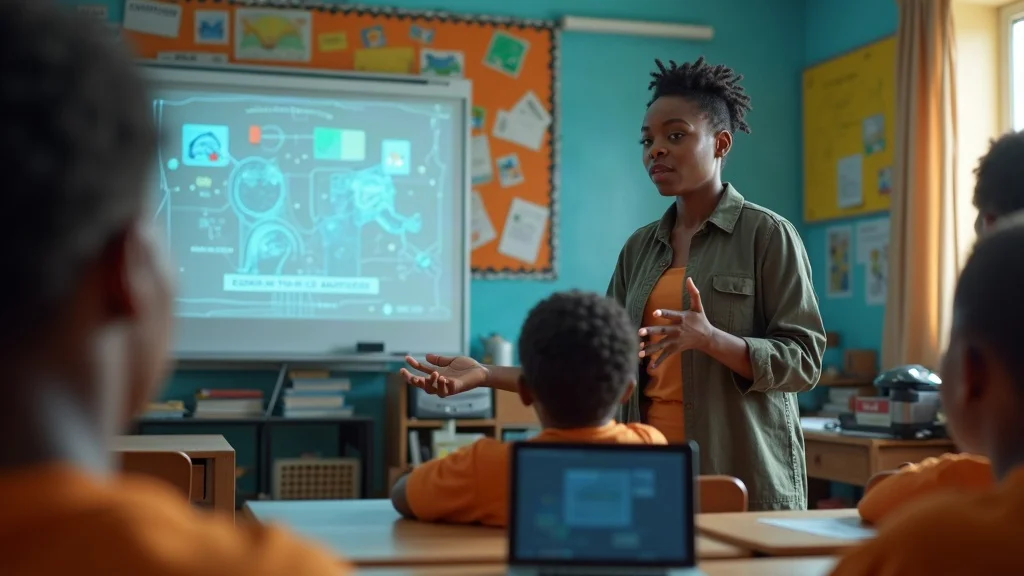
Thoughtful African teacher explaining AI technology to learners in a modern African school, digital whiteboard shows AI diagrams

How Education Systems Are Evolving with Artificial Intelligence

Artificial intelligence is reshaping education systems far beyond the implementation of new software or digital learning platforms. African countries are integrating AI not only to personalise learning or automate administrative tasks but to tailor education to local languages and cultural contexts. With the rollout of AI tools that can translate and adapt content for linguistic diversity, more African students are experiencing learning that is relevant, accessible, and motivating. School systems need to continually evolve, ensuring teachers receive training and support as they introduce AI-powered methods. The result? Classrooms where the use of AI fosters creativity, critical thinking, and inclusive learning—building AI literacy alongside deeper life skills.

The Unique Characteristics of the African Education System

Unlike many regions, the African education system serves a continent with unparalleled diversity in language, culture, and social realities. AI’s promise in Africa is not about replicating Western models but about responding to the needs of million young people who require both global and locally-adapted skills. Whether it’s supporting students and teachers in rural schools or innovating in bustling urban centres, successful AI use depends on culturally relevant solutions. For example, local language processing, context-aware AI systems, and educational content grounded in African values are all hallmarks of forward-thinking AI education. These efforts support not just exam results but the growth of ethical, thoughtful leaders for tomorrow.

The Human Lens: Prioritizing Character in African AI Education

"Character before capability: Why Africa's strengths go beyond code."

Group of African students collaborating outdoors, symbolizing the character and community focus of African AI education

Ethical Challenges and Opportunities with AI in Education

Implementing artificial intelligence in African education systems creates new opportunities and ethical responsibilities. As digital skills become increasingly essential, so too does the need for students to understand the ethical impact of AI use. Deploying AI across the continent means grappling with concerns like student privacy, algorithmic bias, and ensuring equitable access. But with challenges come opportunities: African AI education is beginning to establish ethical frameworks that prioritise transparency, fairness, and respect for cultural values. By addressing these issues up front, educators foster trust in AI systems, ensuring that the next wave of innovators leads with character as well as technical brilliance.

The Role of Community and Cultural Context in Digital Skills Development

Community and culture are foundational in shaping effective digital skills training. In many African countries, the deployment of AI isn’t just a technological upgrade—it’s a collaborative movement grounded in shared values. Family involvement, community-based mentorship, and culturally relevant curricula empower young people to see digital learning as a continuation of traditional forms of problem-solving and creativity. Successful AI education embraces African languages, honours indigenous knowledge, and links digital literacy to community development. When communities and schools unite around shared goals, students not only gain practical skills but also learn how to wield AI as a force for inclusivity and positive change.

Artificial Intelligence and Digital Skills: Bridging the Divide

Preparing Students for Future Work: Digital Skills in African AI Education

Energetic African students coding on tablets in a tech-enabled classroom, highlighting digital skills development in African AI education

With industries across the globe turning to AI-driven solutions, it’s crucial that African students graduate with the digital skills required to succeed in tomorrow’s workplaces. AI literacy, coding, data analysis, and critical thinking are now staples of innovative teaching strategies across Africa—whether in urban schools with advanced infrastructure or remote villages exploring new technology. The goal is clear: prepare students, regardless of background, to participate in and shape the digital economy. Embedded in lesson plans and extracurricular programs, these skills empower young people to create, adapt, and compete at every level.

Encouraging Inclusion and Reducing the Digital Divide

One of the most inspiring aspects of African AI education is its focus on inclusion. Efforts are underway to address infrastructure gaps and ensure that girls, rural learners, and speakers of local languages are not left behind. Initiatives like mobile digital learning labs, open educational resources, and youth mentorship programs are helping bridge the digital divide. By providing tailored support and culturally relevant content, education systems cultivate an environment where all students—regardless of circumstance—can access the benefits of AI-powered learning. The future of AI in Africa rests on this foundation of broad-based empowerment and participation.

  • Key Digital Skills Needed for Success in Artificial Intelligence Fields:
  • AI literacy and computational thinking
  • Coding (Python, Java, local language integration)
  • Data analysis and visualisation
  • Problem-solving in real-world African contexts
  • Communication and collaboration (in local and global teams)

Use of AI in African Education Systems: Success Stories

Case Study: Innovative Approaches to AI in Education

Inspirational African educator mentoring students with AI robots in a well-equipped science lab, showing successful use of AI in African education

Across Africa, local educators and AI systems are teaming up to produce remarkable results. In Nigeria, after-school robotics clubs run by passionate teachers use affordable AI-powered kits to inspire future engineers. In Kenya, primary schools leverage mobile-based AI platforms to personalise reading lessons in local languages, boosting both literacy and confidence. South African research labs and startups are piloting adaptive learning apps that cater to different abilities and interests. These innovative approaches highlight how the use of AI can meet the continent’s diverse educational needs, driving both access and excellence in learning outcomes for students and teachers alike.

Local Solutions with Global Impact

African countries are not just recipients of imported technology; they are increasingly contributing unique AI solutions with a global reach. For example, AI-powered translation tools for African languages developed in Ethiopia and Senegal are now used across the continent and beyond. Initiatives rooted in local realities—such as solar-powered computer labs or curricula designed around community challenges—show that African AI solutions can inspire educational change worldwide. The power of AI in education hinges on African ingenuity: blending technology, culture, and ethics to change lives, both at home and abroad.

Table: Comparing African AI Education Approaches

Education System Key Initiatives Role of Artificial Intelligence Focus Areas in Digital Skills
Kenya Mobile AI learning apps Personalised reading, local language inclusion AI literacy, coding, critical thinking
Nigeria After-school robotics clubs Hands-on robotics, coding basics Problem-solving, teamwork, programming
South Africa Research lab-led AI pilots Adaptive learning platforms Data analysis, AI ethics, collaboration
Ethiopia/Senegal AI language processing tools Translation and content adaptation Multilingual digital skills, cultural relevance

Overcoming Barriers to African AI Education

Infrastructure and Connectivity

Bridging the gap in infrastructure—reliable internet, device access, and electricity—remains one of the most significant hurdles for African education systems leveraging AI. Urban schools may enjoy fibre connectivity and digital labs, but remote areas often rely on creative solutions like solar-powered mobile computer labs. Partnerships between governments, NGOs, local businesses, and international donors are essential in scaling up infrastructure, enabling even the most isolated students to benefit from artificial intelligence powered learning. Addressing these barriers will ensure that the use of AI in education is not limited to privileged urban centres but truly reaches across the continent.

Societal Attitudes and Policy Support

Beyond technology, social perceptions and national policies profoundly affect the adoption of African AI education. In some communities, anxiety about automation or unfamiliar digital tools can slow acceptance. Policymakers must champion not just investment in infrastructure but also curriculum reform, teacher training, and awareness campaigns to build trust in AI’s role in education. Culturally sensitive approaches—like championing teaching in local languages or drawing on African knowledge systems—are key to ensuring everyone can participate in, and benefit from, digital learning opportunities.

Spotlight on Visionaries Shaping African AI Education

Profiles of Leaders in AI and Education Systems

"Real progress in AI education will require not just technology, but vision and heart."

Confident African tech leader presenting at an educational summit on African AI education, engaging the audience

Africa’s AI education revolution is powered by visionary leaders—teachers, tech entrepreneurs, researchers, and policymakers. These individuals aren’t just rolling out new AI systems; they are inspiring communities, advocating for inclusive digital skills, and setting global standards for ethical AI deployment. Names like Professor Nnenna Nwakanma, Dr. Vukosi Marivate, and pioneering grassroots educators exemplify a new generation of leadership rooted in both technical excellence and a deep sense of social responsibility. Their influence proves that lasting progress in AI education demands far more than technology. It calls for vision, empathy, and an unwavering commitment to student growth and cultural relevance.

People Also Ask: African AI Education

How is African AI education different from other regions?

African AI education is distinguished by its unique blend of cultural context, local language inclusion, and a strong focus on character development. Unlike models centered solely on technology, African programs emphasise community, ethical leadership, and solutions tailored to diverse educational realities found across the continent. This culturally relevant approach ensures AI supports both cognitive and character growth in every classroom.

What are the challenges facing AI in African educational systems?

Key challenges include limited infrastructure—such as internet connectivity, access to digital devices, and reliable electricity—especially in rural or underserved areas. Other barriers range from a shortage of trained educators and insufficient policy support to social resistance to new technologies. Overcoming these challenges requires collaborative innovation and strong leadership at every level.

Why is AI important for African students?

AI equips African students with essential digital skills, critical thinking abilities, and creative problem-solving prowess needed for participation in the global economy. It also enhances access to personalised, locally relevant education, helping to close learning gaps and create opportunities for young people to shape their futures and communities.

How can digital skills be enhanced through African AI education?

Digital skills are enhanced through practical, hands-on exposure to coding, AI literacy, and data analysis embedded in curriculum and extracurricular activities. By integrating culturally relevant content and connecting learning to real-world challenges, African AI education fosters deeper engagement, retention, and application of digital skills in the students’ daily lives.

Who are the key players in advancing AI in African education systems?

Key players include dedicated teachers, tech entrepreneurs, government policymakers, global NGOs, research institutions, and inclusive grassroots organisations. Their joint efforts drive innovation, build capacity, and ensure that AI-powered education systems deliver on their promise for all African students.

FAQs on African AI Education

  • What is meant by AI literacy in African classrooms?
    AI literacy refers to students and teachers understanding how AI works, its applications, and ethical concerns, enabling informed, responsible use in learning environments.
  • Why focus on local languages in AI education?
    Many African students speak multiple local languages; tailoring AI tools for these ensures equitable access to learning and supports cultural preservation.
  • Can AI help reduce educational inequalities?
    Yes—AI-driven platforms can personalise learning, bridge resource gaps, and bring quality education to underserved regions when designed with inclusivity in mind.
  • Which subjects benefit most from AI in African schools?
    STEM fields such as mathematics, science, and coding are early beneficiaries, but humanities and languages also gain from adaptive, AI-supported teaching methods.
  • How can parents and communities support African AI education?
    By encouraging curiosity, advocating for convenient access to technology, and working with local schools to integrate relevant digital skills and ethical guidance.

Key Takeaways for the Future of African AI Education

  • The central role of character and community in powering AI transformation
  • Critical need for inclusivity in artificial intelligence and digital skills education
  • Tangible actions to unlock potential across African education systems

In Summary: The Road Ahead for African AI Education

Enduring Potential When Technology Meets Values

The true power of African AI education lies in its fusion of technology with deeply rooted values of community, stewardship, and character.

Final Thoughts: Building Future-Ready African Education Systems

By focusing on both capability and character, Africa’s education revolution is building a future where every learner can thrive—and lead—on the world’s stage.

As you reflect on the transformative journey of African AI education, consider how the broader landscape of digital influence is shaping not only classrooms but also the future of African brands, leaders, and communities. Understanding the interplay between media, technology, and authority can unlock new strategies for growth and impact. For those eager to expand their perspective and discover how digital influence ignites change across sectors, delve into the comprehensive analysis provided in Influence Ignitors: How Media & Digital Influence Shape Brand Authority. This resource offers valuable context for anyone invested in Africa’s digital transformation and the next wave of innovation.

Take the Next Step in African AI Education

  • Join thousands of African founders learning how to work smarter with AI. https://aisiganal.sovereignmomentum.com

To further explore the transformative impact of AI in African education, consider the following resources:

  • “AI4EAC Innovation Challenge: East African students build the AI that could reshape African hiring”: This article highlights a regional AI skills and innovation program where nearly 1,000 students from eight East African countries developed AI tools to address local challenges in education, agriculture, health, and finance. (unesco.org)

  • “The cultural cost of AI in Africa’s education systems”: This piece discusses the potential risks AI tools pose to indigenous values in African education and emphasizes the importance of local ownership and culturally grounded AI to preserve knowledge and ensure equity. (unesco.org)

These resources provide valuable insights into the opportunities and challenges of integrating AI into African education systems, emphasizing the need for culturally relevant and ethically grounded approaches.

#AI SOVEREIGNTY AFRICA

0 Views

0 Comments

Write A Comment

*
*
Please complete the captcha to submit your comment.
Related Posts All Posts

Why You Should Seek Discomfort: Insights for African Tech Innovators

Update Why Embracing Discomfort is Essential for Growth In today's ever-evolving world, the idea of stepping outside your comfort zone may sound daunting. However, as discussed in the recent TEDx talk titled Why a Psychologist Thinks You Should Seek Discomfort, this very discomfort is a catalyst for personal and professional growth. For tech enthusiasts and innovators in Africa, this understanding can pave the way for greater achievements in a landscape ripe with opportunities.In Why a Psychologist Thinks You Should Seek Discomfort, the discussion dives into the transformative power of challenge, prompting us to explore its implications for personal and professional growth. Unlocking New Perspectives Through Challenge Challenging oneself leads to profound insights. The psychologist in the video emphasizes how discomfort forces us to confront our limitations, leading to new understanding and skills. For those in the tech sector in Africa, regularly seeking challenging scenarios can unlock creativity and foster innovation, allowing one to explore uncharted territories in AI and other technologies. Lessons from Successful Innovators Many successful tech pioneers have shared stories of how stepping into discomfort changed their paths. For instance, consider the journey of renowned African entrepreneurs who embraced risks, such as venturing into startup ecosystems. Their growth, often riddled with failures, highlights that challenges are integral to success. This perspective can inspire young Africans in tech to pursue daring ideas that could revolutionize the industry. In essence, as we navigate a continuously shifting landscape, facing discomfort not only prepares us for future challenges but can also serve as a motivation to innovate and lead. So, whether you are a budding entrepreneur or a seasoned tech professional, consider stepping into discomfort; it may be your key to unlocking your true potential.

Why AI in Africa Is Shifting from Access to Agency Now

Did you know that Africa's artificial intelligence ecosystem is expected to contribute over US$1. 5 trillion in economic value by 2030, yet less than 10% of AI research published globally includes African authors or data? As AI in Africa is moving from access to agency, raising urgent questions about ownership, governance, and value creation, this moment marks a pivotal chapter for the continent’s socio-economic transformation. The shift isn’t just about who uses AI, but who builds it, who benefits, and who decides. In this article, we explore why this transformation matters now, to African citizens, governments, and the world.A Startling Shift: Why 'AI in Africa is Moving from Access to Agency' Matters NowThe rise of artificial intelligence (AI) in Africa is no longer simply a matter of access to tools, platforms, or data. Instead, the continent is experiencing a fundamental transition, from passive users of imported AI solutions to architects of homegrown systems and national AI strategies. This evolution is driven by a new generation of African technologists, policymakers, and entrepreneurs determined to shape AI on their own terms. As Africa races to keep pace with the global AI revolution, stakeholders across government, industry, and civil society are wrestling with difficult questions about value creation: Who owns the data? Who sets the rules? And how can AI governance ensure that these advances actually serve African interests rather than replicating colonial-era power dynamics?This journey from access to agency is not just a technological leap, it’s a leap in governance and empowerment. The continent’s unique context, with 54 diverse nations, a rapidly digitising population, and a patchwork of emerging ai policy frameworks, means the stakes are different and often higher than in the US, EU, or China. If Africa can move from being a mere recipient of AI to being a co-creator and an active regulator, it could leapfrog old development models and set new global standards for AI responsibility and innovation. That’s why, at this crucial juncture, the direction Africa chooses will impact everything from ethical governance to equitable access, and influence the global AI age itself.Understanding the Statistical Landscape of Artificial Intelligence Adoption in AfricaAcross the continent, artificial intelligence deployment is accelerating fast, but the path varies significantly by country and sector. According to a 2023 report from the African Union, more than 65% of African countries have cited AI as a key priority in their digital transformation agendas. AI adoption is most advanced in sectors like fintech, agriculture, and healthcare, where local startups are leveraging ai models to drive innovation. Yet, only a handful of countries, such as South Africa, Rwanda, Egypt, and Kenya, have published comprehensive national AI strategies or established clear governance frameworks.At the same time, the proportion of AI research output originating from Africa remains below 5% of the global total, with many solutions still relying on imported models that do not reflect local languages, cultures, or social realities. This data gap raises the spectre of algorithmic bias and underlines the need for genuine agency in both the creation and oversight of AI systems. The move toward local AI capacity-building, increased public sector investments, and intercontinental knowledge-sharing networks like the African Union AI strategy mark crucial steps forward. However, bridging the “AI access” gap is just the beginning—the next challenge is ensuring that Africans themselves are the primary beneficiaries and stewards of these technological advances.For a closer look at the latest developments, policy shifts, and real-world case studies shaping the AI landscape across the continent, you can explore the dedicated news and analysis section at AI News Africa, which offers timely updates on how African nations are advancing from access to true agency in artificial intelligence.From Passive Access to Active Agency: The New Era of AI in AfricaWhat does it mean to move from “access” to “agency” in the realm of artificial intelligence? For many African nations, access once meant gaining internet connectivity or licensing foreign technology. Today, agency is about much more than using AI products: it’s about setting the agenda, building local AI capacities, and creating sovereign control over data and valuable digital resources. The ai age in Africa is defined by initiatives that champion local innovation and policy co-creation, from open-source model development in Nairobi tech hubs to robust regulatory discussions in Addis Ababa.This shift is further cemented by a wave of African-led AI startups, research groups, and educational programs intent on “Africanising” artificial intelligence for real-world problems, such as disease outbreak monitoring or precision agriculture. By actively participating in global AI forums, influencing ai governance debates, and deploying unique ai strategies, African countries are laying the groundwork for an era where AI supports indigenous values, cultures, and socio-economic goals. The result: a bold assertion that Africa will not just be a consumer, but a creator and rule-setter in the global AI landscape.What You'll Learn About 'AI in Africa is Moving from Access to Agency, Raising Urgent Questions About Ownership, Governance, and Value Creation'Key takeaways on AI governance, value creation, and ownership challenges in African contextsInsights on global AI trends and unique local opportunitiesPerspectives on continental AI policy shifts and how they impact governance frameworksTable: Comparing AI Governance Approaches in Africa and Globally AI Governance FrameworksNational AI StrategyValue Creation ModelsD G IntegrationAfricaEmerging, context-driven, multi-stakeholderFew, in early stages or pilot programsStartup-led, indigenous problem-solving focusGradual, linked to digital transformation initiativesUSSector-driven, federal guidance, state diversityDefined, market-innovation focusedCorporate-led, global value capturePartial, with regulatory catch-upEUStrong regulation, rights focus, GDPR modelComprehensive, cross-border cooperationRegulatory-driven, public and private rolesIntegrated, policy-led approachChinaTop-down, central government regulatedNationally mandated, specific sector targetsState-led, rapid scale, infrastructure-centricDeep integration, data sovereignty emphasisDefining Agency: What Does 'AI in Africa is Moving from Access to Agency' Truly Mean?Exploring the Evolution from Artificial Intelligence Access to Agency in AfricaThe journey from mere artificial intelligence access to meaningful agency in Africa is fundamentally an evolution of both mindset and policy. In the early days of AI adoption, much of the focus was on getting affordable technologies into African hands, bridging the “digital divide” and catching up with global tech paradigms. This phase, though essential, left African governments and innovators at the mercy of imported ai models with limited ability to adapt, customise, or control them. Today, the narrative is shifting: African leaders now recognise that true agency begins with building local knowledge, investing in research capacity, and developing open-source or locally informed ai systems.This change is visible in the emergence of national AI policies, regional research collaborations, and an explosion of hackathons, incubators, and interdisciplinary projects across the continent. Agency in this new context means that Africans are not just “trained users” but the ones designing, validating, and deploying AI for local needs, from malaria detection to financial inclusion. By prioritizing African languages, societal values, and real-world applications, the continent is beginning to rewrite the AI rulebook, advocating for fairer and more representative global standards in the process.The Role of AI Governance and National AI StrategiesAs Africa advances deeper into the AI age, the importance of ai governance cannot be overstated. National and continental ai strategies are now emerging as powerful tools to ensure that AI development aligns with local priorities and maximises value creation for African societies. Forward-thinking governments like Rwanda, Ghana, and Egypt are drafting policy blueprints that encourage stakeholder engagement, from academia to civil society, to ensure that regulatory models balance innovation and public good.Yet, there are considerable challenges: the lack of harmonised standards across the continent, conflicting regulatory interests, and the struggle to keep pace with fast-evolving global practices. Key areas such as data protection, bias prevention, and inclusion are under debate. These governance frameworks are not just about compliance but about redefining what “responsible AI” looks like when it is shaped by African aspirations. Effective ai policy is thus the bedrock of agency, ensuring that Africans can determine their digital destiny rather than simply responding to global trends.Quotes: Thought Leaders on Shifting AI Agency in Africa"In Africa, AI governance is not just a policy issue, but an existential one. – Leading African AI Policy Expert"AI Governance: Who Owns the Future of AI Value Creation in Africa?Competitor Models: Mapping National and Global AI Governance StructuresThe competitive landscape of AI governance is complex, with Africa navigating between homegrown talent and global powerhouses. On the global stage, models like the EU’s GDPR, America’s industry-led innovation, and China’s top-down mandates all reveal different philosophies of ownership, oversight, and value distribution. Within Africa, national strategies remain fragmented, but continental initiatives, such as the African Union's AI Framework, provide blueprints for harmonisation and collaboration.By comparing diverse regulatory frameworks and ai models, African governments can learn from international best practices without replicating their flaws. The ultimate prize is to find a balance between enabling rapid AI growth and safeguarding sovereignty, privacy, and inclusive value creation. Ownership, therefore, is not just about who profits, but who controls the underlying data and who sets the terms for responsible AI deployment across the continent.R M and D G: Regulatory Models and Governmental Challenges in African AIDeveloping resilient regulatory models (R M) and robust data governance (D G) presents a concentrated challenge for African governments. Unlike in established ai governance regimes, many African countries must build capacity, both technical and judicial, from the ground up. The stakes are high: without practical mechanisms for technology assessment, ethics review, and data security, Africa risks either falling behind global AI leaders or surrendering control to external actors.Progress hinges on crafting tailored policies that address local context, such as disparities between urban innovation hubs and rural inclusion, or accommodating 2,000+ African languages in natural language AI systems. Continental initiatives, pan-African alliances, and pilot projects by civil society and multilateral partners are critical for overcoming these hurdles. In this way, Africa’s regulatory models have the chance not just to catch up but to chart new frontiers for global AI ethics and accountability.Artificial Intelligence Ownership and Open Access: A Critical ReviewOne of the most pressing issues in the conversation about AI in Africa is moving from access to agency, raising urgent questions about ownership, governance, and value creation is the matter of intellectual property, data control, and open access. With growing demand for localised AI applications, the debate increasingly revolves around whether African datasets, models, and innovations remain in local hands or are exported and monetised by international firms. There is a strong movement toward open-source collaboration, enabling capacity-building and skills development across the continent.However, open access must be balanced with safeguards against data exploitation, privacy violations, or “data colonialism. ” African-led initiatives, backed by regional policy and multi-stakeholder oversight, are beginning to assert data sovereignty and local intellectual property rights. In this way, the continent aims to ensure that value created through AI does not merely flow outward, but is reinvested into African economies and societies, a critical condition for genuine agency in the age of artificial intelligence."True value creation in African AI comes from empowering local talent and ownership.""AI governance must reflect African values and societal aspirations."The Value Chain of Artificial Intelligence: Africa's Opportunity and RiskHarnessing Value through Continental AI and Local InnovationAfrica’s greatest AI opportunity lies in harnessing value at every step of the innovation chain—from data collection and model design to deployment and ongoing monitoring. Continental AI initiatives, including talent exchanges, research networks, and open-source platforms, are helping African nations pool resources, share best practices, and avoid duplication of effort. Partnerships with international tech firms offer lessons but must be carefully managed to ensure local value capture rather than dependency.Across sectors like healthcare, logistics, and education (H E), startups are leveraging indigenous knowledge, African UX/UI principles, and real-time data to address challenges unique to the continent. Examples abound: fintechs that extend credit to the unbanked, precision farming systems that boost yields for smallholders, and diagnostic tools that recognise African genetic traits are all evidence that genuine value creation requires African agency at every stage of the AI pipeline.Case Study List: African Startups Empowering Agency in AIInstadeep (Tunisia/Nigeria) – AI-powered logistics optimisation for African supply chainsmPharma (Ghana) – AI in pharmaceuticals to track inventory and combat counterfeit drugsPilona (Kenya) – AI-based education platforms for local language preservation and digital literacy (D E)Data Science Nigeria – Building continent-wide AI research, talent, and open learning ecosystemAI for Good Africa (South Africa) – Partnerships for responsible AI development and regulatory innovationChallenges to Sustainable AI Value Creation in Africa (G C, R E, Y N)The promise of AI in Africa comes bundled with unique continental hurdles, governance complexity (G C), resource equity (R E), and the gaps in youth and national (Y N) engagement. Many African governments lack the skilled workforce or institutional structures to oversee emerging AI systems, making policy enforcement and monitoring difficult. Digital infrastructure is uneven, and international investment can sometimes crowd out or overshadow homegrown solutions.Addressing these challenges requires bespoke strategies: developing public-private AI policy think tanks, investing in STEM education, encouraging diaspora contribution, and advancing interoperability of tech standards across the African Union. Crucially, inclusive frameworks must prioritise ethics, human rights, and equitable opportunity, so that all Africans, not just urban elites or multinational partners, benefit as agency in technology grows.Governance Frameworks: Crafting Africa's Own AI Policy and StrategyLessons from Global AI Governance for African ContextsStudying global AI standards presents African policymakers with a useful, but sometimes cautionary, blueprint. While the European Union’s rights-based, rules-heavy model ensures comprehensive citizen protection, the USA’s market-driven approach champions rapid innovation, often at the expense of inclusive governance. China’s top-down AI strategy demonstrates rapid scale but raises questions around state surveillance and digital rights.Africa can neither copy-paste nor ignore these models. Instead, it can blend the best aspects, community consultation, strong privacy laws, capacity-building incentives, while ensuring that every governance framework reflects local needs and aspirations. Institutionalising policy reviews, cross-border harmonisation, and collaborative regional institutions will be key to future-proofing African agency in AI.African Governance Framework Models and National AI Policy InitiativesAcross Africa, countries are at varying stages in their formulation of national ai policy. Kenya’s 2022 AI policy draft foregrounds ethical AI and open data principles, while Morocco is focusing on talent investment through higher education and grants. Rwanda’s Smart Africa program champions a pan-African digital identity and AI policy harmonisation initiative spanning multiple governments.These efforts are complemented by AU-backed projects and the proposed Continental AI Policy Framework, which aims to set minimum standards, facilitate knowledge sharing, and coordinate digital transformation (D G) for the region as a whole. As each country iterates and implements its own national AI strategies, the conversation is increasingly shifting from “importing AI” to “building AI for Africa, by Africans. ”Table: Comparing African vs. Global AI Policy StandardsPolicy AreaAfrica’s ApproachGlobal TrendsEffectivenessData SovereigntyLocal data ownership, anti-colonial safeguardsMixed (EU strong, US/China weaker)Early, promising in pilot projectsEthical AICommunity consultation, value-based codesRegulation, corporate standards, public advocacyGrowing but unevenStakeholder EngagementMulti-sector dialogue, strong civil society inputVariable (EU high, US moderate, China low)Effective where implementedNational AI StrategyEmergent, context-driven, more inclusiveComprehensive (EU/China), business-driven (US)Early results, high potentialPeople Also Ask: How is AI Being Used in Africa?Answer: AI in Africa spans multiple sectors, including agriculture, healthcare, fintech, education, and governance, leveraging both indigenous innovation and global partnerships to address local needs.People Also Ask: What Are the 4 Pillars of AI Governance?Answer: The 4 pillars include ethical frameworks, regulatory standards, stakeholder engagement, and monitoring/evaluation, shaping effective AI governance to support value creation and agency.People Also Ask: What is the 10 20 70 Rule for AI?Answer: The 10 20 70 rule refers to AI resource allocation: 10% technology, 20% data infrastructure, 70% change management and human capital investment, crucial for driving AI agency in African contexts.People Also Ask: What is the AI Governance Toolkit for Africa?Answer: Africa’s AI Governance Toolkit encompasses regulatory, strategic, and educational resources tailored for responsible AI development and deployment across the continent.Key Trends: From AI Age to Continental AI Policy—What’s Next for Africa?Current Trends: The Rise of AI Age and National AI InitiativesAfrica is entering a new AI age defined by both momentum and introspection. National AI strategies are proliferating, cross-country data-sharing alliances are growing, and “AI for Social Good” initiatives are capturing the imagination of policymakers and citizens alike. The continent’s youth bulge, over 60% of Africans are under 25, is a prime force for digital innovation, but there remains a pressing need to bridge education and skills gaps.As international investment cascades into African tech hubs, the risk of “AI colonialism” reappears. The challenge for African governments and local entrepreneurs is ensuring that new value is not merely extracted but cultivated, to resource innovation ecosystems, build resilient governance frameworks, and foster the next generation of AI leaders. These trends suggest the next 5–10 years will be critical as Africa defines a distinctly African approach to AI value creation and agency.Continental AI Alliance: Strategic RecommendationsLooking ahead, unified action at the continental AI level is no longer optional, but essential. The African Union and affiliated bodies must lead in establishing pan-African data standards, collaborative ai policy development, and open intra-continental R&D exchanges. By adopting modular, context-sensitive regulatory approaches, Africa can maintain agility while scaling impact—, urning local innovation into lasting continental value.Agreements on cross-border data protection, co-investment in talent pipelines, and continental AI “centres of excellence” will enable African AI to compete globally while serving domestic priorities. By defining the rules at home, Africa enhances both ownership and global competitiveness.List: Best Practices for Sustainable AI Governance and Agency in AfricaImplement transparent AI strategy and governance frameworksFocus on inclusive AI policy developmentCollaborate across continental and global AI networksQuotes: African Voices on the Future of AI Agency"True value creation in African AI comes from empowering local talent and ownership.""AI governance must reflect African values and societal aspirations."FAQs: AI in Africa is Moving from Access to AgencyWhat does agency mean in African AI development?Agency refers to the capacity of Africans to create, control, and direct AI systems that reflect local priorities, rather than just using imported technology. It prioritises local ownership, leadership, and value sharing.How is AI governance being implemented across Africa?Through multi-stakeholder platforms, national AI strategies, and continental frameworks, African governments are establishing ethical, legal, and operational foundations for responsible AI, often learning from global models.What are the challenges to ownership and value creation in African AI?Hurdles include data privacy concerns, limited resources and skills, risk of digital dependency, and gaps in regulatory capacity, which are being addressed through homegrown initiatives and international partnerships.How do national AI policies differ across African countries?National policies vary in maturity and scope; some focus on ethics and education, others emphasise business growth or public sector service delivery, but coordination is growing thanks to the African Union and regional bodies.Key Takeaways on 'AI in Africa is Moving from Access to Agency, Raising Urgent Questions About Ownership, Governance, and Value Creation'Empowering agency is critical for responsible AI growth in AfricaAI governance frameworks must adapt to local realitiesSustainable value creation hinges on ownership and inclusive strategyContinental AI policy collaboration is vital for long-term successConclusion: Charting the Next Chapter for AI in Africa, From Access to Agency, and BeyondReflecting on Ownership, Governance, and Value Creation in African AIThe evolution of AI in Africa from access to agency is not just a technological revolution but a socio-political awakening. True value creation and sustainable development will demand continued investment in governance, local talent, and robust collaborative strategies.Opportunities Ahead: Strategic Paths to Catalyse AgencyWith bold policy innovation, continental unity, and steadfast community participation, Africa can shape a future where AI acts not only as a tool, but as a platform for empowerment and equity.Join the Conversation. Subscribe To Our News ChannelIf you’re interested in understanding how these shifts in AI agency are influencing broader digital transformation and policy innovation across Africa, be sure to explore the wider coverage and expert perspectives available at AI News Africa. Their in-depth reporting delves into the intersection of technology, governance, and economic growth, offering valuable context for leaders, entrepreneurs, and anyone passionate about Africa’s digital future. By staying informed on these evolving trends, you’ll be better equipped to anticipate the next wave of opportunities and challenges as Africa continues to define its own path in the global AI landscape.SourcesUN Economic Commission for Africa – https://www.uneca.org/stories/historic-launch-of-africa’s-continental-artificial-intelligence-strategyAfrican Union – https://www.africanunion.org/newsroom/press-releases/ai-policy-continental-blueprintGSMA – https://www.gsma.com/publicpolicy/resources/the-impact-of-ai-in-africaAI4D Africa – https://ai4d.aiData Science Nigeria – https://www.datasciencenigeria.orgAfrica’s journey in artificial intelligence (AI) is evolving from mere access to active agency, prompting critical discussions on ownership, governance, and value creation. The article “Africa needs to assert its agency in the development of AI” highlights the necessity for the continent to shape AI technologies that reflect its unique values and priorities, cautioning against the imposition of foreign-developed systems that may not align with local needs. (blogs. lse. ac. uk) Similarly, “AI sovereignty in Kenya: Building a future rooted in local ownership and innovation” explores Kenya’s proactive steps toward AI sovereignty, emphasizing the importance of local innovation and data ownership to ensure AI advancements serve national development goals. (brookings. edu) For those committed to understanding and contributing to Africa’s AI landscape, these resources offer valuable insights into the continent’s strategic approaches to AI development and governance.

How Indigenous Chef Shawn Sherman is Pioneering Food Sovereignty

Update Rediscovering Our Roots Through Food In the enlightening video titled How to eat with awareness and purpose | How to Be a Better Human, Chef Shawn Sherman emphasizes the significant connection between food, culture, and personal memories. He highlights how many of us have cherished food memories tied to family and home, yet rarely do we reflect on the cultural and historical implications of what we eat.In How to eat with awareness and purpose | How to Be a Better Human, the discussion dives into food, culture, and history, exploring key insights from Chef Shawn Sherman that sparked a deeper analysis on our end. The Importance of Cultural Context Shawn's journey as a chef is not just about serving delicious meals; it’s a deep dive into the rich tapestry of Indigenous culture and history. Native foods convey stories that are crucial to understanding the identity and beliefs of Indigenous peoples. By spotlighting dishes that refrain from using colonial ingredients, he awakens a sense of awareness in diners about the values and traditions of Indigenous communities. Food Sovereignty: A Key Theme One of Shawn’s main messages revolves around the concept of food sovereignty. He argues for communities—especially Indigenous ones—to gain control over their food systems. When local cultures embrace their traditional food practices, they not only preserve their history and heritage, but also promote healthier food options that contribute to overall well-being. Shawn's restaurant, Awamni, operates with this philosophy in mind, serving a menu that is free from modern, industrialized ingredients, focusing instead on the natural bounty of the land. Engaging the Next Generation As discussions about sustainable living and cultural preservation intensify, Shawn advocates for education about North America’s food landscape. He believes that understanding our food roots is an essential step in creating a healthier future. By teaching young people about local plants and Indigenous culinary practices, we empower them to appreciate and respect the rich history of their land. His work resonates deeply, as millions of people are eager to explore diverse culinary heritages. By embracing our food stories and understanding their context, we not only reconnect with our past but pave the way for future generations to cherish their own cultural identities.

AI Africa Digital News Nexus

AI is reshaping Africa’s future, and staying informed is essential. Subscribe to updates from leading AI thought leaders, research centers, African tech news platforms, and digital transformation initiatives to stay ahead of the curve. The AI revolution is here. Africa is not just participating; it is leading the way..

COMPANY

  • Privacy Policy
  • Terms of Use
  • Advertise
  • Contact Us
  • Menu 5
  • Menu 6

650-980-9020

Available From 8AM - 5PM

City, State

6749 S. Westnedge Avenue, Portage, MI 49002


Serving Africa & Diaspora Tech Enthusiasts And Educators

ABOUT US

Across Africa, innovative platforms are emerging as beacons of progress.
The ai revolution is paving the way for solutions that transcend traditional news delivery. With tools that seamlessly integrate ai, the continent is moving toward an era of enhanced transparency and efficiency. AI Africa News embodies a vision where each story we add reflects the broader aims to change outdated narratives and promote connectivity.

© 2025 AI AFRICA NEWS MEDIA SOLUTIONS All Rights Reserved. 6749 S. Westnedge Avenue, Portage, MI 49002 . Contact Us . Terms of Service . Privacy Policy

eyJjb21wYW55IjoiQUkgQUZSSUNBIE5FV1MgTUVESUEgU09MVVRJT05TIiwiYWRkcmVzcyI6IjY3NDkgUy4gV2VzdG5lZGdlIEF2ZW51ZSIsImNpdHkiOiJQb3J0YWdlIiwic3RhdGUiOiJNSSIsInppcCI6IjQ5MDAyIiwiZW1haWwiOiJtYWplc3RpY21lZGlhc29sdXRpb25AZ21haWwuY29tIiwidG9zIjoiUEhBK1BITjBjbTl1Wno0OFpXMCtWMmhsYmlCNWIzVWdjMmxuYmkxcGJpQjNhWFJvSUhWekxDQjViM1VnWVhKbElHZHBkbWx1WnladVluTndPeUI1YjNWeUlIQmxjbTFwYzNOcGIyNGdZVzVrSUdOdmJuTmxiblFnZEc4Z2MyVnVaQ0I1YjNVZ1pXMWhhV3dnWVc1a0wyOXlJRk5OVXlCMFpYaDBJRzFsYzNOaFoyVnpMaUJDZVNCamFHVmphMmx1WnlCMGFHVWdWR1Z5YlhNZ1lXNWtJRU52Ym1ScGRHbHZibk1nWW05NElHRnVaQ0JpZVNCemFXZHVhVzVuSUdsdUlIbHZkU0JoZFhSdmJXRjBhV05oYkd4NUlHTnZibVpwY20wZ2RHaGhkQ0I1YjNVZ1lXTmpaWEIwSUdGc2JDQjBaWEp0Y3lCcGJpQjBhR2x6SUdGbmNtVmxiV1Z1ZEM0OEwyVnRQand2YzNSeWIyNW5Qand2Y0Q0S0NqeHdQanhoSUdoeVpXWTlJbWgwZEhBNkx5OTNkM2N1WjI5dloyeGxMbU52YlNJK2FIUjBjRG92TDNkM2R5NW5iMjluYkdVdVkyOXRQQzloUGp3dmNENEtDanh3UGladVluTndPend2Y0Q0S0NqeHdQanh6ZEhKdmJtYytVMFZTVmtsRFJUd3ZjM1J5YjI1blBqd3ZjRDRLQ2p4d1BsZGxJSEJ5YjNacFpHVWdZU0J6WlhKMmFXTmxJSFJvWVhRZ1kzVnljbVZ1ZEd4NUlHRnNiRzkzY3lCNWIzVWdkRzhnY21WalpXbDJaU0J5WlhGMVpYTjBjeUJtYjNJZ1ptVmxaR0poWTJzc0lHTnZiWEJoYm5rZ2FXNW1iM0p0WVhScGIyNHNJSEJ5YjIxdmRHbHZibUZzSUdsdVptOXliV0YwYVc5dUxDQmpiMjF3WVc1NUlHRnNaWEowY3l3Z1kyOTFjRzl1Y3l3Z1pHbHpZMjkxYm5SeklHRnVaQ0J2ZEdobGNpQnViM1JwWm1sallYUnBiMjV6SUhSdklIbHZkWElnWlcxaGFXd2dZV1JrY21WemN5QmhibVF2YjNJZ1kyVnNiSFZzWVhJZ2NHaHZibVVnYjNJZ1pHVjJhV05sTGlCWmIzVWdkVzVrWlhKemRHRnVaQ0JoYm1RZ1lXZHlaV1VnZEdoaGRDQjBhR1VnVTJWeWRtbGpaU0JwY3lCd2NtOTJhV1JsWkNBbWNYVnZkRHRCVXkxSlV5WnhkVzkwT3lCaGJtUWdkR2hoZENCM1pTQmhjM04xYldVZ2JtOGdjbVZ6Y0c5dWMybGlhV3hwZEhrZ1ptOXlJSFJvWlNCMGFXMWxiR2x1WlhOekxDQmtaV3hsZEdsdmJpd2diV2x6TFdSbGJHbDJaWEo1SUc5eUlHWmhhV3gxY21VZ2RHOGdjM1J2Y21VZ1lXNTVJSFZ6WlhJZ1kyOXRiWFZ1YVdOaGRHbHZibk1nYjNJZ2NHVnljMjl1WVd4cGVtRjBhVzl1SUhObGRIUnBibWR6TGp3dmNENEtDanh3UGxsdmRTQmhjbVVnY21WemNHOXVjMmxpYkdVZ1ptOXlJRzlpZEdGcGJtbHVaeUJoWTJObGMzTWdkRzhnZEdobElGTmxjblpwWTJVZ1lXNWtJSFJvWVhRZ1lXTmpaWE56SUcxaGVTQnBiblp2YkhabElIUm9hWEprSUhCaGNuUjVJR1psWlhNZ0tITjFZMmdnWVhNZ1UwMVRJSFJsZUhRZ2JXVnpjMkZuWlhNc0lFbHVkR1Z5Ym1WMElITmxjblpwWTJVZ2NISnZkbWxrWlhJZ2IzSWdZMlZzYkhWc1lYSWdZV2x5ZEdsdFpTQmphR0Z5WjJWektTNGdXVzkxSUdGeVpTQnlaWE53YjI1emFXSnNaU0JtYjNJZ2RHaHZjMlVnWm1WbGN5d2dhVzVqYkhWa2FXNW5JSFJvYjNObElHWmxaWE1nWVhOemIyTnBZWFJsWkNCM2FYUm9JSFJvWlNCa2FYTndiR0Y1SUc5eUlHUmxiR2wyWlhKNUlHOW1JR1ZoWTJnZ1UwMVRJSFJsZUhRZ2JXVnpjMkZuWlNCelpXNTBJSFJ2SUhsdmRTQmllU0IxY3k0Z1NXNGdZV1JrYVhScGIyNHNJSGx2ZFNCdGRYTjBJSEJ5YjNacFpHVWdZVzVrSUdGeVpTQnlaWE53YjI1emFXSnNaU0JtYjNJZ1lXeHNJR1Z4ZFdsd2JXVnVkQ0J1WldObGMzTmhjbmtnZEc4Z1lXTmpaWE56SUhSb1pTQlRaWEoyYVdObElHRnVaQ0J5WldObGFYWmxJSFJvWlNCVFRWTWdkR1Y0ZENCdFpYTnpZV2RsY3k0Z1YyVWdaRzhnYm05MElHTm9ZWEpuWlNCaGJua2dabVZsY3lCbWIzSWdaR1ZzYVhabGNua2diMllnWlcxaGFXd2diM0lnVTAxVExpQlVhR2x6SUdseklHRWdabkpsWlNCelpYSjJhV05sSUhCeWIzWnBaR1ZrSUdKNUlIVnpMaUJJYjNkbGRtVnlMQ0J3YkdWaGMyVWdZMmhsWTJzZ2QybDBhQ0I1YjNWeUlHbHVkR1Z5Ym1WMElITmxjblpwWTJVZ2NISnZkbWxrWlhJZ1lXNWtJR05sYkd4MWJHRnlJR05oY25KcFpYSWdabTl5SUdGdWVTQmphR0Z5WjJWeklIUm9ZWFFnYldGNUlHbHVZM1Z5SUdGeklHRWdjbVZ6ZFd4MElHWnliMjBnY21WalpXbDJhVzVuSUdWdFlXbHNJR0Z1WkNCVFRWTWdkR1Y0ZENCdFpYTnpZV2RsY3lCMGFHRjBJSGRsSUdSbGJHbDJaWElnZFhCdmJpQjViM1Z5SUc5d2RDMXBiaUJoYm1RZ2NtVm5hWE4wY21GMGFXOXVJSGRwZEdnZ2IzVnlJR1Z0WVdsc0lHRnVaQ0JUVFZNZ2MyVnlkbWxqWlhNdUlGbHZkU0JqWVc0Z1kyRnVZMlZzSUdGMElHRnVlU0IwYVcxbExpQktkWE4wSUhSbGVIUWdKbkYxYjNRN1UxUlBVQ1p4ZFc5ME95QjBieVp1WW5Od096eG9hV2RvYkdsbmFIUWdZMnhoYzNNOUltTnZiWEJoYm5sVFRWTlFhRzl1WlZWd1pHRjBaU0krYm5Wc2JEd3ZhR2xuYUd4cFoyaDBQaTRnUVdaMFpYSWdlVzkxSUhObGJtUWdkR2hsSUZOTlV5QnRaWE56WVdkbElDWnhkVzkwTzFOVVQxQW1jWFZ2ZERzZ2RHOGdkWE1zSUhkbElIZHBiR3dnYzJWdVpDQjViM1VnWVc0Z1UwMVRJRzFsYzNOaFoyVWdkRzhnWTI5dVptbHliU0IwYUdGMElIbHZkU0JvWVhabElHSmxaVzRnZFc1emRXSnpZM0pwWW1Wa0xpQkJablJsY2lCMGFHbHpMQ0I1YjNVZ2QybHNiQ0J1YnlCc2IyNW5aWElnY21WalpXbDJaU0JUVFZNZ2JXVnpjMkZuWlhNZ1puSnZiU0IxY3k0OEwzQStDZ284Y0Q0OGMzUnliMjVuUGxsUFZWSWdVa1ZIU1ZOVVVrRlVTVTlPSUU5Q1RFbEhRVlJKVDA1VFBDOXpkSEp2Ym1jK1BDOXdQZ29LUEhBK1NXNGdZMjl1YzJsa1pYSmhkR2x2YmlCdlppQjViM1Z5SUhWelpTQnZaaUIwYUdVZ1UyVnlkbWxqWlN3Z2VXOTFJR0ZuY21WbElIUnZPand2Y0Q0S0NqeHZiRDRLQ1R4c2FUNXdjbTkyYVdSbElIUnlkV1VzSUdGalkzVnlZWFJsTENCamRYSnlaVzUwSUdGdVpDQmpiMjF3YkdWMFpTQnBibVp2Y20xaGRHbHZiaUJoWW05MWRDQjViM1Z5YzJWc1ppQmhjeUJ3Y205dGNIUmxaQ0JpZVNCMGFHVWdVMlZ5ZG1salpTWWpNems3Y3lCeVpXZHBjM1J5WVhScGIyNGdabTl5YlNBb2MzVmphQ0JwYm1admNtMWhkR2x2YmlCaVpXbHVaeUIwYUdVZ0puRjFiM1E3VW1WbmFYTjBjbUYwYVc5dUlFUmhkR0VtY1hWdmREc3BJR0Z1WkR3dmJHaytDZ2s4YkdrK2JXRnBiblJoYVc0Z1lXNWtJSEJ5YjIxd2RHeDVJSFZ3WkdGMFpTQjBhR1VnVW1WbmFYTjBjbUYwYVc5dUlFUmhkR0VnZEc4Z2EyVmxjQ0JwZENCMGNuVmxMQ0JoWTJOMWNtRjBaU3dnWTNWeWNtVnVkQ0JoYm1RZ1kyOXRjR3hsZEdVdUlFbG1JSGx2ZFNCd2NtOTJhV1JsSUdGdWVTQnBibVp2Y20xaGRHbHZiaUIwYUdGMElHbHpJSFZ1ZEhKMVpTd2dhVzVoWTJOMWNtRjBaU3dnYm05MElHTjFjbkpsYm5RZ2IzSWdhVzVqYjIxd2JHVjBaU3dnYjNJZ2QyVWdhR0YyWlNCeVpXRnpiMjVoWW14bElHZHliM1Z1WkhNZ2RHOGdjM1Z6Y0dWamRDQjBhR0YwSUhOMVkyZ2dhVzVtYjNKdFlYUnBiMjRnYVhNZ2RXNTBjblZsTENCcGJtRmpZM1Z5WVhSbExDQnViM1FnWTNWeWNtVnVkQ0J2Y2lCcGJtTnZiWEJzWlhSbExDQjNaU0JvWVhabElIUm9aU0J5YVdkb2RDQjBieUJ6ZFhOd1pXNWtJRzl5SUR4emRISnZibWMrUEhOd1lXNGdjM1I1YkdVOUltTnZiRzl5T2lOR1JqQXdNREE3SWo1MFpYSnRhVzVoZEdVZ2VXOTFjaUJoWTJOdmRXNTBMM0J5YjJacGJHVWdZVzVrSUhKbFpuVnpaU0JoYm5rZ1lXNWtJR0ZzYkNCamRYSnlaVzUwSUc5eUlHWjFkSFZ5WlNCMWMyVWdiMllnZEdobElGTmxjblpwWTJVZ0tHOXlJR0Z1ZVNCd2IzSjBhVzl1SUhSb1pYSmxiMllwTGp3dmMzQmhiajQ4TDNOMGNtOXVaejQ4TDJ4cFBnbzhMMjlzUGdvS1BIQStKbTVpYzNBN1BDOXdQZ284YUdsbmFHeHBaMmgwSUdOc1lYTnpQU0pqYjIxd1lXNTVUbUZ0WlZWd1pHRjBaU0krUVVrZ1FVWlNTVU5CSUU1RlYxTWdUVVZFU1VFZ1UwOU1WVlJKVDA1VFBDOW9hV2RvYkdsbmFIUStQR0p5SUM4K0NqeG9hV2RvYkdsbmFIUWdZMnhoYzNNOUltTnZiWEJoYm5sQlpHUnlaWE56VlhCa1lYUmxJajQyTnpRNUlGTXVJRmRsYzNSdVpXUm5aU0JCZG1WdWRXVXNJRkJ2Y25SaFoyVXNJRTFKSURRNU1EQXlQQzlvYVdkb2JHbG5hSFErUEdKeUlDOCtDanhvYVdkb2JHbG5hSFFnWTJ4aGMzTTlJbU52YlhCaGJubFFhRzl1WlZWd1pHRjBaU0krTmpVd0xUazRNQzA1TURJd1BDOW9hV2RvYkdsbmFIUStQR0p5SUM4K0NqeG9hV2RvYkdsbmFIUWdZMnhoYzNNOUltTnZiWEJoYm5sRmJXRnBiRlZ3WkdGMFpTSStiV0ZxWlhOMGFXTnRaV1JwWVhOdmJIVjBhVzl1UUdkdFlXbHNMbU52YlR3dmFHbG5hR3hwWjJoMFBnPT0iLCJwcml2YWN5IjoiUEhBK1BITjBjbTl1Wno1UVVrbFdRVU5aUEM5emRISnZibWMrUEM5d1Bnb0tQSEErUEhOMGNtOXVaejVVYUdVZ2FXNW1iM0p0WVhScGIyNGdjSEp2ZG1sa1pXUWdaSFZ5YVc1bklIUm9hWE1nY21WbmFYTjBjbUYwYVc5dUlHbHpJR3RsY0hRZ2NISnBkbUYwWlNCaGJtUWdZMjl1Wm1sa1pXNTBhV0ZzTENCaGJtUWdkMmxzYkNCdVpYWmxjaUJpWlNCa2FYTjBjbWxpZFhSbFpDd2dZMjl3YVdWa0xDQnpiMnhrTENCMGNtRmtaV1FnYjNJZ2NHOXpkR1ZrSUdsdUlHRnVlU0IzWVhrc0lITm9ZWEJsSUc5eUlHWnZjbTB1SUZSb2FYTWdhWE1nYjNWeUlHZDFZWEpoYm5SbFpTNDhMM04wY205dVp6NDhMM0ErQ2dvOGNENDhjM1J5YjI1blBrbE9SRVZOVGtsVVdUd3ZjM1J5YjI1blBqd3ZjRDRLQ2p4d1BqeGxiVDVaYjNVZ1lXZHlaV1VnZEc4Z2FXNWtaVzF1YVdaNUlHRnVaQ0JvYjJ4a0lIVnpMQ0JoYm1RZ2FYUnpJSE4xWW5OcFpHbGhjbWxsY3l3Z1lXWm1hV3hwWVhSbGN5d2diMlptYVdObGNuTXNJR0ZuWlc1MGN5d2dZMjh0WW5KaGJtUmxjbk1nYjNJZ2IzUm9aWElnY0dGeWRHNWxjbk1zSUdGdVpDQmxiWEJzYjNsbFpYTXNJR2hoY20xc1pYTnpJR1p5YjIwZ1lXNTVJR05zWVdsdElHOXlJR1JsYldGdVpDd2dhVzVqYkhWa2FXNW5JSEpsWVhOdmJtRmliR1VnWVhSMGIzSnVaWGx6SmlNek9Uc2dabVZsY3l3Z2JXRmtaU0JpZVNCaGJua2dkR2hwY21RZ2NHRnlkSGtnWkhWbElIUnZJRzl5SUdGeWFYTnBibWNnYjNWMElHOW1JRU52Ym5SbGJuUWdlVzkxSUhKbFkyVnBkbVVzSUhOMVltMXBkQ3dnY21Wd2JIa3NJSEJ2YzNRc0lIUnlZVzV6YldsMElHOXlJRzFoYTJVZ1lYWmhhV3hoWW14bElIUm9jbTkxWjJnZ2RHaGxJRk5sY25acFkyVXNJSGx2ZFhJZ2RYTmxJRzltSUhSb1pTQlRaWEoyYVdObExDQjViM1Z5SUdOdmJtNWxZM1JwYjI0Z2RHOGdkR2hsSUZObGNuWnBZMlVzSUhsdmRYSWdkbWx2YkdGMGFXOXVJRzltSUhSb1pTQlVUMU1zSUc5eUlIbHZkWElnZG1sdmJHRjBhVzl1SUc5bUlHRnVlU0J5YVdkb2RITWdiMllnWVc1dmRHaGxjaTQ4TDJWdFBqd3ZjRDRLQ2p4d1BqeHpkSEp2Ym1jK1JFbFRRMHhCU1UxRlVpQlBSaUJYUVZKU1FVNVVTVVZUUEM5emRISnZibWMrUEM5d1Bnb0tQSEErUEhOMGNtOXVaejVaVDFVZ1JWaFFVa1ZUVTB4WklGVk9SRVZTVTFSQlRrUWdRVTVFSUVGSFVrVkZJRlJJUVZRNlBDOXpkSEp2Ym1jK1BDOXdQZ29LUEc5c1Bnb0pQR3hwUGxsUFZWSWdWVk5GSUU5R0lGUklSU0JUUlZKV1NVTkZJRWxUSUVGVUlGbFBWVklnVTA5TVJTQlNTVk5MTGlCVVNFVWdVMFZTVmtsRFJTQkpVeUJRVWs5V1NVUkZSQ0JQVGlCQlRpQW1jWFZ2ZER0QlV5QkpVeVp4ZFc5ME95QkJUa1FnSm5GMWIzUTdRVk1nUVZaQlNVeEJRa3hGSm5GMWIzUTdJRUpCVTBsVExpQXNMaUJCVGtRZ1ZWTXNJRWxVSmlNek9UdFRJRU5WVTFSUFRVVlNVeXdnUlZoUVVrVlRVMHhaSUVSSlUwTk1RVWxOVXlCQlRFd2dWMEZTVWtGT1ZFbEZVeUJQUmlCQlRsa2dTMGxPUkN3Z1YwaEZWRWhGVWlCRldGQlNSVk5USUU5U0lFbE5VRXhKUlVRc0lFbE9RMHhWUkVsT1J5d2dRbFZVSUU1UFZDQk1TVTFKVkVWRUlGUlBJRlJJUlNCSlRWQk1TVVZFSUZkQlVsSkJUbFJKUlZNZ1QwWWdUVVZTUTBoQlRsUkJRa2xNU1ZSWkxDQkdTVlJPUlZOVElFWlBVaUJCSUZCQlVsUkpRMVZNUVZJZ1VGVlNVRTlUUlNCQlRrUWdUazlPTFVsT1JsSkpUa2RGVFVWT1ZDNDhMMnhwUGdvSlBHeHBQazFCUzBWVElFNVBJRmRCVWxKQlRsUlpJRlJJUVZRZ0tHa3BJRlJJUlNCVFJWSldTVU5GSUZkSlRFd2dUVVZGVkNCWlQxVlNJRkpGVVZWSlVrVk5SVTVVVXl3Z0tHbHBLU0JVU0VVZ1UwVlNWa2xEUlNCWFNVeE1JRUpGSUZWT1NVNVVSVkpTVlZCVVJVUXNJRlJKVFVWTVdTd2dVMFZEVlZKRkxDQlBVaUJGVWxKUFVpMUdVa1ZGTENBb2FXbHBLU0JVU0VVZ1VrVlRWVXhVVXlCVVNFRlVJRTFCV1NCQ1JTQlBRbFJCU1U1RlJDQkdVazlOSUZSSVJTQlZVMFVnVDBZZ1ZFaEZJRk5GVWxaSlEwVWdWMGxNVENCQ1JTQkJRME5WVWtGVVJTQlBVaUJTUlV4SlFVSk1SU3dnUVU1RUlDaHBkaWtnUVU1WklFVlNVazlTVXlCSlRpQlVTRVVnVTA5R1ZGZEJVa1VnVjBsTVRDQkNSU0JEVDFKU1JVTlVSVVF1UEM5c2FUNEtDVHhzYVQ1QlRsa2dUVUZVUlZKSlFVd2dSRTlYVGt4UFFVUkZSQ0JQVWlCUFZFaEZVbGRKVTBVZ1QwSlVRVWxPUlVRZ1ZFaFNUMVZIU0NCVVNFVWdWVk5GSUU5R0lGUklSU0JUUlZKV1NVTkZJRWxUSUVSUFRrVWdRVlFnV1U5VlVpQlBWMDRnUkVsVFExSkZWRWxQVGlCQlRrUWdVa2xUU3lCQlRrUWdWRWhCVkNCWlQxVWdWMGxNVENCQ1JTQlRUMHhGVEZrZ1VrVlRVRTlPVTBsQ1RFVWdSazlTSUVGT1dTQkVRVTFCUjBVZ1ZFOGdXVTlWVWlCRFQwMVFWVlJGVWlCVFdWTlVSVTBnVDFJZ1RFOVRVeUJQUmlCRVFWUkJJRlJJUVZRZ1VrVlRWVXhVVXlCR1VrOU5JRlJJUlNCRVQxZE9URTlCUkNCUFJpQkJUbGtnVTFWRFNDQk5RVlJGVWtsQlRDNDhMMnhwUGdvSlBHeHBQazVQSUVGRVZrbERSU0JQVWlCSlRrWlBVazFCVkVsUFRpd2dWMGhGVkVoRlVpQlBVa0ZNSUU5U0lGZFNTVlJVUlU0c0lFOUNWRUZKVGtWRUlFSlpJRmxQVlNCR1VrOU5JRTlTSUZSSVVrOVZSMGdnVDFJZ1JsSlBUU0JVU0VVZ1UwVlNWa2xEUlNCVFNFRk1UQ0JEVWtWQlZFVWdRVTVaSUZkQlVsSkJUbFJaSUU1UFZDQkZXRkJTUlZOVFRGa2dVMVJCVkVWRUlFbE9JRlJJUlNCVVQxTXVQQzlzYVQ0S1BDOXZiRDRLQ2p4d1BqeHpkSEp2Ym1jK1RFbE5TVlJCVkVsUFRpQlBSaUJNU1VGQ1NVeEpWRms4TDNOMGNtOXVaejQ4TDNBK0NnbzhjRDVaVDFVZ1JWaFFVa1ZUVTB4WklGVk9SRVZTVTFSQlRrUWdRVTVFSUVGSFVrVkZJRlJJUVZRZ1FVNUVJRk5JUVV4TUlFNVBWQ0JDUlNCTVNVRkNURVVnUms5U0lFRk9XU0JFU1ZKRlExUXNJRWxPUkVsU1JVTlVMQ0JKVGtOSlJFVk9WRUZNTENCVFVFVkRTVUZNTENCRFQwNVRSVkZWUlU1VVNVRk1JRTlTSUVWWVJVMVFURUZTV1NCRVFVMUJSMFZUTENCSlRrTk1WVVJKVGtjZ1FsVlVJRTVQVkNCTVNVMUpWRVZFSUZSUExDQkVRVTFCUjBWVElFWlBVaUJNVDFOVElFOUdJRkJTVDBaSlZGTXNJRWRQVDBSWFNVeE1MQ0JWVTBVc0lFUkJWRUVnVDFJZ1QxUklSVklnU1U1VVFVNUhTVUpNUlNCTVQxTlRSVk1nS0VWV1JVNGdTVVlnU0VGVElFSkZSVTRnUVVSV1NWTkZSQ0JQUmlCVVNFVWdVRTlUVTBsQ1NVeEpWRmtnVDBZZ1UxVkRTQ0JFUVUxQlIwVlRLU3dnVWtWVFZVeFVTVTVISUVaU1QwMDZQQzl3UGdvS1BHOXNQZ29KUEd4cFBsUklSU0JWVTBVZ1QxSWdWRWhGSUVsT1FVSkpURWxVV1NCVVR5QlZVMFVnVkVoRklGTkZVbFpKUTBVN1BDOXNhVDRLQ1R4c2FUNVVTRVVnUTA5VFZDQlBSaUJRVWs5RFZWSkZUVVZPVkNCUFJpQlRWVUpUVkVsVVZWUkZJRWRQVDBSVElFRk9SQ0JUUlZKV1NVTkZVeUJTUlZOVlRGUkpUa2NnUmxKUFRTQkJUbGtnUjA5UFJGTXNJRVJCVkVFc0lFbE9SazlTVFVGVVNVOU9JRTlTSUZORlVsWkpRMFZUSUZCVlVrTklRVk5GUkNCUFVpQlBRbFJCU1U1RlJDQlBVaUJOUlZOVFFVZEZVeUJTUlVORlNWWkZSQ0JQVWlCVVVrRk9VMEZEVkVsUFRsTWdSVTVVUlZKRlJDQkpUbFJQSUZSSVVrOVZSMGdnVDFJZ1JsSlBUU0JVU0VVZ1UwVlNWa2xEUlRzOEwyeHBQZ29KUEd4cFBsVk9RVlZVU0U5U1NWcEZSQ0JCUTBORlUxTWdWRThnVDFJZ1FVeFVSVkpCVkVsUFRpQlBSaUJaVDFWU0lGUlNRVTVUVFVsVFUwbFBUbE1nVDFJZ1JFRlVRVHM4TDJ4cFBnb0pQR3hwUGxOVVFWUkZUVVZPVkZNZ1QxSWdRMDlPUkZWRFZDQlBSaUJCVGxrZ1ZFaEpVa1FnVUVGU1ZGa2dUMDRnVkVoRklGTkZVbFpKUTBVN0lFOVNQQzlzYVQ0S0NUeHNhVDVCVGxrZ1QxUklSVklnVFVGVVZFVlNJRkpGVEVGVVNVNUhJRlJQSUZSSVJTQlRSVkpXU1VORkxqd3ZiR2srQ2p3dmIydytDZ284Y0Q0OGRUNUNlU0J5WldkcGMzUmxjbWx1WnlCaGJtUWdjM1ZpYzJOeWFXSnBibWNnZEc4Z2IzVnlJR1Z0WVdsc0lHRnVaQ0JUVFZNZ2MyVnlkbWxqWlN3Z1lua2diM0IwTFdsdUxDQnZibXhwYm1VZ2NtVm5hWE4wY21GMGFXOXVJRzl5SUdKNUlHWnBiR3hwYm1jZ2IzVjBJR0VnWTJGeVpDd2dKbkYxYjNRN2VXOTFJR0ZuY21WbElIUnZJSFJvWlhObElGUkZVazFUSUU5R0lGTkZVbFpKUTBVbWNYVnZkRHNnWVc1a0lIbHZkU0JoWTJ0dWIzZHNaV1JuWlNCaGJtUWdkVzVrWlhKemRHRnVaQ0IwYUdVZ1lXSnZkbVVnZEdWeWJYTWdiMllnYzJWeWRtbGpaU0J2ZFhSc2FXNWxaQ0JoYm1RZ1pHVjBZV2xzWldRZ1ptOXlJSGx2ZFNCMGIyUmhlUzQ4TDNVK1BDOXdQZ29LUEhBK0ptNWljM0E3UEM5d1BnbzhhR2xuYUd4cFoyaDBJR05zWVhOelBTSmpiMjF3WVc1NVRtRnRaVlZ3WkdGMFpTSStRVWtnUVVaU1NVTkJJRTVGVjFNZ1RVVkVTVUVnVTA5TVZWUkpUMDVUUEM5b2FXZG9iR2xuYUhRK1BHSnlJQzgrQ2p4b2FXZG9iR2xuYUhRZ1kyeGhjM005SW1OdmJYQmhibmxCWkdSeVpYTnpWWEJrWVhSbElqNDJOelE1SUZNdUlGZGxjM1J1WldSblpTQkJkbVZ1ZFdVc0lGQnZjblJoWjJVc0lFMUpJRFE1TURBeVBDOW9hV2RvYkdsbmFIUStQR0p5SUM4K0NqeG9hV2RvYkdsbmFIUWdZMnhoYzNNOUltTnZiWEJoYm5sUWFHOXVaVlZ3WkdGMFpTSStOalV3TFRrNE1DMDVNREl3UEM5b2FXZG9iR2xuYUhRK1BHSnlJQzgrQ2p4b2FXZG9iR2xuYUhRZ1kyeGhjM005SW1OdmJYQmhibmxGYldGcGJGVndaR0YwWlNJK2JXRnFaWE4wYVdOdFpXUnBZWE52YkhWMGFXOXVRR2R0WVdsc0xtTnZiVHd2YUdsbmFHeHBaMmgwUGc9PSJ9

Terms of Service

Privacy Policy

Core Modal Title

Sorry, no results found

You Might Find These Articles Interesting

T
Please Check Your Email
We Will Be Following Up Shortly
*
*
*