

Did you know that only 5% of African schools currently have access to digital learning tools? Yet, against these staggering odds, a courageous new wave of visionaries, like Uganda’s pioneering creators of virtual reality (VR) classrooms, are redefining what’s possible for education across the continent. Their journey reveals that the greatest obstacle isn’t technology or funds—it’s the mindset barrier, a psychological ceiling that shapes Africa’s educational future. This article demystifies the real story: why mindsets matter, what it means for VR education for kids in Africa, and how one Ugandan VR trailblazer is carving a path for millions of children to experience digital learning as never before.
Unveiling the New Frontier: Virtual Reality Education for Kids in Africa
Virtual reality education for kids in Africa represents both an urgent necessity and an unprecedented opportunity. As schools and governments nationwide strive towards 21st-century learning experiences, the promise of VR technology is often overshadowed by deep-rooted skepticism and infrastructural gaps. Despite the overwhelming narrative of the digital divide, the Ugandan VR pioneer’s journey shows that transformative learning can thrive—even in settings where traditional teaching methods are the norm. Embedding immersive VR content into schools doesn’t just enhance science, mathematics, and history lessons. It revolutionises how students see themselves, their community, and their global potential. Early pilots indicate that when educators and students interact with VR, curiosity blooms, engagement multiplies, and critical thinking flourishes. The challenge lies not only in scaling the hardware but in elevating minds to embrace a new era where learning experience and VR tech blend seamlessly—even in Africa’s most resource-stretched classrooms.
The impact of introducing virtual reality to school children in Africa is profound. For many learners, this leap bypasses years of educational barriers and offers a direct bridge to global knowledge and opportunity. Yet adoption rates differ dramatically from country to country, influenced by social norms, digital literacy, and prevailing perceptions of the value of new technology in education. Today, as the need to close Africa’s education gap gains urgency, VR pioneers are reshaping the role that innovative technology—when rooted in ethical, locally driven frameworks—can play in realising human potential.
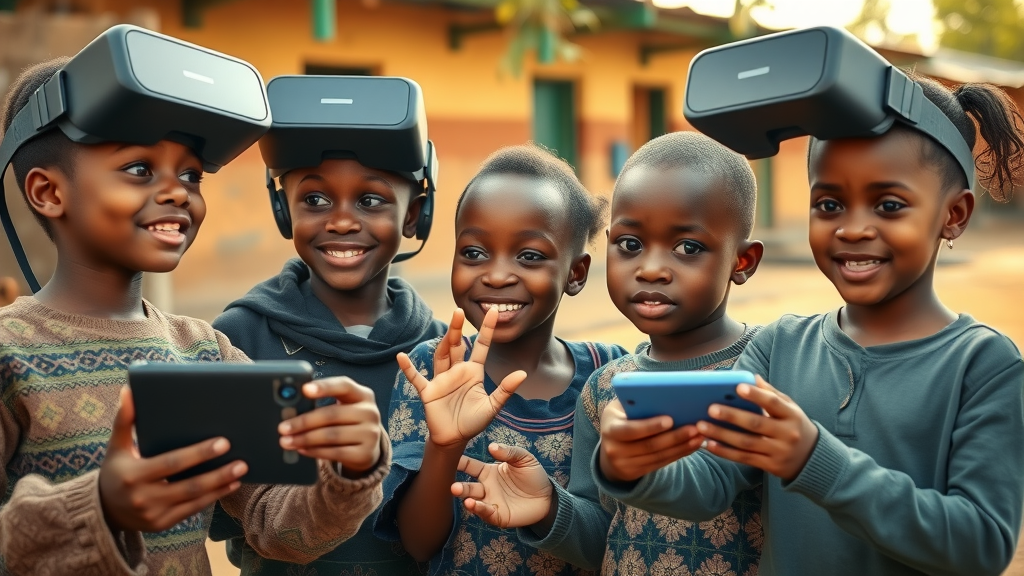
“Only 5% of African schools have access to digital learning tools – yet the innovators who build VR classrooms are changing the rules of the future.”
A Startling Digital Divide: Setting the Context for Virtual Reality Education in Africa
Across much of Africa, the education system is defined by a vast digital divide. The majority of classrooms are still equipped with little more than chalkboards and outdated textbooks—while a select few leap ahead with access to tablets, laptops, and cutting-edge VR devices. This divide is not merely about hardware; it’s about equal opportunity and the right to a modern education. The children in traditional classrooms face limited exposure to globally relevant content, while those in digitally advanced settings are learning to code, problem-solve, and dream beyond their everyday realities. Virtual reality education for kids in Africa holds the promise of bridging this gap, but only if both policymakers and local educators strategically address infrastructure, teacher training, and the mindsets that determine whether new tech is welcomed or resisted.
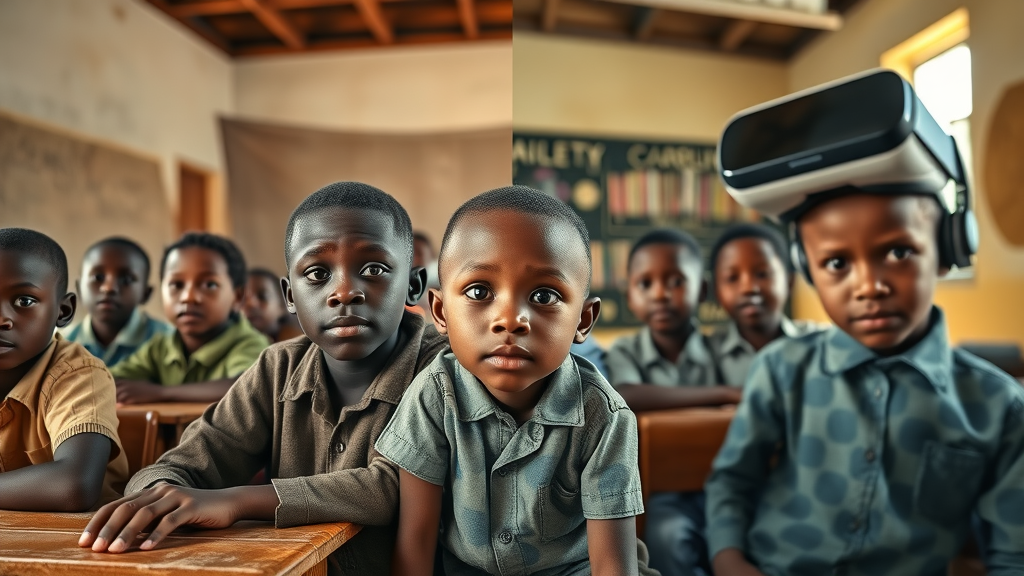
This contrast is starkly illustrated in Uganda, where some children still study on dirt floors under leaky roofs, while others don VR headsets to explore the solar system or conduct simulated science experiments. The Ugandan VR pioneer’s story exemplifies the challenge: how to ensure that virtual reality becomes a tool for inclusion, not division. For progress to be sustainable, community stakeholders must help shape the narrative, ensuring VR technology supports authentic learning and reflects the every day, lived realities of African children—not just imported digital ideals. By rooting new digital initiatives in local context, educational leaders can start to dismantle the psychological and cultural barriers that have held back tech adoption—and begin replacing them with hope, empowerment, and agency.
What You’ll Learn in This Article about Virtual Reality Education for Kids in Africa
- How mindset barriers impact virtual reality education for kids in Africa
- Key lessons from the Ugandan VR pioneer and their journey
- Cutting-edge perspectives on the ethical deployment of virtual reality in African education
- Case studies from Africa: successes, failures, and lessons in VR education
- Practical strategies to foster a human-centered mindset shift for technology adoption
The Mindset Ceiling: How Perceptions Impede Virtual Reality Adoption in African Education
What stands in the way of a VR classroom revolution is rarely just money or hardware. The single greatest obstacle is the collective mindset—deeply rooted beliefs and habits that frame technology as either a threat or a privilege reserved for the elite. In many African schools, virtual reality still sounds like science fiction. Teachers and parents may perceive the technology as a distraction, a luxury, or even an agent undermining traditional values and learning practices. The virtual reality education for kids in Africa agenda risks stalling unless communities intentionally tackle these old narratives and replace them with a sense of shared ownership and adaptive growth.
The Ugandan VR pioneer learned early that trust is the true currency. When school leaders and teachers are brought into the process—from pilot planning to lesson design—they are more likely to champion digital change. Yet, many face fears about job displacement, cultural erosion, and maintaining instructional authority in VR-enabled classrooms. Only by addressing these concerns openly, offering robust teacher training, and highlighting positive, relevant learning experience examples can African educators help their school children step confidently into the digital world. Overcoming this mindset ceiling is not a question of technology, but of courage, collaboration, and context-driven leadership at every level.
Dissecting Old Narratives: Technology Skepticism and Opportunity
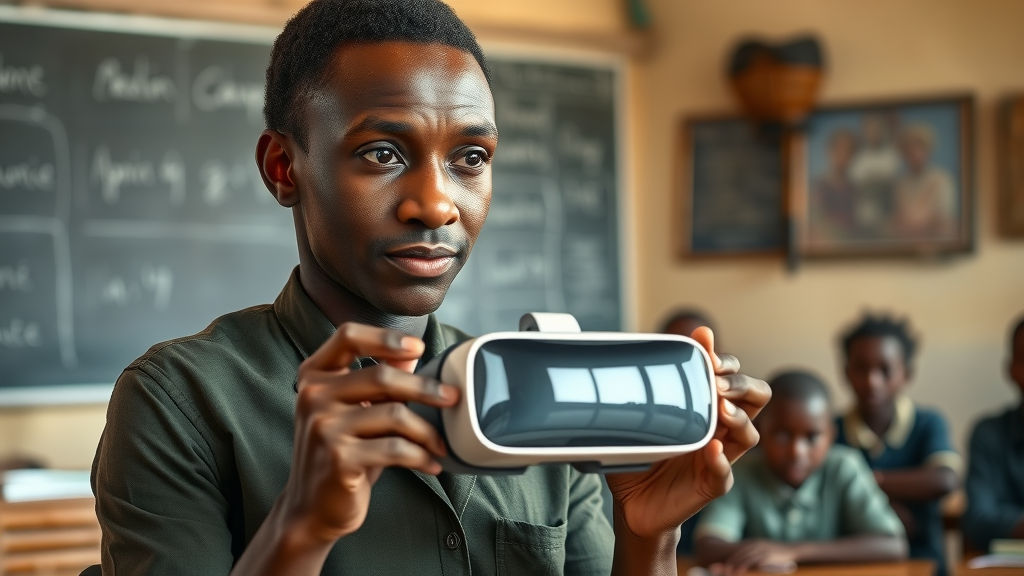
Historically, African communities have been both wary and wise when it comes to disruptive technology. Concerns about privacy, job loss, and cultural identity are valid and should not be dismissed. Yet, clinging to technology skepticism for too long can mean missing out on vital social and educational opportunities. Through the lens of virtual reality education for kids in Africa, we see how old fear-driven narratives can stymie forward progress. The Ugandan VR pioneer confronted these doubts directly—by hosting workshops, consulting elders and parents, and designing lessons that used VR not to replace culture but to celebrate and extend it.
Technology skepticism need not be a dead end. If communities are invited to help steer VR initiatives—voicing concerns and co-creating content—then the narrative can rapidly shift from resistance to ownership. By grounding new tools in local languages, stories, and lived experience, the opportunities multiply: from strengthening digital literacy to creating new jobs in content creation, digital storytelling, and grassroots teaching methods. The path forward for VR education in Africa lies in reframing technology as a tool of empowerment, one owned by the people, for the people.
Virtual Reality, Local Realities: Navigating Social and Cultural Norms
Virtual reality cannot thrive on imported software alone. African social fabrics are complex, defined by community, ceremony, and oral storytelling traditions. For VR to become meaningful in primary school classrooms, it must be tailored to serve local truths—not undermine them. Lessons and experiences need to reflect indigenous history, community rituals, and the lived experience of African children. The Ugandan VR pioneer succeeded by recruiting local artists and storytellers, ensuring content felt familiar even as it unlocked entirely new learning vistas.
Successfully navigating local social and cultural norms also means considering who controls the technology and whose narratives are elevated. When VR content is built by Africans for African kids, innovators ensure relevance, spark engagement, and nurture a sense of pride and global citizenship. Cross-cultural collaboration between developers, teachers, and families remains the linchpin for sustainable VR adoption—and the most powerful antidote to resistance rooted in social and cultural values.
Meet the Ugandan VR Pioneer: Architecting Change for Virtual Reality Education for Kids in Africa
The Ugandan VR pioneer’s mission started with a simple but radical question: What if every child—regardless of where they lived—could step inside a rainforest, orbit a digital planet, or dissect cells in a virtual lab? For this trailblazer, virtual reality education for kids in Africa was never about importing Western learning experience but architecting an African future on African terms. Dodging naysayers and skeptics, they championed teacher empowerment, grassroots workshops, and partnerships with local educational leaders. Their classroom pilots quickly demonstrated measurable gains in student curiosity, retention, and joy. Yet, for all their vision, this leader insists that mindset—more than any hardware or curriculum—is the true frontier obstructing or enabling change.
Drawing inspiration from the “Sovereign’s Code”—an ethical framework for responsible, human-centered technology—the Ugandan VR pioneer puts dignity, community, and local wisdom at the heart of every innovation. Their journey is not just about tech adoption, but about a seismic shift in how African societies value their young people’s creative and scientific potential. Today, their advocacy is a blueprint for VR innovators across the continent: start with ethics, lead with empathy, and only then deploy technology.
Personal Journey: Overcoming Skepticism & Embracing the 'Sovereign’s Code'
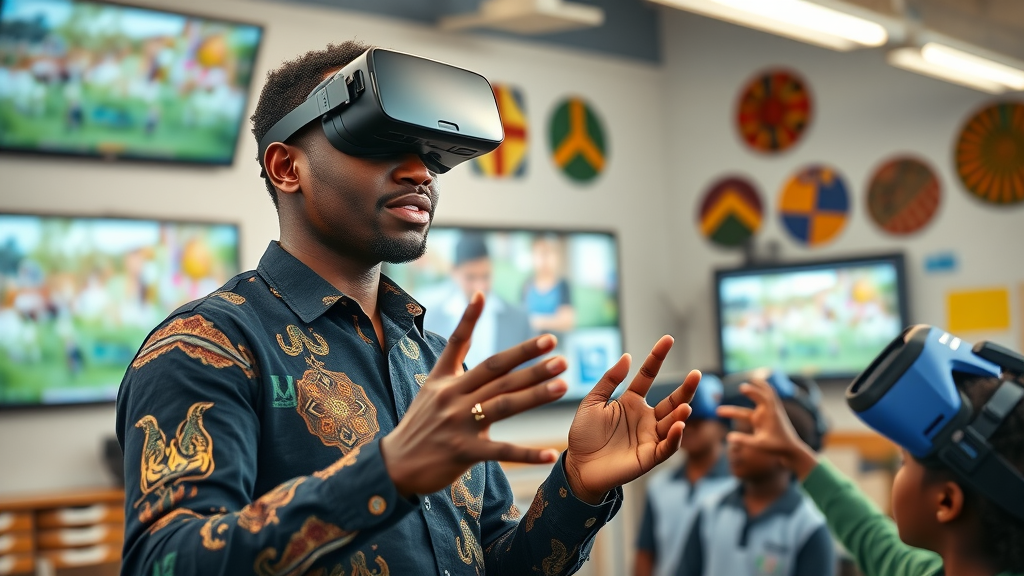
The journey of the Ugandan VR pioneer was fraught with setbacks. Early attempts to introduce VR headsets met resistance—from parents fearing their children would become “lost” in unreality, to school administrators unsure if digital devices belonged in the classroom. Overcoming skepticism required relentless humility and dialogue. By embracing the Sovereign’s Code—a philosophy that centres ethics, local perspective, and stewardship—this pioneer cultivated trust, implemented transparent data policies, and kept community engagement central. These principles earned the respect of stakeholders and inspired a new wave of digital literacy advocacy across East Africa.
Ultimately, the Ugandan leader’s formula is simple but revolutionary: build with, not for, the community. By listening first, piloting with local teachers, and adapting based on feedback, the VR classroom became a shared space—not a foreign import. Today, the stories of fourth-grade students, wide-eyed at simulated science labs, and teachers re-energised by new teaching methods, offer proof that ethical and inclusive innovation can transform African education for decades to come.
“Ethics is not an option – it is the foundation. Without it, technology in Africa risks deepening inequality instead of closing the gap.”
Global Perspectives: Lessons from South Africa, Nigeria, and Beyond for Virtual Reality Classrooms
The struggle to implement virtual reality education for kids in Africa is not limited to one country. Across the continent, digital transformation is unfolding at different speeds and scales. South Africa has led with bold pilot programmes, integrating VR into suburban and urban schools, while Nigeria’s grassroots e-learning campaigns are catching up rapidly. Each context reveals unique barriers—from power supply challenges to policy gaps and cultural hesitancy—but also striking common ground in the power of local leadership and tailored curricula. Pioneers in South Africa leveraged public-private partnerships and teacher training to advance digital literacy, while Nigeria’s youth-led coding academies illustrate how VR can spark entrepreneurial ambition at scale.
Global best practices show that the most successful VR classroom initiatives couple world-class technology with hyper-local strategy. In many cases, teams of educators, content creators, and policymakers work hand-in-hand, ensuring technology responds to the needs and dreams of their children—not just donor expectations. The resulting classroom transformations are dramatic: increased school attendance, improved science scores, and a new generation of African school children who see themselves as inventors, not just consumers, of digital futures.
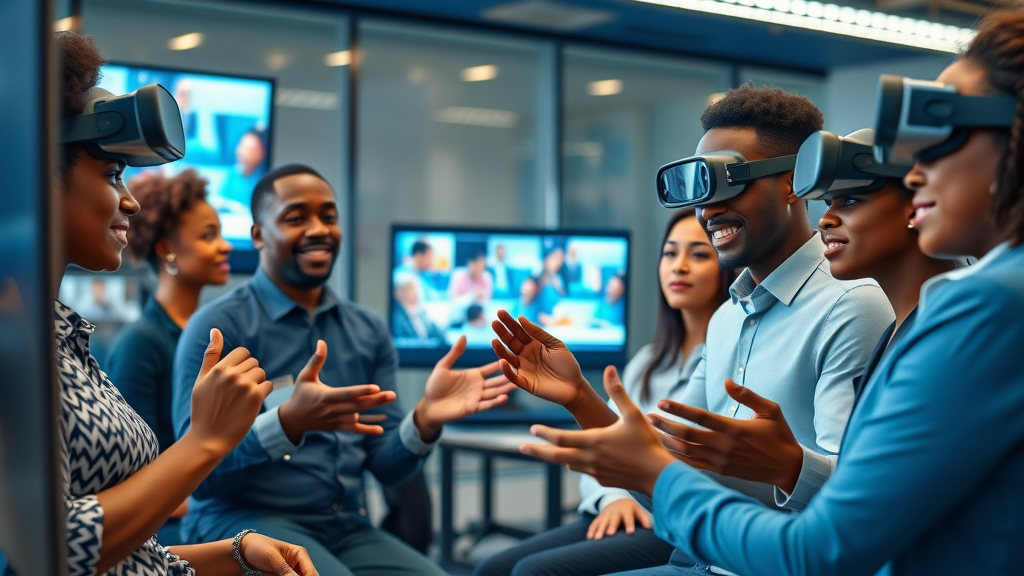
Case Study: South Africa’s Pioneering Moves with Virtual Reality in Education
South Africa offers a powerful model for the region: targeted public-private investment, compulsory digital skills lessons, and pilot “smart schools” where VR is part of everyday teaching. South African educators discovered that early teacher buy-in and robust curriculum alignment were critical for success. Students who previously struggled to visualise scientific concepts now perform virtual chemistry experiments and embark on digital field trips. These outcomes have fuelled government commitments to expand VR adoption, despite uneven resource availability between provinces and districts.
However, even in leading countries, the journey is far from complete. Digital exclusion remains, especially in rural provinces. South Africa’s experience underscores the need for adaptive policy, continuous professional development for teachers, and the careful integration of VR content that reflects local culture and language. For those aiming to build the next generation of technology leaders in Africa, the lesson is clear: innovation must respect context and rely on strong community involvement, not just imported templates from abroad.
From e l to n o: Comparing Cross-Country Approaches to VR Learning
The landscape of virtual reality education for kids in Africa is as diverse as the continent itself. From “e l” schools pioneering large-scale VR rollouts, to “n o” regions experimenting with nimble, mobile device platforms, each approach brings valuable lessons. Countries like Ghana and Kenya have focused on scalable mobile VR solutions, using smartphones and affordable headsets, while Nigeria’s digital hubs emphasise coding and creative content production alongside VR immersion. What unites these efforts is a shared recognition that a single method won’t fit all—and that strong partnership between tech companies, policy bodies, and educators is essential for sustainable growth.
Comparing these countries’ experiences reveals several keys to success: flexible funding, dynamic content partnerships, and a relentless focus on equity. Where cross-border collaborations occur, African innovators can leapfrog common obstacles—pooling local expertise for context-driven solutions. This mosaic approach makes Africa’s VR classroom movement uniquely innovative and deeply resilient, capable of overcoming adversity through collective endeavour.
| Country | VR Technology Type | Delivery Model | Key Challenges | Notable Successes |
|---|---|---|---|---|
| South Africa | Advanced classroom VR kits | Public/private pilot “smart schools” | Resource gaps, rural/urban divide, teacher training | Improved science scores, increased attendance, national curriculum integration |
| Nigeria | Mobile VR, affordable headsets | Youth-led coding/learning hubs | Infrastructure gaps, digital literacy, content relevance | Entrepreneurial skills, content creation, increased engagement in STEM |
| Uganda | Custom VR content, mixed hardware | Teacher-led community pilots | Parental skepticism, power outages, training needs | Mindset shifts, ethical frameworks, grassroots adoption |
| Kenya | Smartphone-based VR, AR overlays | NGO-to-school model | Limited funding, device access | Scalable solutions, digital storytelling, localized content |
Ethical Frameworks and the ‘Sovereign’s Code’ for Virtual Reality in African Education
As VR transforms African classrooms, the need for robust ethical guidance becomes paramount. The “Sovereign’s Code” is a call to action: technology must always serve human dignity, protect children’s privacy, and ensure local communities retain ownership of their narratives. In the rush to digitize, there’s a risk of amplifying inequalities—unless educators, policymakers, and entrepreneurs collaborate to keep human values at the centre. Responsible VR implementation means designing with transparency, accountability, and respect for tradition, ensuring that every leap forward is truly inclusive and beneficial.
The Ugandan VR pioneer’s legacy lies here: advocating relentlessly for a code of conduct rooted in African realities. When data ownership, consent, and content neutrality are protected, trust flourishes, and communities are empowered to shape their children’s digital education journeys. For Africa’s next generation of coders, engineers, and storytellers, an ethics-first approach keeps their future open, equitable, and truly theirs.
AI, Data, and Power: Ensuring Human-Centered, Responsible VR Implementation
The intersection of AI, VR, and education is fraught with risk and promise. Data collected from VR headsets can improve learning experiences, but also raises questions around surveillance, bias, and control. To unlock VR’s full potential in African schools, leaders must establish transparent data policies—making clear what data is collected, how it is used, and who benefits. The “Sovereign’s Code” requires continual vigilance to prevent exploitation, guaranteeing that technology remains a servant to humanity, not its master. Communities that enforce digital rights and privacy, and that regularly audit classroom technology for bias and accessibility, set a global benchmark for ethical innovation.
Responsible use isn’t just about compliance with regulations; it’s about shifting the entire mindset of VR tech adoption, putting people—not profit—at the heart. The Ugandan VR pioneer’s approach is echoed in South Africa’s privacy laws and Kenya’s digital inclusion policies. Together, these models show Africa can be not just a recipient of technology, but a global thought leader in accountable, human-centred digital innovation.
Championing African Narratives: Building VR Content for Kids by Africans
VR education cannot succeed with software alone—it needs African voices, stories, and creators. When local educators and digital artists co-create learning modules, students are more engaged and communities see their values reflected. The Ugandan VR pioneer’s greatest triumph has been in mobilising young creators and teachers to build custom VR experiences that teach both science and African history, inspiring a new wave of digital storytellers. Across “e l,” “r o,” and “y h” communities, this grassroots movement is challenging the dominance of Western-centric content and championing narratives that spark pride, curiosity, and imagination.
This approach ensures every VR experience feels authentic and empowering. Whether constructing virtual models of traditional architecture or simulating historic events in African languages, the message to students is clear: technology and tradition can evolve together, and African genius can define the digital era.
Technology’s Deepest Roadblock: The Psychological Cost of the Digital Divide
The greatest cost of Africa’s digital divide isn’t just falling behind in skills or missing out on content–it’s the erosion of digital confidence and aspiration among young learners. Every day, millions of school children are reminded–by lack of devices, fast-fading chalkboards, or patchy lessons–that they belong to a “have not” world. This persistent gap quietly diminishes self-belief and the sense that the future can be shaped from within. The Ugandan VR pioneer, along with a new network of African educators, recognises that closing the psychological gap is as important as closing the infrastructure gap. By investing in virtual reality education for kids in Africa, they aim not just to level the playing field, but to raise ambition for an entire generation.
This mission goes beyond feel-good pilot projects. It’s rooted in data: classrooms that pilot VR and digital content see students stay in school longer, perform better in STEM, and show more resilience in self-guided projects. The cost of inaction is clear–without bold moves to nurture digital confidence, Africa’s youth risk being left with education that is outdated before it begins.
Nurturing Digital Confidence: Grassroots Solutions for Virtual Reality Education Adoption in Africa
Sustainable adoption of virtual reality education for kids in Africa depends on a bottom-up approach to digital confidence-building. Community VR advocates and teacher training programmes amplify impact by turning sceptics into champions. Teacher training, in particular, empowers local educators with the confidence to adapt their teaching methods and master new classroom tools. Simultaneously, youth-led digital literacy academies encourage students to take their place as innovators, not passive consumers, in the new digital economy.
It’s also vital to institutionalise policy recommendations for inclusive VR infrastructure. This means governments and NGOs should work together to build networks of small-scale, replicable pilots first, focusing on equity and local relevance. This approach allows best practices to emerge, pitfalls to be avoided, and community trust to grow organically, thus laying a resilient foundation for scaling VR education across Africa.
- Community VR advocates and teacher training
- Youth-led digital literacy academies
- Policy recommendations for inclusive VR infrastructure
People Also Ask: Virtual Reality Education for Kids in Africa
How can virtual reality transform education for kids in Africa?
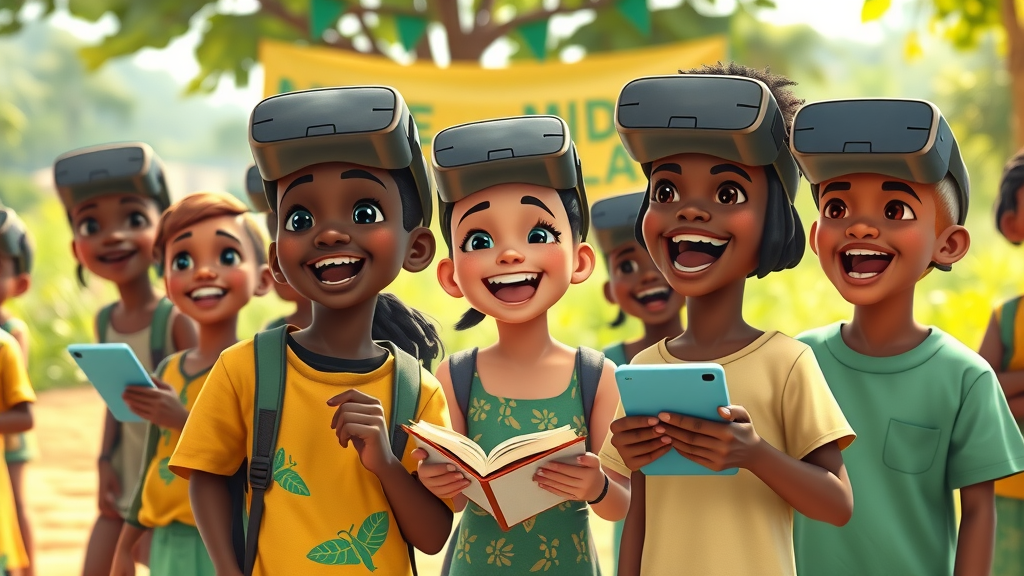
Virtual reality has the power to fundamentally reshape education for children across Africa. By making lessons immersive and interactive, VR bridges learning gaps, fosters deeper engagement, and enables students to explore environments and ideas otherwise beyond their reach. Learners can take virtual field trips, conduct safe science experiments, and access global experts, all from their classrooms. As a result, virtual reality education for kids in Africa levels the playing field, boosts critical thinking, and inspires students to pursue STEM and other high-growth fields.
What are the biggest challenges to VR adoption in African schools?
The largest barriers to VR adoption include inadequate infrastructure, limited teacher training, prevailing skepticism about technology, and the high cost of devices. Additionally, concerns around culturally relevant content, internet connectivity, and electricity access pose real hurdles. Addressing these challenges requires not only investment in hardware, but also long-term planning around ethics, local context, and building digital literacy among teachers and students.
Are there affordable virtual reality solutions workable for resource-limited settings?
Yes, affordable VR solutions such as smartphone-enabled headsets (e.g., Google Cardboard, locally produced alternatives) are making technology more accessible, even in resource-limited settings. Open-source content and partnerships with NGOs and local developers further reduce costs, while modular pilot programmes demonstrate that high-impact digital learning is possible without massive budgets. Community ownership and innovation, championed by African pioneers, are vital in ensuring these solutions are fit-for-purpose and scalable.
How are Ugandan innovators leading the VR classroom revolution?
Ugandan VR innovators are championing ethical, context-driven education by co-developing content with local teachers, empowering students to become creators, and establishing models for responsible data use. They stand out for integrating community feedback, embracing the Sovereign’s Code, and proving that local leadership and innovation can drive sustained, impactful change in digital education across Africa.
Strategic Imperatives: Overcoming Mindset Barriers for the Next Generation
To build the future of virtual reality education for kids in Africa, overcoming mindset barriers must become a deliberate strategy, not an afterthought. Policymakers and innovators need to prioritise community-driven pilot programmes, foster the creation of educational content rooted in African stories, and champion ethical digital frameworks at every step. This isn’t just about accruing technology—it’s about unlocking the genius in tomorrow’s leaders, ensuring every child has the confidence and support to thrive as a digital native in the 21st century. When collective ambition combines with inclusive ethical vision, Africa’s next generation will not just adapt to the digital age—they’ll define it.
Architecting Tomorrow’s Genius: Step-by-Step Solutions for Policymakers and Innovators
- Develop community-driven VR pilot programs
- Advocate for locally relevant educational VR content
- Institutionalise digital ethics frameworks in all projects
Key Takeaways: Virtual Reality Education for Kids in Africa and the Ugandan VR Pioneer
- A mindset revolution is the first step toward technology progress
- Ethics and local context must anchor every VR initiative
- Africa’s next innovators need support to drive forward change
FAQs on Virtual Reality Education for Kids in Africa
What is the current state of VR education in Africa?
VR education is at a nascent stage in Africa, with only select schools across countries like South Africa, Nigeria, and Uganda piloting immersive tools. Rapid growth is anticipated as cost barriers decrease, local content expands, and teacher training accelerates. Still, the vast majority of African school children have limited or no access, underlining the need for greater investment and mindset shifts at all levels.
How can policymakers accelerate VR adoption for kids?
Policymakers can accelerate adoption by investing in teacher training, subsidizing affordable VR hardware, and mandating digital literacy as part of national curricula. Policies that support grassroots innovation, incentivise local content production, and enforce ethics-first frameworks help ensure that adoption is widespread, equitable, and truly transformative.
Is VR teaching culturally sensitive content in African classrooms?
When implemented with local collaboration, VR can deliver culturally relevant and sensitive content. African pioneers are working with local artists, linguists, and historians to ensure VR experiences reflect authentic stories, languages, and values—creating resonance and engagement for African learners.
What support do Ugandan VR pioneers need from the global community?
Ugandan VR pioneers need access to international funding, open-source software, teacher exchange programmes, and supportive policy frameworks. Most importantly, they seek equitable partnerships that respect African agency in shaping the future of education, rather than imposing one-size-fits-all solutions.
Conclusion: Virtual Reality Education for Kids in Africa – Why Mindset is the True Frontier
The frontier for Africa’s VR classroom revolution is not silicon or code—but the minds and attitudes of her people. When beliefs shift, technology follows, and the next generation of African innovators can step confidently into a limitless digital future.

Take Action Now: Supporting Virtual Reality Education for Kids in Africa
- Invest in the Minds which Will Build the Future of Africa: Discover Fanancial Fitness Fortunes Hub News
- Architecting the Next Generation of Genius | Learning is the New Revolution: subscribe to our AI In Africa Digital media Channel Here
Sources
- EdTech Hub – https://edtechhub.org
- UNICEF – https://www.unicef.org/innovation/virtual-reality
- World Bank – https://www.worldbank.org/en/topic/education/publication/vr-in-education
- AI Africa News – https://aiafricanews.com
- Fanancial Fitness Fortunes Hub News – https://futurepreneurs.fanancialfitnessfortunes.com/hub-news
Virtual reality (VR) is revolutionizing education across Africa, offering immersive learning experiences that captivate students and enhance comprehension. For instance, the article “Kenyan School Uses Virtual Reality in Classrooms to Supplement Learning” highlights how schools in Nairobi are utilizing VR to teach children about social and environmental issues, enabling virtual field trips that bring complex topics to life. (afrisquare.africa) Similarly, “South African Schools Introduce VR Lessons” discusses the integration of VR headsets in Johannesburg classrooms, allowing students to explore environments like the Egyptian pyramids or the inside of a volcano, thereby enriching their educational journey. (techcentral.co.za) These initiatives demonstrate the transformative potential of VR in African education, breaking down traditional barriers and fostering a more engaging learning environment.


Write A Comment